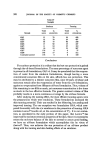
396 JOURNAL OF THE SOCIETY OF COSMETIC CHEMISTS testosterone, of the order of 0.6-1.0 mg day -•, do not produce significant increases in sebum secretion {21). These results appear, therefore, to con- firm our initial conclusions about the effect of hypophysectomy on the response of the sebaceous glands to testosterone, and to substantiate the view that a pituitary hormone must be involved as a permissive factor. That the sebaceous glands of hypophysectomized rats are unresponsive to testosterone has, however, been questioned by two other groups of workers. Nikkari and Valavaara (22) treated hypophysectomized female rats with testosterone propionate and estimated the skin lipids by washing each whole animal at 2-day intervals with acetone. Although the authors' conclusion that 0.2 mg day -• of testosterone propionate had an effect on sebum secretion appears questionable because it depends on making cor- rections for body weight, which was very much reduced in the hypophy- sectomized rats, they clearly demonstrated that a dose of 1 mg day- • given between 7 and 10 weeks of age was able to increase skin surface lipid pro- duction in hypophysectomized animals, albeit to a level no higher than that of untreated intact female rats. The same authors recently again obtained a significant increase, of the order of 160%, in sebum production when 1 mg of testosterone propionate per 4 days was given to 12-week-old hypophy- sectomized female rats (23). Thody and Shuster (24), who similarly measure total surface fat by dipping the whole animal in lipid solvents (25-27), also claim that the sebaceous gland remains sensitive to testosterone after hypophysectomy. With a dose equivalent to 1 mg of testosterone propionate per day they were able to demonstrate an increase in sebum secretion of about 270%. To summarize: there appears to be a contradiction, two groups stressing the necessity of the pituitary, and two others believing that the sebaceous gland can react to testosterone even in its absence. What could be the explanation of these differences in view? The experiments of Nikkari and Valavaara (22, 23) in which rats were hypophysectomized by the transauricular route at 3-4 weeks of age differ from those of Ebling et al (20, 21) in which hypophysectomy was carried out by a parapharyngeal route. However, Thody and Shuster (24) also used a parapharyngeal approach to hypophysectomy, which was carried out at 7-10 weeks of age. A further difference between the experiments was that Nikkari and Valavaara (22, 23) and Thody and Shuster (24) administered testosterone propionate in oil whereas Ebling et al (20, 21) used testosterone as an implant. The possible differences between the responses to testo- sterone and testosterone propionate have not yet been fully investigated,

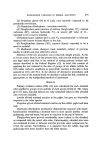
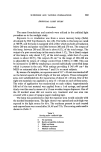
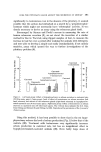
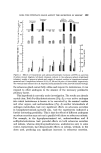
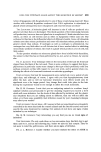
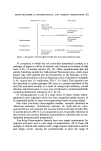
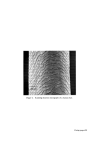
DOES THE PITUITARY GLAND AFFECT THE SECRETION OF SEBUM? 397 but the evidence to date suggests that they do not account for the differ- ences between the results. For a possible explanation the relative responses have to be carefully examined in relation to the doses given. in the first paper of Nikkari and Valavaara (22) the production of sebum in hypophysectomized female rats treated with 1 mg of testosterone per day for 3 weeks was still far short of that in normal rats of the same age. In their second paper (23), no com- parison of the response to testosterone propionate of hypophysectomized- castrated rats with that of castrated rats with intact pituitaries can be made, because no such controls were set up. It seems probable, therefore, that the responses of hypophysectomized rats claimed by these authors, using considerably larger doses of testo- sterone than Ebling et al., were much less than would have been produced in animals with intact pituitaries. Similarly, the responses obtained by Thody and Shuster (24) were less in hypophysectomized-castrated rats than in castrated rats with intact pituitaries. All the data are consistent with the view that some increase in sebaceous secretion can be produced by testosterone in the hypophysectomized rat, but that the response is con- siderably less than in animals with intact pituitaries. If we accept the view that the pituary is necessary for the sebaceous glands fully to respond to testosterone, the question arises of what pituitary 1.5 ' 1-0 2- .c: 0 U nt reated hormone Growth Growth hormone+ hormone+ testosterone testosterone so • •0 u, U nt reared 51 Growth 20 • hormone :'4• :, .•• • 0 Figure 2. Effect of growth hormone plus testosterone on secretion of sebum (left hand columns) and mitosis in the sebaceous glands (right hand columns) in hypophysectomized- castrated rats. Comparisons between 9, 13 and 12 pairs of litter-mates respectively. The vertical lines indicate the S.E. From Ebling et al (20). Reproduced by permission of the Journal of Endocrinology.
Purchased for the exclusive use of nofirst nolast (unknown)
From: SCC Media Library & Resource Center (library.scconline.org)