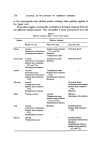
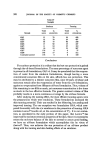
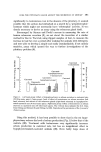
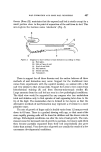
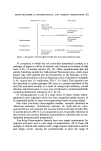
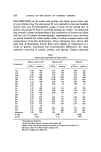
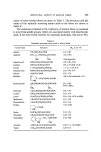
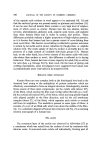
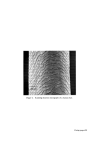
398 JOURNAL OF THE SOCIETY OF COSMETIC CHEMISTS hormones are concerned. We have tested in our sebum production assay a 'sebotropic' preparation made according to the method by Woodbury et al (18, 19), and it proved completely incapable of restoring the response of hypophysectomized-castrated male rats to testosterone. But, on the other hand, we have been able to restore this response (Fig. 2) with a growth hormone preparation (Squibb lot no. GH3) (20), a prolactin preparation (Squibb ovine luteotrophin, lot 5 3273-002R) which appeared to be free of somatotrophic activity (20), and a thyrotrophic hormone preparation (Ferring SF1 822), with very slight growth hormone activity (21). It was of particular interest that the growth hormone preparation was incapable of restoring the response of the preputial gland to progesterone (14), so that its action appeared to be distinct from the 'sebotrophic' activity as defined by Woodbury, Lorincz and Ortega (18, 19). We must assume, therefore, either that all our hormone preparations contain a true sebotrophic (as distinct from preputiotrophic) factor as an impurity, or that they all contain 'sebotrophic' amino-acid sequences within their molecules. What is the nature of the action of the pituitary hormones? A clue to this has arisen from our studies with adrenocorticotrophic hormone (28). In view of the demonstration that preparations of somatotrophin, prolactin and thyrotrophin were able to facilitate response of the sebaceous gland to testosterone, it seemed appropriate to discover whether adrenocortico- trophic hormone (ACTH), a peptide of known constitution with 39 amino acid residues, could act in like fashion. ACTH proved incapable of exercising the permissive action, but the experiments produced the surprising result that given by itself it was capable of increasing both sebaceous secretion and the incidence of mitosis in the sebaceous glands in hypophysectomized- castrated male rats, though to levels no higher than those of castrated rats with intact pituitaries (Fig. $). No significant changes in the weight of preputial glands or the seminal vesicles were produced. We already knew, and Thody and Shuster (24) agree, that sebum production is less in hypo- physectomized-castrated than in castrated rats and it is a reasonable assumption that this reduction is due to lowered adrenocortical activity. So we might reasonably expect that the administration of ACTH to hypo- physectomized-castrated rats might restore sebaceous activity to the level of castrates, by stimulating the production of adrenal steroids of low andro- genicity to which the sebaceous gland might be sensitive, were it not for one fact. This is that the powerful androgen, testosterone, is by itself incapable of doing this, unless a pituitary hormone other than ACTH is present. The dilemma can be solved by a single assumption, namely that although

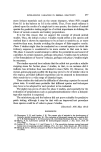
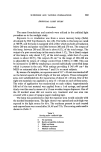
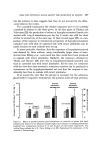
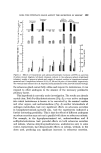
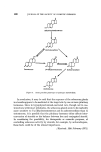
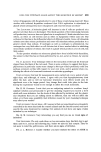
DOES THE PITUITARY GLAND AFFECT THE SECRETION OF SEBUM? 399 500 0 50 0 1-5- -- 1-0- 0.5- - Figure 3. Testosterone ACTH+ Testosterone 0.• rag/24 h testosterone ACTH+ Testosterone Untreated• Untreated Untreated ACTH ACTH - 60 -50c .o - •o• •o .• - i.• 10 • Effects of testosterone and adrenocorticotrophic hormone (ACTH) on secretion of sebum (lowest diagram, left-hand columns), mitosis in the sebaceous glands (right-hand columns), weight of preputial glands and weight of seminal vesicles in hypophysectomized- castrated rats. Comparisons between 15, 10, 17, 20 and 14 pairs of litter-mates respectively. The vertical lines indicate the S.E. Reproduced by permission ooe the Journal of EndocrinoZogj. the sebaceous gland cannot fully utilize and respond to testosterone, it can respond to other androgens in the absence of the necessary permissive pituitary factor. This hypothesis is currently under investigation. The results are already crystal clear. Both 5 •-dihydrotestosterone (Fig. •), a very active androgen into which testosterone is known to be converted by the seminal vesicles and other organs, and androstenedione (Fig. •) another intermediate of androgen metabolism, had very significant effects on sebaceous secretion in hypophysectomized-castrated rats. And the experiments indicated a further interesting possibility. This is that the effects of different androgens on sebum secretion may not run in parallel with those on sebaceous mitosis. For example, in the hypophysectomized rat, androstenedione and 5 a-dihydrotestosterone had powerful effects on both sebaceous secretion and mitosis, whereas dehydroepiandrosterone, androsterone and, to some extent, testosterone, had demonstrable effects on mitosis, without, in the doses used, producing any significant increases in sebaceous secretion.
Purchased for the exclusive use of nofirst nolast (unknown)
From: SCC Media Library & Resource Center (library.scconline.org)