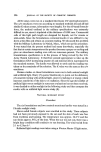
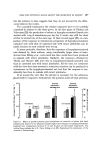
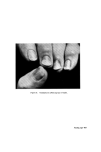
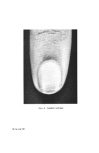
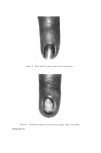
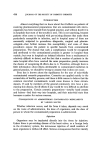
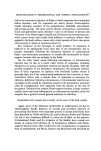
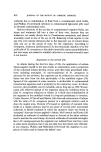
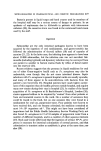
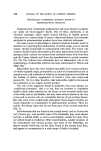
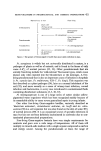
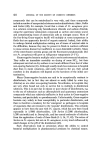
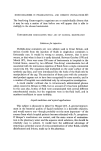
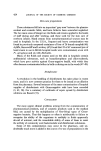
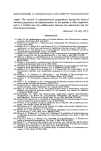
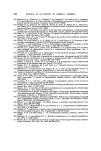
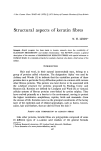
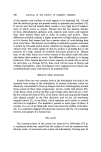
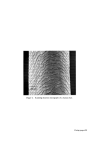
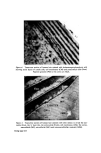
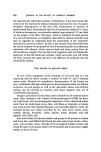
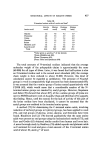
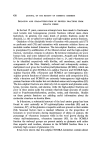
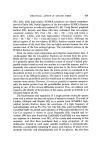
Figure $. Lamellar dystrophy. Facing page 409

NAIL FORMATION AND SOME NAIL DISORDERS 4O9 there may be a minor traumatic element. It is essentially a disease of women and is seen more often in persons who like to keep their nails long. The disadvantages of a loose nail are that it feels uncomfortable, looks unsightly and the space below the nail is likely to collect dirt which is difficult to remove. The space is moist and warm and very easily becomes secondarily infected often with Gram-negative organisms. Pseudomonas aeruginosa infection is especially liable to occur and makes the overlying nail appear bluey-green or black in colour. Malodour may also develop and add to the patient's distress. A minority of these cases has undoubtedly been caused by nail cos- metics. Some of you will recall that several years ago a base coat was marketed which produced onycholysis in many persons (7). It could be shown that phenol from the base coat penetrated the nail and could be detected on its under surface. This resulted in a reaction either as a result of primary irritation or of an allergic nature and caused the separation. More recently the same change has been observed from the use of nail hardeners containing formaldehyde (8). There is no doubt that these preparations harden the nail but they are also liable to cause separation at the tips of the nails. In most cases encountered by the author the preparation had been used more frequently than recommended by the makers, but this was not always so. Once the nail comes loose it is very difficult to get it to re-attach. Another common nail sympton is splitting into layers or lameilar dystrophy (Fig. $). When a nail is made in three layers splitting might be expected to occur frequently. This is a simple explanation but may not be the whole answer. It is again a disease mainly of women, especially those who like to keep their nails long. Atmospheric conditions certainly play a part and repeated wetting and drying may be a factor. It is for this con- dition that nail hardeners are often used. A safe nail hardener is urgently needed. Gelatin by mouth has not proved of much value. Are there any other dangers from nail cosmetics? Nail varnish or polish is generally very well tolerated and seldom causes damage to the nail or its surroundings. Dermatitis of the eyelids and sides of the neck is well recog- nized as a contact dermatitis from resins in the varnish. Occasionally a nail will become yellow after the application of a varnish of a different hue. This is due to the leakage of a tint from the varnish into the nail. It is quite harmless but may cause great distress to a sensitive patient. This condition is difficult to reproduce experimentally. To avoid time wasting in the application of nail varnish, stick-on nail
Purchased for the exclusive use of nofirst nolast (unknown)
From: SCC Media Library & Resource Center (library.scconline.org)