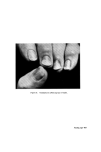
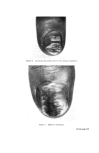
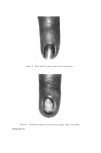
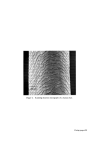
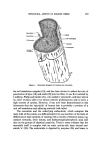
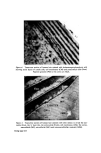
412 JOURNAL OF THE SOCIETY OF COSMETIC CHEMISTS wonder whether there is any danger at all in the normal, garden use, of paraquat solutions? THE LECTURER: Absolutely no danger from the ordinary use once it is diluted to the concentration advised. For the ordinary gardener it is put up in granular form which is even safer and can be handled with impunity, but even the diluted liquid is claimed to be safe. DR. C. PROTTEY: Would you comment further on your statement that enzyme- detergents have caused nail loss? Is this due to a synergistic effect of either the detergent upon enzyme action or vice versa? Does either the enzyme or the detergent penetrate to the matrix? Is the complaint due to excess concentrations of enzyme- detergent, as in paraquat-induced nail loss? Is this complalnt a common one? TI/E LECTURER: It seems probable that there is a dual effect here. The solution gets underneath the nail and causes separation, and secondly, it may destroy the cuticle and get right through to the matrix in that way. It might be due to either of these two mechanisms. DR. C. PROTTEY: Were the concentrations used high compared with, say, the paraquat effect where you state that the effect is due to very high concentration? Are you saying that this is relatively uncommon because the concentrations in this par- ticular case were high? Or is it more common than we would believe? Ti•E LECTURER: In ordinary handlers of the detergent {housewives or equivalent) it was the same as recorded in the Nottingham group with dermatitis due to it. The solutions would therefore not have been concentrated. PROF. F. J. EB•.•NG: Women are the sex who are mostly putting their hands in detergents, and who are constantly grooming their nails. In view of the emphasis you put on the value of the cuticle in preventing damage to the base of the nail, would you recommend that women do not groom their nails? THE LECTURER: I always recommend that the patients must not push back the cuticle. I think if done carefully by a cosmetologist it is safe, but if done by the patients themselves, it can be dangerous. Leuchonychia striata is shown in Fig. 6 and is entirely due to pushing back the cuticle. It must have been done quite viciously. As soon as we stopped the nurse doing it the nail grew out normally, there was no question as to the cause. MR. J. M. BLaKEWaY: I was struck by the slide of the thumb that had been treated with cortisone under occlusion. The state of the skin on the occluded side was very much smoother and demonstrated very well the effect of cortisone on the skin. In the early part of your paper you reviewed at least three series of nail formation. You referred to the Barton-Lewis theory, the last as I recall, of these three. Which do you think is the more valid? TaE LECTURER: I do not think there is any doubt that the traditional view of nail formation, viz. that it all arises from the matrix is the commonest form. Especially under pathological conditions. Lewis's theory is correct, but there may be some argument here as to whether one is using the definition of a nail correctly. Is the material that is being added from the nail bed true nail or is it something else, an

NAIL FORMATION AND SOME NAIL DISORDERS 413 intermediate keratin one might say? Histochemical studies show that this material from the nail bed is, in fact, different from the true nail keratin, but it is arguable. Is everything that looks like a nail, a nail? I think this argument has not been really solved. MR. C. J. KIRK: Could you tell me whether fat solvents as such have any peculiar effect on nails? Ta• L•CTUR•R: Apart from the general effect on the epidermis, none that I know of.
Purchased for the exclusive use of nofirst nolast (unknown)
From: SCC Media Library & Resource Center (library.scconline.org)