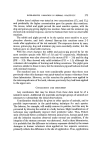
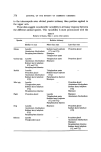
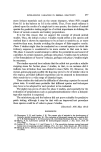
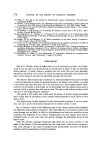
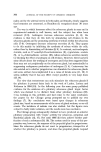
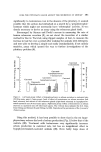
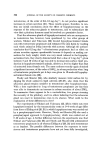
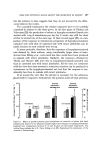
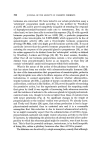
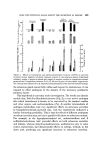
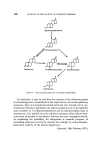
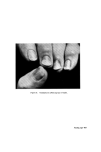
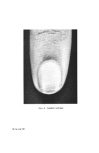
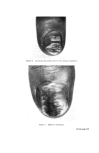
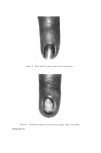
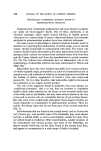
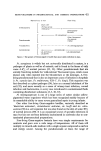
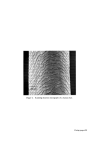
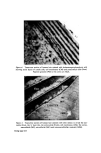
Figure 8. Early nail loss from contact with a weed killer. Figure 9. Facing page 411 Complete permanent nail loss from contact with a weed killer.

NAIL FORMATION AND SOME NAIL DISORDERS 411 REFERENCES (1) Lewis, B. L. Microscopic Studies of foetal and mature nail and surrounding soft tissue. Arch. Derrnatol. 70 592 (1955). (2) Boas, I.E. V. Zur Morphol. Wirbeltierkralle. Morphologic Jahrbuch Bd. 111 281 (1894) Quoted by Pinkus, F. in Jadassohn, J. Handbuch der Haut und Geschlechtskrankeiten 1/1, 289. (1927) (Julius Springer, Berlin). (3) Zaias, N. The regeneration of the primate nail. Studies of the squirrel monkey Saimiri. J. Invest. Derrnatol. 44 107 (1965). (4) Zaias, N. and Alvarez, J. The formation of the primate nail plate, an autoradiographic study in the squirrel monkey. J. Invest. Dermatol. 51 120 (1968). (5) Achthen, G. L'ongle normal et pathologique. Dermatol. 1116 229 (1963). (6) Hashimoto, K., Gross, B. G., Nelson, R. and Lever, W. F. The ultrastructure of the skin of human embryos. III. The formation of the nail in 16-18 weeks old embryos. J. Invest. Derrnatol. 47 205 (1968). (7) Rein, C. R. and Rogin, J. R. Allergic eczematous reactions of the nail bed due to "Undercoats". Arch. Derrnatol. $1 971 (1950). (8) Lazar, P. Reactions to Nail Hardeners. Arch. Derrnatol. 04 446 (1966). (9) Samman, P. D. Onychia due to synthetic nail coverings. Experimental studies. Trans. St. John's Hosp. Derrnatol. Soc. 40 68 (1961). (10) Samman, P. D. and Johnston, E. N.M. Nail damage associated with the handling of paraquat and diquat. Brit. Med. J. 1 818 (1969). DISCUSSION MR. M. G. DENAVARRE: Did I understand that when you see extensive whitening in the nail this indicates that the nail is splitting? Do you mean between the lamellae? THE LECTURER: Actual splitting of the layers. MR. K. V. CURRY: You showed us the effect of nail preparation on finger nails, and on a particular slide there were three fingers which presumably came from the same person. On two of them one could see the staining of the nail. On the third one it was much worse. Do you come across this effect often in that one or more finger nails respond completely differently to the rest, and is this due to some other factor that perhaps has not been discovered yet? THE LECTURER: This was done deliberately. The patient was removing all her varnish and was asked to leave some so that we could see the original colour. There- fore the finger that showed a lot of colour was showing the varnish and not the 'leak' from the varnish, which was the paler colour seen on the other nails. MR. J. M. BLAKEWAY: Did you go back to the manufacturer to find out which particular dye or colour was causing the trouble? TI•E LECTURER: Yes, it has been published by Cainan (11). MR. R. CI•uDzi•owsKx: American regulations allow 4% formaldehyde in nail hardening preparations. Do you consider this level safe? TI•E LECTURER: I find it rather difficult to answer that question. MR. J. S. CA•ELL: You mentioned the injurious effects that can arise from the use of concentrated solutions of paraquat. Those are concentrated solutions but I (11) Cainan, C. D. Reactions to artificial colouring materials. J. Soc. Cosmet. Chern. 18 215 (1967).
Purchased for the exclusive use of nofirst nolast (unknown)
From: SCC Media Library & Resource Center (library.scconline.org)