J. Soc. Cosmet. Chem. 23 427-445 (1972) ¸ 1972 Society of Cosmetic Chemists of Great Britain Structural aspects of keratin fibres N.H. LEON* Synopsis--Rapid progress has been made in keratin research since the availability of ELECTRON MICROSCOPY and modern biochemistry. This REVIEW presents a general description of the structure of MAMMALIAN KERATIN FIBRES with special reference to HUMAN HAIR. It is intended primarily for cosmetic chemists who desire a brief survey of the subject. INTRODUCTION Hair and wool, in their natural (unstretched) state, belong to a group of proteins called a-keratins. The designation 'alpha' was used by Astbury and Woods (1) to indicate that the crystalline portions of these proteins have a particular X-ray diffraction pattern in common with various other fibrous proteins. This pattern was later shown to be associated with the a-helical structure for proteins proposed by Pauling, Corey and Branson (2). Keratins are defined by Lundgren and Ward (3) as 'natural, cellular systems of fibrous proteins cross-linked by cystine sulphur. They have evolved primarily as a barrier to the environment, serving to protect the higher vertebrates--amphibians, reptiles, birds and mammals--from the stresses of life. Keratins occur as the principal constituents of the horny layer of the epidermis and of related appendages, such as horns, hooves, scales, hair and feathers, that are derived from the skin'.'• AMINO ACID COMPOSITION OF KERATIN FIBRES Like other proteins, keratin fibres are polypeptides composed of some 18 different types of a-I•-amino acid residues of the general formula * Unilever Research Laboratory, 455 London Road, Isleworth, Middlesex. •' For a discussion of a more precise definition, see (4). 427

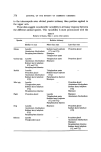
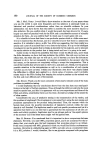
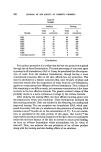
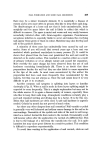
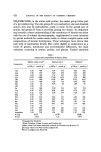
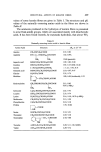
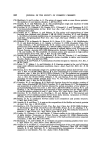
428 JOURNAL OF THE SOCIETY OF COSMETIC CHEMISTS NHo. CHRCOOH in the amino acid proline, the amino group forms part of a pyrrolidine ring. The side groups R vary markedly in size and chemical nature they may be hydrophobic, acidic or basic. In the special case of cystine, the groups R form a cross-link joining two chains. An important step towards a closer understanding of the constitution of keratin was taken with the use of column chromatography, supplemented in some instances by special methods for certain amino acids, to obtain complete amino acid compositions of keratin hydrolysates. These techniques have shown that each kind of mammalian keratin fibre varies slightly in composition as a result of genetic, nutritional and environmental differences, the main variations occurring in cystine, proline, and glycine. Typical analytical Table I Amino acid composition of keratin fibres Component Merino sheep wool* Human hair•' MohairS' g 100 g-X Ixmole g-X g 100 g-X ,tzmole g-X g 100 g-X [xmole g-X Ala 4.10 460 3.07 345 4.03 452 Arg 9.58 550 8.29 476 8.53 490 Asp 6.65 500 5.52 425 7.24 544 Cys 12.02 1000 17.08 1422 9.70 808 Glu 14.41 980 13.02 885 15.52 1055 Gly 5.25 700 3.84 512 4.84 645 His 1.02 66 0.96 62 1.09 70 Hyl 0.16 10 .... Ile 3.41 260 2.78 212 3.57 272 Leu 8.26 630 6.08 464 8.70 672 Lys 3.22 220 2.60 178 3.26 223 Met 0.52 39 .... Phe 3.80 230 2.36 143 4.04 245 Pro 6.79 590 8.67 753 6.41 557 Ser 9.66 920 8.94 851 7.83 745 Thr 6.54 550 6.45 542 5.74 482 Trp 1.43 70 .... Tyr 5.25 290 2.28 126 3.51 194 Val 5.38 460 5.73 490 7.76 663 Ammonia 1.20 750 1.28 797 1.27 793 N (5/o) 16.35 16.50 16.60 S (%) 3.655 5.1õ 3.0 •[ *Compiled by Ward (5). •From Crewther, Fraser, Lennox and Lindley (6). $Mean value from three analytical methods by Fletcher and Robson (7). õAverage value from Ward and Lundgren (8). •From Lundgren and Ward (3).
Purchased for the exclusive use of nofirst nolast (unknown)
From: SCC Media Library & Resource Center (library.scconline.org)