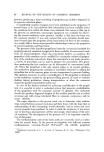
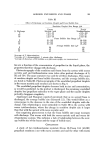
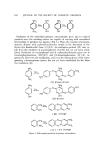
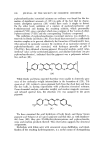
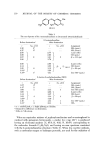
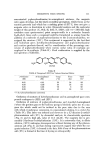
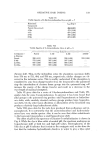
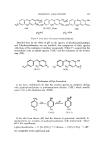
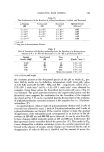
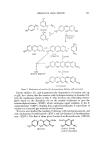
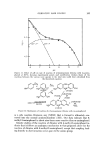
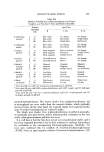
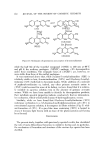
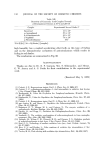
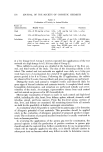
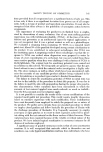
119. JOURNAL OF THE SOCIETY OF COSMETIC CHEMISTS Ox. e• (XVI) (XV) H2N / •V'"NH MeO OH (XVII) Table III The nmr Spectrum o[ Compound (XIV) in Deuterated Dimethylsulfoxide Before deuteration" After deuteration r No. of H r No. of H Assignment 2.03 1 ...... NH (quin.) 2.83 2 ...... NH.o (quin.) 4.91 4 ...... 2NH.o (benz.) 2.92 '( 2.90 • 3.08 3.04 (J: 84 cps) 3.34 4 3.26f 4 3.49 3.40 2 sets of 2 pairs of ortho H (benz.) 3.22 3.19 3.30 • 4 3.22 j• 4 (J: 90 cps) 3.45 ... 3.99 i 3.96 i lone CH • (quin.) 4.40 i 4.30 - i lone CH c (quin.) m = masked. Ortho to --NHCoH4NH.o. Ortho to --NH. Table IV Effect of Initial Hydroxyindamine (XVI) a Concentration on the Yield of the Phenoxazime (XV) Concn (M) 10 -• 2.5 X 10 -• 5 X 10-'* 10 -'ø 10-' Yield, % 0 • 2.6 • 5.7 b 11.4 • (O" Formed by reaction of 1 molar proportion of each of p-phenylenediamine and 3-amino- 4-methylphenol and 6 molar proportions of potassium ferricyanide, at room temperature followed by 2 hr at 98 ø C. Determined spectrophotometrically. Determined gravimetrically.

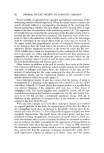
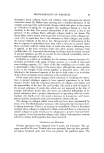
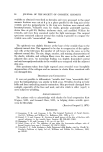
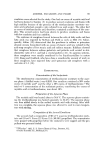
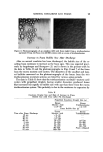
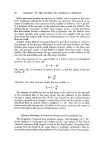
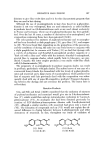
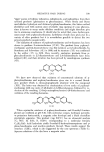
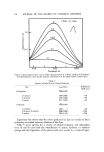
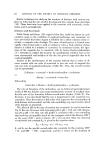
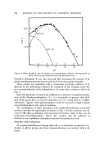
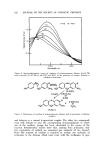
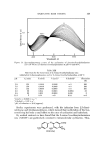
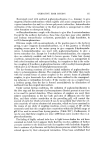
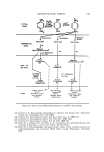
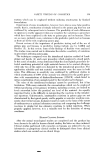
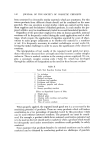
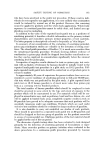
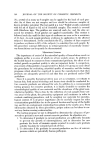
OXIDATIVE HAIR DYEING 113 0.5 D i i i ß i ß 500 600 Wavelength, nm Figure 2. Visible spectrum of 7-amino-g-methylphenoxazime in 0.1M HC1 (A and F) pH 11.2 aqueous Na=O• (B) 0.1M NaOH (C) 12M HC1 (D) and coned H2SO• (E). A-E, 5 x 10⁻⁶M solutions in 4.0-cm cells F, 5 x 10-=M solution in 0.5-cm cell In contrast, we find that oxidation of mixtures of 2,5-diaminoanisole and 4- methyl-3-aminophenol gives rise to a magenta dye which, even in dilute solu- tion, undergoes almost immediate intramolecular cyclization to the phenoxa- zinium salt. The latter can be extracted from hair dyed with the above mix- ture and its formation accounts for the extremely stable violet coloration which has been reported to be produced (33). Apparently, the oxidative cou- pling produces the indamine (XVII) which undergoes nonoxidative cycliza- tion with the elimination of methanol to give (XV). Except as otherwise indicated above, all the compounds (IX)- (XVI) can either be extracted from or observed to have been formed in hair dyed with the appropriate reactant mixture. Furthermore, they are the major colored species formed in oxidative dyeing with p-diamines and m-disubstituted couplers. Spectral Properties o[ Binuclear Dyes The colors produced in hair by the various classes of binuclear dyes have been mentioned above and it is pertinent at this point to consider their spec- tral properties.
Purchased for the exclusive use of nofirst nolast (unknown)
From: SCC Media Library & Resource Center (library.scconline.org)