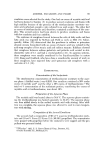
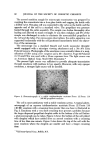
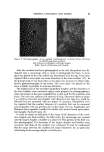
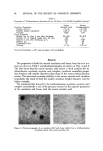
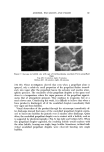
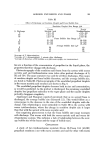
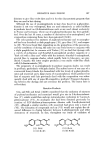
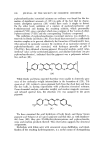
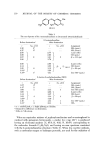
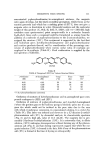
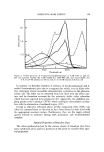
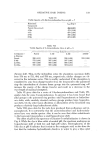
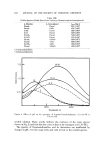
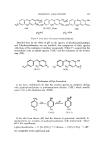
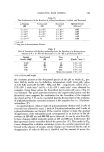
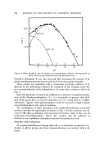
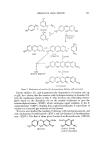
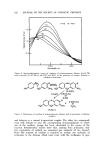
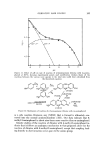
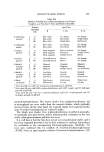
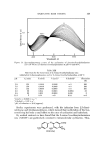
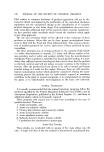
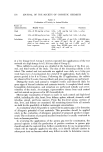
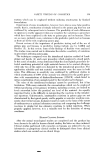
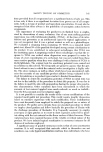
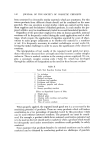
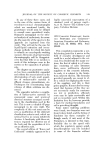
OXIDATIVE HAIB DYEING 10.9 ,400 500 6 O0 Wavelength, nm Figure 14. Spectrophotometric course of the cyclization of g-amino-5-methylindamine (1.0 x 10⁻⁴M) to 3,7-diamino-9.-methylphenazine at phi.,6 and 60øC Table XIII Rate Data for the Conversion of 2~Amino-5-methylindamine into 3-Methyl-2, 8-diaminophenazine and/or 2-Amino-5-methylindoaniline, at 60 ø C pH t,/2 (min) k (obsd) k (cycl.)" k (hydrol) b Phenazine (%) 5.9 150 0.0046 0.0046 -- 0 100 7.0 150 0.0046 0.0046 -- 0 100 8.0 150 0.0046 0.0046 -- 0 100 9.0 50 0.014 0.0043 0.0084 31 9.8 22 0.031 0.0010 0.030 3 11.2 5 0.14 -- 0 0.14 -- 0 "k(cycI.) = 0.0046 X aIII +0. • k(hydrol) = 0.15 X aI 0. c pK, of indamine -- 10.0 (approx.). Similar experiments were performed, with the indamine from 2,5-diami- notoluene and 2,4-diaminotoluene, which showed that methylation of the ben- zenoid ring had only a small effect on the rates of cyclization and hydrolysis. By marked contrast we have found that the 2-amino-5-methoxyindaminium ions (XXXIV) are particularly resistant to intramolecular cyclization. Thus, /•j,,, N ••r. OMe H•N• H,•N •)•..•'• H• (XXXlV)

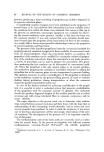
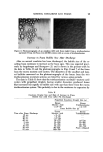
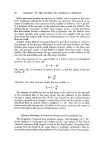
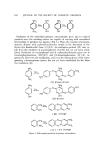
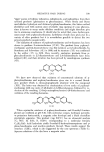
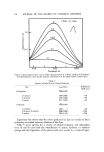
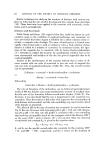
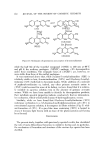
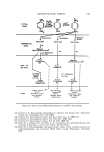
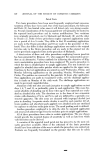
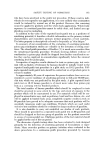
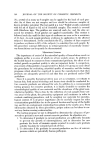
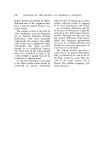
1'30 JOURNAL OF THE SOCIETY OF COSMETIC CHEMISTS (xI -NH• (XlII) H•N' • H•N • • 'NH• (XVIII) [,(slow) (XXXIII) Ox •(fast) H,.N• •NH• (XXXII) Figure 15. Mechanism of spontaneous consumption of 2-aminoindamines while the half life of the 5-methyl compound (XVIII) is 150 rain at 60øC and pH 6, the methoxy analogues (XXXIV) undergo 5% decomposition under these conditions. The conjugate bases of (XXXIV) are, however, no more stable than those of the methyl analogues. It was mentioned above that, while 2-amino-5-methylindoaniline (XIII) is relatively stable in hair, 2-aminoindoaniline (XXX) and 2-hydroxy-5-methyl- indamine (XVI) both fade to brownish shades. While addition of a molecule of p-phenylenediamine or, indeed, any other primary aromatic amine to (XXX) could account for some of its fading, •ve have found that it is relative- ly unstable in aqueous solution even in the absence of primary aromatic amines. While we have been unable to identify its decomposition products, their indefinite spectral properties indicate conclusively that no intramolecu- l ar cyc]ization, which would yield 2-amino-8-hydroxyphenazine, occurs. Similarly, while we have found that 2-hydroxy-5-methylindamine (XVI) undergoes cyclization to a 3,7-diamino-2-methylphenoxazinium salt (XV) in concentrated aqueous solution, it decomposes in dilute solution (Fig. 3) with- out formation of (XV). If a grey-blue tress containing (XVI) is heated in steam it becomes light brown with no trace of the phenoxazinium salt having been formed. CONCLUSION The present study, together with previously reported results, has elucidated the role of meta difunetional benzenes in oxidative dyeing and, in particular, the mechanism of formation and structure of the various dye species has been clarified.
Purchased for the exclusive use of nofirst nolast (unknown)
From: SCC Media Library & Resource Center (library.scconline.org)