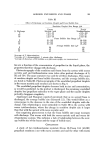
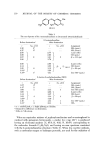
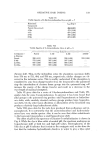
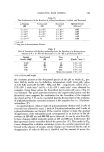
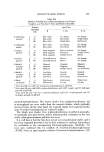
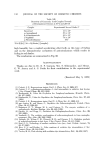
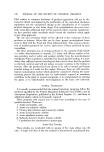
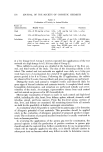
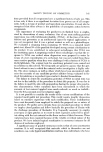
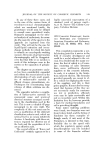
OXIDATIVE HAIR DYEING 127 Table XII Stability of Shades from p-Phenylenediamine and Various Couplers, as a Function of Time and Relative Humidity Relative Humidity (%) Age/Color 0 1 mo. 3 IllO. 2,4-Diamino- ( 0 Blue-violet No change No change toluene a 35 Blue-violet Blue-black Purple-black 88 Blue-violet Purple-blue Red-brown 2,4-Diamino- { 0 Blue-violet No change No change anisole 88 Blue-violet Blue-black Blue-black m-Amino- { 0 Deep magenta Brown overtone No changebrown phenoP 35 Deep magenta Brownish Golden 88 Deep magenta Golden brown Brown m-Amino- ( 0 Greenish brown Brown No change phenol ø 88 Greenish brown Brown No change 6-Methyl- { 0 Magenta Magentared-brown 3-amino- 35 Magenta Magenta Magenta phenoP 88 Magenta Pinkish brown Lt.
Magenta 4-Methyl- ( 0 Grey-blue Greyish Greyish 3-amino- 35 Grey-blue Greyish Greyish phenoP 88 Grey-blue Brown-grey Grey-brown 4-Ethyl- { 0 Pink-brown resorcinoP 88 Pink-brown Lt.
Pink-brown tan Lt.
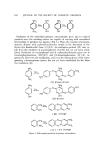
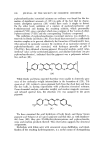
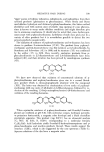
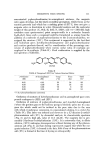
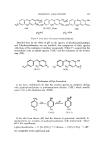
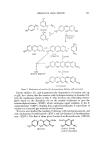
Pink-brown tan Tress dyed 20 min with 0.1% 2-amino-5-methylindamine at pH 9.95. Tress dyed 20 min with 0.05% p-phenylenediamine and 0.05% coupler and 3% hydrogen peroxide at pH 9.95. Tress dyed 20 min with 0.1% p-phenylenediamine and 0.1% m-aminophenol and 3% hydrogen peroxide at pH 9.5. amino-5-methylindamine. The brown shades from p-phenylenediamine and m-aminophenol are more stable than the magenta shades, which gradually become brown. On the other hand, the magenta shades from p-phenylenedia- mine/6-methyl-3-aminophenol are relatively stable. The bluish grey shades from p-phenylenediamine/4-methyl-3-aminophe- nol gradually turn grey-brown, clearly indicating that cyclization to the very stable violet phenoxazinium salt does not occur. It is well known that the blue dyes in hair are not particularly stable, and it has been suggested that this is due to their tendency to undergo intramolecu- lar cyclization to the corresponding 2,8-diaminophenazine (32,48,49). We have now confirmed this by isolation of 3-methyl-2,8-diaminophenazine (XXXII) from an aged aqueous solution of 2-amino-5-methylindamine (XI)

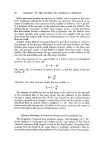
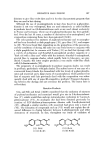
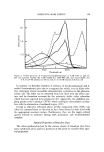
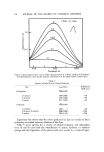
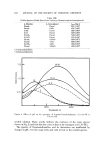
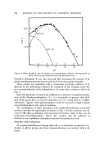
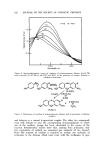
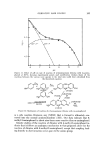
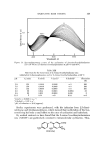
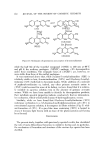
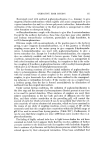
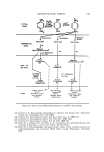
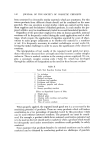
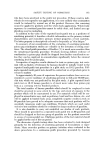
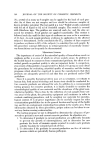
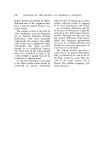
128 JOURNAL OF THE SOCIETY OF COSMETIC CHEMISTS •o.• 400 500 Wavelength, nm Figure 13. Effect of pH on the spectrum of 3,7-diamino-2-methylphenazine (1.0 x 10-•M) and from an aged hair tress which had been dyed with a mixture of p- phenylenediamine and 2,4-diaminotoluene. Figure 13 shows spectral data for the phenazine dye which is orange-yellow at pH 7.5 and red at lower pH, where it evidently exists as the aza-protonated species. That the intramo]ecu- lar cyclization of the aminoindamine is a clean reaction at pH~6 can be seen from its spectrophotometric course (Fig. 14). From similar spectrophotomet- ric studies, we have measured the rate of the cyclization reaction and have found it to follow a first-order rate law and to be virtually independent of pH over the range 5-8.5. At higher pH values, the rate of cyclization decreases with increasing pH, but the neutral aminoindamine dye is in fact ]ess stable than its conjugate acid and undergoes rapid decomposition to some species other than the diaminophenazine. The product of the latter reaction absorbs maximally at 490 nm, having a broad absorption which is independent of pH over the range 6-11. Isolation of the product formed at pH 11 showed it to be 2-amino-5-methylindoaniline (XIII), resulting from hydrolysis of the inda- mine at the terminal imino group. Analysis of the rate data for the consumption of 2-amino-5-methylindamine at 60øC is given in Table XIII. It is evident that the phenazine (XXXII) is formed by intramolecular cyclization of the conjugate acid (XVIII) of the indamine while the indoaniline (XIII) is formed by hydrolysis of the free base (XI), water being the active hydrolyric species. The mechanism of these reactions is shown in Fig. 15.
Purchased for the exclusive use of nofirst nolast (unknown)
From: SCC Media Library & Resource Center (library.scconline.org)