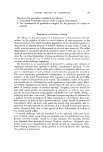
SAFETY TESTING OF COSMETICS 14,5 Therefore, the procedure consists of two phases: 1. Evaluation of biostatic activity of the complete formulations. 2. The examination of production samples for the presence of viable or- ganisms. Evaluation o1' Biostatic Activity The efficacy of the preservative in a preparation is determined in the lab- oratory by the addition of pure or mixed cultures of microorganisms to the finished product. The initial microbial population of the inoculated product is determined by plating aliquots of suitable dilutions in agar media. Counts of viable microorganisms are redetermined at selected time intervals. The initial populations in inoculated products should be about 5 x 10 5 per ml or g. Ali- quots of inoculated products are plated at various testing intervals to deter- mine the microbial population. Various neutralizers for the preservative pres- ent in the formulation can be added to the plating media to insure maximal recovery of the challenge organisms. The inoculum to be used should l'•e prepared by mixing pure cultures of organisms isolated h'om spoiled or grossly contaminated products. In the event this procedure is not feasible, pure cultures of organisms which are sus- peck as contaminants of such products can be mixed to prepare the incoulum. The most commonly encountered contaminants in industrial products are members of the genus Pseudomonas. This organisln is generally the most diffi- cult to control in the products to be tested. The inhibitory action of the prod- ucts should also be challenged by such organisms as Aspergillus niger, Bacil- lus subtilis, Staphylococcus aureus, Escherichia coli, and others which are ca- pable of causing disease or product spoilage. Sampling intervals should be such that rapid growth of contaminants is detected, as well as very slow growth. In some materials contaminants will proliferate very rapidly during a relatively short time (one week). This rapid increase may then be followed by a gradual decrease in numbers of viable organisms to a level below that origi- nally present. In both of these growth patterns, counts should be performed immediately, after one week, and again one month after inocualtion and re- peated at 4-month intervals for 12 months. If it is desired to determine preser- vative adequacy only over a short period of time, termination of testing at one month should suffice. A second challenge with the inoculum may be indicated with some prod- ucts. Products whose usage from one container may be distributed over long periods (several months) would be in this category. The biostatic activity may diminish after prolonged storage. Products which are adequately pro- tected at the time of production may permit growth of contaminants intro- duced during extended use. If the product is used up shortly after opening, this problem is eliminated.

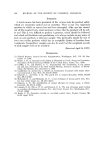
146 JOURNAL OF THE SOCIETY OF COSMETIC CHEMISTS SUMMARY A short resume has been presented of the various tests for product safety which are commonly carried out on cosmetics. There is one very important question to which an answer has not been attempted. After one has carried out all the required tests, what assurance is there that the product will be safe to use? This is very difficult to predict. A practice, which should be followed and which will facilitate such predictions, is to always include in any series of tests on new products a reference sample. This preferably should be one of your own similar products which has an acceptable history of freedom from complaints. Competitors' samples can also be used, but the complaint records of such samples will not be available. ( Received April 14, 1972) REFERENCES (1) Federal Register, General Services Administration, Washington, D.C., Vol. 9.9, Sep- tember 17, 1964. (2) Draize, J. H., in Appraisal of the Safety of Chemicals in Foods, Drugs and Cosmetics, Association of Food and Drug Officials of the United States, Austin, Tex., 1959. (3) Griffith, J. E., and Buehler, E. V., Experimental skin sensitization in the guinea pig and man, Presented at the 28th Annual Meeting, American Academy of Derma- tology, Bal Harbour, Fla., December 9, 1969. (4) Landsteiner, K., and Jacobs, J., Studies on sensitization of animals with simple chem- ical compounds, J. Exp. Med., 61, 643-56 (1935). (5) Schwartz, L., and Peek, S. M., The patch test in contact dermatitis, Public Health Rev., 59, 2 (1944). (6) Shelanski, H. A., and Shelanski, M. V., A new technique of human patch tests, Proc. Sci. Sect. Toilet Goods Ass., 19, 46-9 (1953). (7) Kligman, A.M., The identification of eontaet allergens by human assay, J. Invest. DermatoL, 47, 369-74 (1966). (8) Lanman, B. M., Elvers, W. B., and Howard, C. S., The role of human patch testing in a produet development program, Proc. Joint Conf. Cosmet. Sci., Washington, D.C., 135-45 (1968). (9) Bruch, C. W., Cosmetics sterility vs. microbial control, Amer. Perrum. Cosmet., 86, 45-50 (April 1971).
Purchased for the exclusive use of nofirst nolast (unknown)
From: SCC Media Library & Resource Center (library.scconline.org)