136 JOURNAL OF THE SOCIETY OF COSMETIC CHEMISTS FDA relative to voluntary disclosure of product ingredients will not be dis- cussed in detail. Accompanying the publication of the ingredient disclosure regulations was the unexpected change in the classification of 13 cosmetic product categories as also being drugs. This reclassification does not neces- sarily mean that additional tests will be required. Many cosmetic manufactur- ers have product safety standards which exceed the standards which apply to new drug approvals. The one area of testing which will be affected is the evaluation of these products on humans. Before this can be done, proper investigational forms must be filed xvith the Food and Drug Administration. This requires submis- sion of detailed protocols for review, and review of these protocols by peer committees. The three ,principal aras of testing pertinent to the cosmetic field include (a) safety determinations in animals, (b) safety and efficacy studies in hu- man panelists, and (c) safety and product stability from the microbiological standpoint. When a product is submitted for human panelist testing, it is man- datory that sufficient animal toxicological data exist to show that the product is relatively nontoxic and will not induce excessive reactions in the testing on humans. After the product has been shown to be safe in animal and human panelist testing, it is ready for the market. However, there are still microbio- logical contamination factors which should be considered. During the manu- facturing process the product may be inadvertently exposed to unsanitary conditions in the plant or around equipment, or to contaminated air entering the plant, or to obiectionable microorganisms in the basic raw materials. ANIMAL TOXICOLOGY It is usually recommended that the animal toxicology programs follow the protocols specified by the Federal Hazardous Substances Act (FHSA) and its subsequent Regulations, published in the Federal Register (1), and those of additional studies which are frequently required. These programs wfil require one or more tests according to the type of product involved. These are: 1. Acute oral toxicity-rats 2. Acute eye irritation-rabbits 3. Primary skin irritation and corrosivity-rabbits 4. Acute dermal toxicity-rabbits 5. Acute inhalation toxicity-rats 6. Subacute dermal (21-day) toxicity-rabbits 7. Landsteiner skin sensitization in guinea pigs Acute Oral Toxicity These studies are conducted with six groups of five male albino rats (30 rats). A single oral dose of the test material is administered at graduated dos-

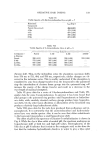
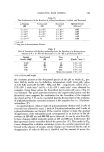
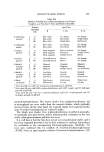
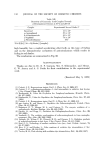
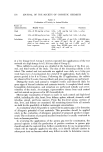
SAFETY TESTING OF COSMETICS 137 age levels. The rats are observed for gross signs of systemic toxicity, pharma- cological effects, and mortality at frequent intervals during the day of dosage, and at least once daily thereafter for 14 days. Gross autopsies are performed on any animals xvhieh die. Acute Eye Irritation Six albino rabbits are used in these tests. One-tenth milliliter of a liquid test material, or 100 mg of solids or pastes, is placed in one eye of each of the rabbits. The opposite eye is untreated and serves as a control. Readings for eye irritation are made at 24, 48, and 72 hours following application. The scor- ing scale for recording eye irritation is that of Draize (2). Primary Skin Irritation and Corrosivity The test material is applied under a 1-in. 2 gauze patch to both an intact and an abraded skin area on each of six albino rabbits, whose trunks have been clipped free of fur. Four patches can be applied, allowing for two sam- ples to be tested on each animal. Acute Derreal Toxicity This study uses four groups of four albino rabbits. A single derreal appli- cation of the test material is made to each group at graduated dosage levels. The skin of two rabbits per group is abraded the skin of the two remaining rabbits per group remains intact. The test material is applied under a rubber dental dam and remains in contact with the skin for 24 hours while the ani- mals are restrained in stocks. Acute Inhalation Toxicity Ten male albino rats are exposed in an inhalation chamber for one hour to an atmospheric concentration .of 20,000 ppm of gas .or vapor or 200 mg/1. of mist or dust. The rats are observed during the exposure period and daily for 14 days for gross signs of systemic toxicity. Gross autopsies are performed on rats which die. Standard criteria are used to evaluate the results of 'these various animal studies as shown in Table I. Subacute Derreal (21-Day) Toxicity This study evaluates the percutaneous absorption and irritative potential of the test material following subacute derreal application to rabbits. The test is not specified by the regulation but is frequently carried out. Eighteen young adult albino rabbits are divided randomly into three groups of six rabbits each. Group 1 is the control group and receives repeated skin applications of dis- tilled water. Group 2 receives repeated skin applications of the test material
Purchased for the exclusive use of nofirst nolast (unknown)
From: SCC Media Library & Resource Center (library.scconline.org)