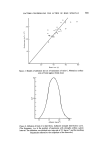
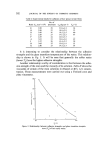
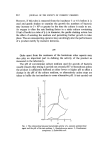
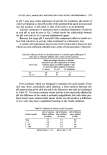
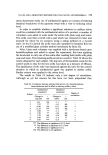
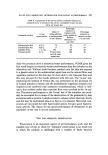
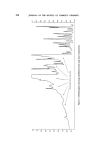
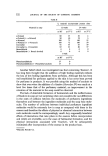
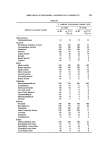
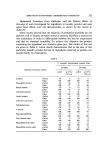
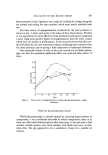
IN-USE AND LABORATORY METHODS FOR EVALUATING ANTIMICROBIALS 313 at pH 7 may give a false impression of activity for cosmetics, the extent of which will depend on the pH profile of the antimicrobial agent incorporated into the product. A pH closer to that of the skin is to be preferred. Cationic substances in particular show a marked diminution of activity at acid pH as may be seen in Fig. 1 which shows the relationship between the pH and activity of a cationic antibacterial agent. Between the range pH 5 and pH 8 this compound suffers as much as a four-fold reduction in activity when examined by a laboratory test. A similar pH dependence may be seen if the compound is tested on skin which has been artificially infected with a series of test bacterium (Table III). Table III. Influence of pH on the performance of a cationic agent (500 •g ml -x) when skin is artificially infected with a series of test bacterium pH of skin Mean percentage reduction in bacteria achieved 5 min after application of culture. Cationic agent and buffer applied to skin 1 h previous before addition of bacteria $. aureus E. coli Ps aeruginosa 4.5 34 14 5 6.5-7.5 87 97 88 Even products which are designed to maintain the acid mantle of the skin may show, particularly upon dilution, a wide variation between the pH appertaining at the skin site and in the laboratory test tube as is indicated in Table IV. For those products whose activity is not materially affected by pH the difference of two units is probably insignificant, but with other pro- ducts based upon antimicrobial agents which are pH sensitive a difference of two units may have a significant bearing on the results obtained. Table IV. Influence of culture on pH of product Product tested pH of solution pH of dilution before addition after addition of culture of culture pH of dilution when applied to skin Neat 5.7 5.7 5.9 1:3 6.0 6.3 5.7 1:10 6.2 6.3 5.4 1:1• 6.7 7.0 5.0 pH of culture = 7.2. pH of skin = 5.0.

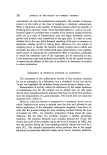
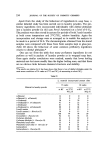
314 JOURNAL OF THE SOCIETY OF COSMETIC CHEMISTS EFFECT OF SUBSTANCES PRESENT ON THE SKIN Currently laboratory evaluation of a product suffers from the dis- advantage that it cannot take account of all the substances present on the skin which might influence the performance of the antimicrobial agent. Organic excretions from the skin can be demonstrated, in laboratory tests, to inactivate many antibacterial agents, yet these same antimicrobial agents when applied to the skin exert an antibacterial effect. The reasons for this are simple they relate to the relative quantities of the excreted material. The quantity of substances such as sebum, fatty acids, proteins and soap, etc. present on the skin are relatively small, and because of this the anti- bacterial agent is able to act competitively between these substances and the bacterial cells. In most laboratory tests in which attempts are made to represent the situation appertaining on the skin, material representing organic excretions is usually used in excess and moreover is often added to the product prior to the addition of the bacterial culture. This latter action in itself can have a profound effect as may be seen from Table V in which PCMX is shown to be eight times more active when 10•o blood is added along with the culture rather than prior to the addition of the culture. Table V. Concentration of PCMX killing Staphylococcus aureus in the presence of 10 % blood when the blood is added before the culture and with the culture Concentration of PCMX required to kill 0.5 ml 24 h culture added to 5 ml of PCMX solution plus 0.5 ml blood Before the culture 4.8 mg ml -x With the culture 0.6 mg ml -x Although the quantity and quality of organic excretions on the skin may differ from person to person and in the individual on different sites and at different times it is necessary to establish these limits so that these limits may be applied in time to both the laboratory and simulated 'in-use' tests. DESIGN OF TESTS Design of test, be it a laboratory test, simulated 'in-use' test or 'in-use' test, is very important. However, it is often impossible to predict before- hand some of the factors which might be involved.
Purchased for the exclusive use of nofirst nolast (unknown)
From: SCC Media Library & Resource Center (library.scconline.org)