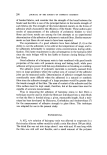
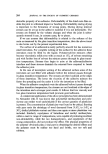
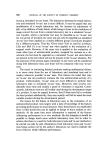
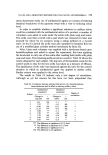
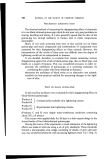
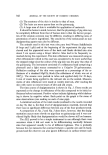
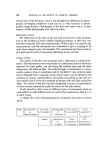
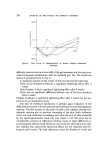
346 JOURNAL OF THE SOCIETY OF COSMETIC CHEMISTS control sites of the forearms, since it was thought that differences in photo- graphic developing conditions could lead to a wide variation in photo- graphic image density. Photographs of the face were taken with a 35 mm camera. All the photographs were taken in colour. Reflectance of skin The reflectance of the skin on the test and control sites of the forearms and on the forehead of those subjects applying products to their face was measured using the EEL spectraphotometer. 'White Light' was used for the measurements, and the instrument was calibrated to give a reading of 50 units when using the grey tile standard. This instrument had been found to give quite good results in measuring lightening in test animals. Colour of skin The colour of the skin was measured with a reflectance Lovibond tinto- meter. The instrument consists essentially of a reflectance head to which are attached two light guides, one delivering the incident light and the other taking away the reflected light. The reflected light is transmitted to a mon- ocular eyepiece where it constitutes half of the field of view while the other half is obtained from a separate source whose colour can be altered by the insertion of various coloured filters. The probe was placed on the skin sur- face and the colour of the skin matched by means of the red, blue and yellow filters. The colour of the skin was then designated in terms of combinations of these colours required to match the colour of the skin surface. In all, therefore, there were six different types of assessments made on each subject on eight different sites on each formal examination after 0, 1, 2, 4 and 8 weeks. A simple flow chart demonstrating the evaluation procedure is shown below. E'nter JJExamination Full-face photograph Photographs t Grey scale [.[ Visual of assessment assessment forearms Depart Application of creams assesment ] reflectance (Lov/Do,'•d) /measurement

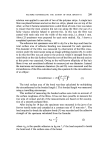
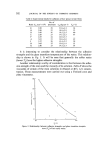
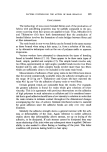
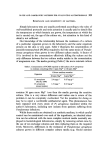
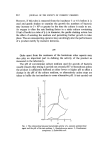
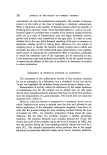
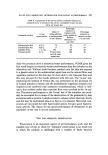
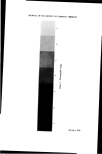
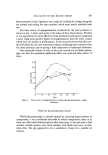
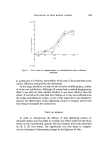
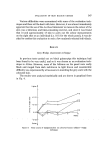
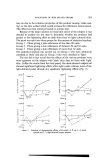
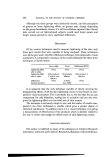
EVALUATION OF SKIN BLEACH CREAMS 347 Various difficulties were encountered with some of the evaluation tech- niques and these will be dealt with later. However, it was almost immediately apparent that the use of the Lovibond tintometer to measure the colour of the skin was a laborious and time-consuming exercise, and since it was found that it took approximately 15 rain to carry out the colour measurements on the eight sites on an individual (i.e. 10 h for the whole panel), it was de- cided to confine this evaluation to only a few randomly-selected individuals. RESULTS Grey Wedge Assessment technique In previous tests carried out on black guinea-pigs this technique had been found to be very useful, and so it was chosen as an evaluation tech- nique in Africa. However, none of the Africans on the panel were really black and ranged from dark red-brown to light brown and considerable difficulty was experienced by all assessors in matching the grey scale with the coloured skin. The results were analysed statistically and are shown in graphical form in Fig. 4. Figure 4. +0.10 +0-05 Lighter { D C A B o.oo %•...x,,,6 • 4 6 8 Weeks .20.05 .'_ ...... Darker • Time course of depigmentation on coloured human subjects--wedge technique.
Purchased for the exclusive use of nofirst nolast (unknown)
From: SCC Media Library & Resource Center (library.scconline.org)