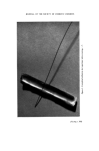
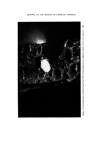
328 JOURNAL OF THE SOCIETY OF COSMETIC CHEMISTS o O O O O O O 113 (D b-- 0D 03 -- I I I I o o • o m o o o o o o

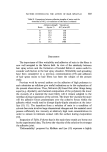
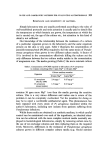
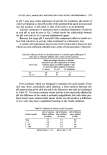
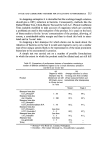
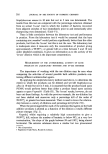
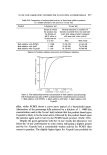
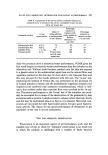
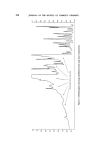
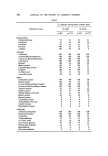
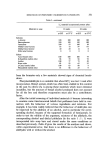
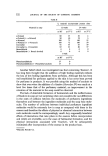
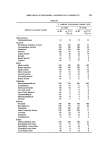
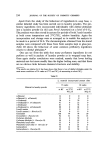
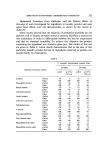
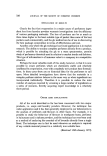
BEHAVIOUR OF PERFUMERY INGREDIENTS IN PRODUCTS 329 when no residual traces of the ingredients could be found. Losses of the majority of perfumery materials during the weighing and sample loading procedure were minimal and a coefficient of variation of d-7• relative was obtained for the method when analysing a mixture of cineole, linalool, benzyl acetate, benzyl benzoate and diethyl phthalate in superratted soap. To carry out controlled storage tests it was necessary to use a stable reference material which would be incorporated into the product with the ingredient under investigation. It was also desirable that this reference material should be odourless so that parallel odour assessments could be made. Diethyl phthaIate (DEP) was selected as it is both odourless and stable in soap bars under the conditions of storage that were to be used in the test. The suitability of DEP was confirmed by incorporating a mixture of benzophenone (which had previously been shown to be stable by uv measurements) and diethyl phthalate in soap bars and analysing samples from the centre of each bar after various periods of storage. The behaviour of each ingredient was studied in the following manner. A mixture of the ingredient and diethyl phthalate (ratio of about 1: 1) was incorporated in superratted soap at 0.2• the soap was plodded into bars 3"x 1" and wrapped in standard glassine and glazed paper wrapping. The bars were then stored for both 12 and 24 weeks both at room tempera- ture (c. 20 ø) and at 37 ø. Samples were taken from the centre of each bar and analysed by glc. Chromatograms were compared with those obtained from freshly prepared bars of perfumed soap (1 week old to allow equili- bration of distribution). The incorporation and storage were arranged so that analyses could be carried out within a 24 h period. RESULTS Table I gives the results obtained for some common perfumery materials. Although some results have been omitted, no general conclusions could be drawn as to relationships between behaviour and chemical class except in the case of formates, which all showed a tendency to hydrolyse and pro- duce the parent alcohol. Low boiling materials generally were lost more readily than the higher boiling materials. Samples taken from the surface layers of the wrapped bars had the same composition as those taken from the centre, which proves that any loss other than by chemical breakdown is governed, in the case of the wrapped bar, by the rate at which the ingre- dient migrates through the wrapper and hence into the atmosphere. Apart
Purchased for the exclusive use of nofirst nolast (unknown)
From: SCC Media Library & Resource Center (library.scconline.org)