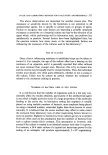
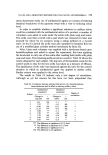
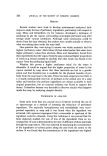
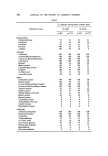
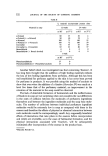
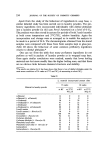
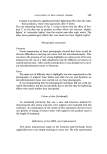
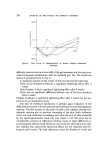
332 JOURNAL OF THE SOCIETY OF COSMETIC CHEMISTS Table II material incorporated present after Material in soap 12 weeks 24 weeks at RT at 37øC at RT at 37øC n-Octanal 80 35 30 4 n-Octanal (+ n-Octanol) 90 40 28 6 n-Nonanal 100 75 100 55 n-Nonanal (+ n-Nonanol) 100 72 100 50 Citronellal 91 93 83 59 Citronellal (+ Citronellol) 95 91 80 57 Benzaldehyde 0 0 0 0 Benzaldehyde (+ Benzyl alcohol) 0 0 0 0 1 week at RT at 37øC Phenylacetaldehyde 37 0 Phenylacetaldehyde (-t- Phenylethyl alcohol) 37 0 Another belief which was investigated was that concerning 'fixation'. It has long been thought that the addition of high boiling materials reduces the loss of low boiling ingredients from perfumes. Although this has been well established for perfumes applied to the skin it has never been proved for perfumes in products. It was possible using this method of analysis to show that even when the addition of a fixative (Hercolyn D*) was made at a level five times that of the perfumery material, no improvement in the retention of the material in the soap could be observed. The lack of detectable formation of hemiacetals and the ineffectiveness of fixatives in soap are not surprising when one considers the vast differences in the rates of collision between the molecules of perfumery ingredients themselves and between the ingredient molecules and the soap base mole- cules. The number of collisions between individual perfumery ingredient molecules would be extremely low in soap as compared with those in the essence and therefore the effects of physical or chemical interaction between such molecules would be correspondingly small. Any supposedly beneficial effects of interactions that take place in the essence before incorporation and which are reversible, as in the cases of hemiacetal formation, and the physical interactions associated with 'fixatives', will be subsequently minimized after incorporation of the essence in the product base. *Hercules Powder Co.

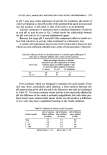
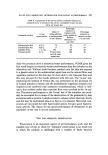
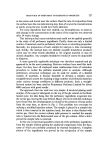
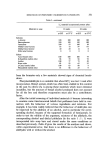
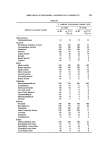
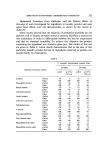
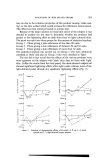
BEHAVIOUR OF PERFUMERY INGREDIENTS IN PRODUCTS 333 Table III Material in laundry powder material incorporated present after 12 weeks 24 weeks at RT at 37øC/ at RT at 37øC/ 70 % rh 70 % rh Hydrocarbons Diphenylmethane 62 24 72 33 Alcohols Phenylethyl dimethyl carbinol 100 100 100 95 Caryophyllene alcohol 100 100 100 88 Dodecanol 100 100 100 70 Decanol 100 84 92 67 Anisyl alcohol 64 40 45 19 Borneol 77 31 37 0 Benzyl alcohol 65 18 31 0 Linalool 38 8 27 0 Esters Musk oxalide 100 100 100 100 Benzyl benzoate 100 100 100 71 Gardocyclene 94 69 98 70 Ethyl cinnamate 59 67 63 38 Geranyl acetate 67 12 54 0 Citronellyl acetate 65 0 31 0 Benzyl acetate 18 0 13 0 Aldehydes Hexylcinnamaldehyde 100 100 100 100 Anisaldehyde 30 14 17 13 Hydroxycitronellal 80 40 75 0 cis Citral, neral 40 0 0 0 trans Citral, geranial 40 0 0 0 Cinnamaldehyde 28 0 0 0 Phenylacetaldehyde 20 0 7 0 Decanal 14 0 0 0 Ketones Versalide 100 100 100 100 Benzophenone 100 90 91 89 Celestolide 100 100 100 71 Methyl naphthyl ketone 100 100 100 71 •-Ionone 86 26 78 4 Jasmalone 92 20 72 0 Acetophenone 0 0 0 0 Ethers Methyl diphenyl ether 100 100 100 83 [•-Naphthyl ethyl ether 93 76 97 66 Phenylethyl n-butyl ether 44 15 38 0 Phenylethyl amyl ether 35 0 23 0 Amyl benzyl ether 40 0 12 0
Purchased for the exclusive use of nofirst nolast (unknown)
From: SCC Media Library & Resource Center (library.scconline.org)