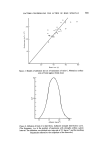
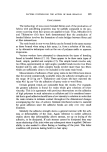
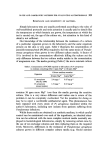
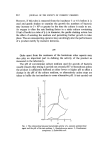
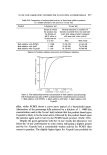
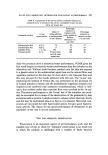
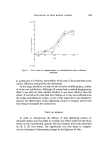
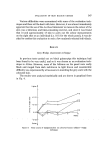
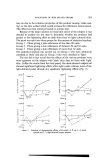
342 JOURNAL OF THE SOCIETY OF COSMETIC CHEMISTS (1) The anatomy of the skin is similar to that of man. (2) The hairs are more sparse than on the guinea-pig. (3) A large area of skin is available for application of materials. It should be borne in mind, however, that the physiology of pig skin may be completely different from that of human skin in that the barrier proper- ties of the stratum corneum may be different, resulting in differing rates of penetration of active ingredients. The sensitivity of the melanocytes to skin depigmenting agents may also be different. The animals used in this test were nine pure bred Wessex Saddlebacks (8 hogs and 1 gilt) and at the beginning of the experiment the pigs were shaved and the pigmented area of the back and flanks divided into sites about 5 cm square using a Magic Marker. Sites had to be frequently re- marked during the experiment. The skin reflectance was measured using an EEL reflectometer which in this case was considered to be more useful than the stepped wedge since the colour of the pig skin was less grey than that of the guinea-pig. The instrument consisted of a reflectance head comprising a photocell and a light source connected to a Unigalvo 20 galvanometer. Reflection readings of the skin were expressed as a percentage of the re- flectance of a standard MgCOs block (the reflectance of which was set at 100•o). The creams were packed in tubes and applied daily for 38 days, 6 mm of cream being applied to the relevant site on the animal. Measure- ments of skin reflectance were made at weekly intervals, after washing the skin with water to remove traces of dirt and old cream. The time course of depigmentation is shown in Fig. 3. These results are expressed as the change in reflectance of the skin compared to its initial re- flectance before treatment. Positive values indicate lightening whilst darken- ing is shown by negative values. Each point on the graph is the mean of nine observations (one reading on each of nine pigs). A statistical analysis of the total results (confined to the results recorded on day 38, that is, the final level of depigmentation reached), showed that there was no significant difference between any of the four products tested. A comparison of Fig. 2 and Fig. 3 does show, however, that the depig- menration occurs more slowly on pigs than on guinea-pigs and it was con- sidered highly likely that depigmentation would be slower still on humans. The EEL proved to be a simple instrument to use although there were occasions when it did not seem to be differentiating markedly between sites that appeared visually to be of different lightness. This is probably because the eye measures the contrast between a specific site and its back- ground and the observer can also ignore differences in surface texture such

EVALUATION OF SKIN BLEACH CREAMS 343 L•õh•er l IO 6 Dorker Figure 3. Time course of depigmentation on black-skinned swine--reflection technique. as scaling due to irritation, and stubble, which may in fact contribute to the surface reflection measured by the instrument. At this stage, therefore, we had two sets of rather conflicting data, neither of which was satisfactory. Although all creams had a marked depigmenting effect it was still not clear whether Product A was more effective than the others. It was felt at the time that the irritation of A may have affected both the wedge and reflectance values. It was at this stage that it was decided to measure the effectiveness of skin lightening creams on humans and for the time being to disregard the animal tests. TESTS ON HUMANS In order to demonstrate the efficacy of skin lightening creams on coloured subjects and if possible to correlate any effects achieved with those shown on the experimental animals, the four products previously described (A, B, C, D) were tested. The opportunity was also taken to compare various techniques of measuring changes in the lightness of skin.
Purchased for the exclusive use of nofirst nolast (unknown)
From: SCC Media Library & Resource Center (library.scconline.org)