J. Soc. Cosmet. Chem. 25 339-354 (1974) ¸ 1974 Society of Cosmetic Chemists of Great Britain Evaluation of skin bleach creams K. V. CURRY* Presented on I2th November 1973 in Nottingham, at the Sym- posium on 'Evaluation of Product Performance', organized by the Society of Cosmetic Chemists of Great Britain. Synopsis--The use of test animals to screen DEPIGMENTING CHEMICALS is described and an attempt is made to correlate these results with tests carried out on humans. A comparison of various techniques used for measuring changes in SKIN LIGHTNESS showed that the method of visual assessment using a simple numerical scoring system was the simplest and gave the most statistically significant results. Products based on hydroquinone or its derivatives, and designed to lighten the skin colour of the dark skinned races in Africa, Asia and the U.S.A., have been marketed for many years. A considerable amount of data on the depigmenting effects of the chemicals on black guinea pigs is available (1-3) and since the products containing these chemicals have a fairly high volume of sales one must assume that they have some degree of effectiveness on humans. However, although there have been reports in the literature of the treatment of specific problems of skin hyperpigmentation with hydro- quinone compounds, no work on the quantitative evaluation of the depig- menting effect of skin lightening creams on coloured races has yet been published. There are two closely related problems that are encountered in the selection of suitable depigmenting agents for skin lightening creams. The first is that of setting up a suitable test method for the rapid screening of large numbers of compounds in order to narrow them down to one or two with the required effects. Coupled with this is the problem of selecting a method to measure changes in skin colour produced by the test material (4). * Unilever Research, Isleworth Laboratory, 455 London Road, Isleworth, Middlesex, TW7 5AB. 339

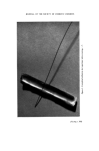
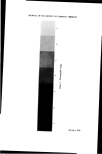
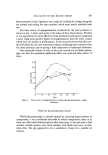
340 JOURNAL OF THE SOCIETY OF COSMETIC CHEMISTS PRELIMINARY SCREENING TESTS The classical method of measuring the depigmenting effect of chemicals is to use black-skinned guinea-pigs which do not pose very great problems in rearing, handling and testing. It is also generally agreed that the skin of the guinea-pig has enough similarity to human skin to make comparisons meaningful. Many of our early screening tests were in fact carried out on black guinea-pigs and many compounds and combinations of compounds were examined for their depigmenting effects on these animals. However, the interpretation of the results of these tests was difficult since the degree of lightening could not be extrapolated to humans. It was decided, therefore, to evaluate four creams containing various depigmenting agents first of all on black guinea-pigs, then on black pigs, and finally on a panel of humans. This was considered necessary in order to: ascertain the usefulness of guinea-pigs as a screening technique by correlating the results with those obtained on humans determine the usefulness of black swine as an alternative test animal establish the best practical method for measuring changes in the light- ness of skin. TESTS ON BLACK GUINEA-PIGS In this test four products were evaluated for their depigmenting effect on black-skinned guinea-pigs: Product A } Commercially-available skin lightening creams Product B Product C } Experimental skin lightening creams Product D (Products C and D were simple water-continuous emulsions containing about 20•o oil phase.) The creams were applied daily for 26 days in a latin square design to the shaved backs of four black-skinned guinea-pigs. During the course of the experiment a visual estimation of the lightening effects was made at intervals using a set of grey standards. These standards formed a photographic step wedge consisting of shades of grey and each step was numbered arbitrarily with increasing lightness from 1 to 7 (Fig. 1).
Purchased for the exclusive use of nofirst nolast (unknown)
From: SCC Media Library & Resource Center (library.scconline.org)