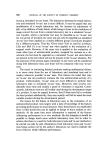
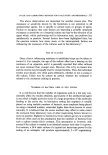
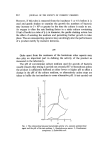
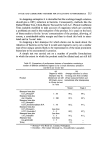
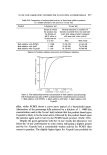
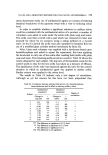
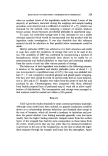
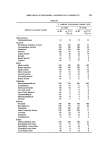
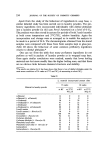
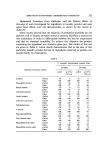
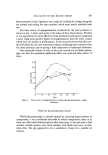
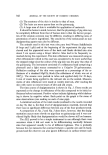
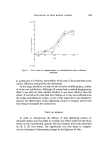
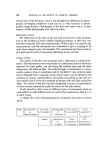
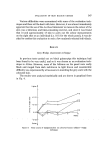
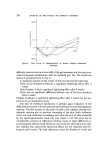
35O JOURNAL OF THE SOCIETY OF COSMETIC CHEMISTS Lighter' +05 0.0 - 0-5 Darker x Figure 6. Time course of depigmentation of human subjects--reflectance technique. difficulty observed was in a slow drift of the galvanometer but this was over- come by frequent recalibration with the standard grey tile. The results are shown in graphical form in Fig. 6. A statistical analysis of the results of this test showed the following. None of the products produced a significant lightening effect after 4 weeks. Only Product A had a significant lightening effect after 8 weeks. There was no significant difference between any of the four products after 8 weeks. Product B did give a significant lightening effect after 2 weeks but this ap- pears to be an anomalous result. The lack of statistical significance is perhaps again indicative of the difficulties associated with instrumental measurements on non-homogeneous surfaces. The skin surface on the arms of quite a few subjects showed con- siderable scarring due to previous wounding of the skin (both deliberate tribal cuts and accidental wounding), and since the area of skin evaluated by the spectrophotometric head was only about 1 cm •' this gave rise to considerable variation in reflectance readings owing to slight differences in positioning the reflector head. However, the results are still useful since they also indicate that appreciable lightening effects are not obtained until be- tween 6 and 8 weeks. The high reflectance values for Product A in this test

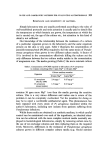
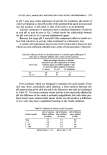
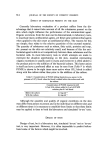
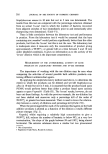
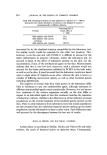
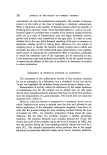
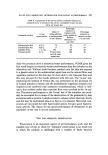
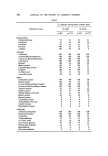
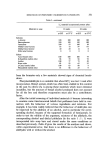
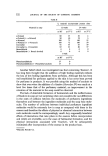
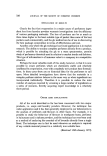
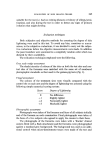
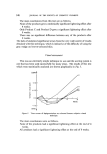
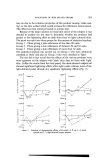
EVALUATION OF SKIN BLEACH CREAMS 351 may be due to the irritation properties of this product causing 'white scal- ing' on the skin surface which would increase the reflectance measurement. This effect has been noted previously in animal tests. Because of the large variation in initial skin colour of the subjects it was decided to analyse the test data to determine whether the products had greater or less lightening effect on dark skins than on light coloured skins. The panel was split into three groups for the purpose of statistical analysis. Group 1 Those giving a skin reflectance of less than 28 units. Group 2 Those giving a skin reflectance of between 28 and 32 units. Group 3 Those giving a skin reflectance of more than 32 units. The statistical analysis was carried out on Group 1 who were arbitrarily classified as 'dark' and also on Group 3 who were classified as 'light'. The test did in fact reveal that the effects of the various products were more apparent on the subjects with 'dark' skin than on those with 'light' skin. Unlike the results from the total panel, the dark-skinned subjects all showed significant lightening effects after eight weeks whereas none of the light-skinned panel showed any significant lightening effects (Fig. 7). Lighter +1.0 +o.5 o.o -0.5 Darker Product A I { . .•/- -,•- -- - • Weeks Lighter Product C +0-5- 0.0 • XX ,// Weeks -0.5 X Darker { Lighter I 9'0i. . 'C}--•, 4 6 8 'El,,,, // Weeks -0,5 Darker J Lighter { •+0.5 0-0 -0.5 Darker Product D Figure 7. Variation of depigmenting effects of Products A-D on (--) dark- skinned and (- - -) light-skinned human subjects.
Purchased for the exclusive use of nofirst nolast (unknown)
From: SCC Media Library & Resource Center (library.scconline.org)