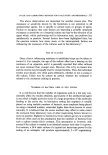
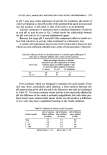
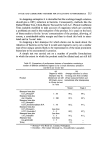
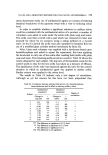
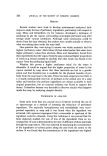
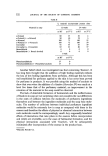
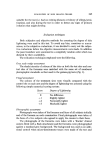
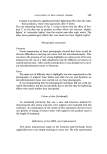
IN-USE AND LABORATORY METHODS FOR EVALUATING ANTIMICROBIALS 315 In designing antiseptics it is desirable that the working strength solution should give a 100• reduction in bacteria. Consequently, methods like the Rideal Walker Test, Chick-Martin Test and the A.O.A.C. Phenol Coefficient Tests (suitably modified to take account of organisms which are currently a problem) are used in the evaluation of the product. It is usual on the basis of these results to fix the 'in-use' concentration of the product, allowing, of course, a considerable safety margin and then to check this both in simu- lated and in 'in-use' tests. In designing a hair shampoo for which claims can be made about the reduction of bacteria on the hair it would seem logical to carry out a similar type of test using a species likely to be representative of the most prominent bacterium to be encountered in practice. A simple test was carried out on a number of possible formulations in which the extent to which the product could be diluted and yet still kill Table VI. Comparison of performance between a formulation containing a number of different antibacterial agents (a) by a simple laboratory procedure and (b) by an 'in-use' test Product (a) (b) Degree by which Average reduction in colony shampoo may be forming units from switches diluted and yet still of hair measured before and kill Staph. aureus immediately after shampooing in 10 min but not in 5 min Week 1 Week 2 Shampoo base plus 0.2 • Bronopol* 1: 30 98 •o 89 • Shampoo base plus zinc Ornadine 1: 200 93 •o 88 • Shampoo base plus 0.2 • Bronopol+ 0.25 • hexachlorophane B.P. 1: 10 92 • 87 • Shampoo base plus 0.2 • Bronopol+ Less than 0.25 • Fentichlor$ 1: 5 80 • 82 •o Shampoo base plus Less than 1.6% Iodophor 1: 5 75•o 81 •o Shampoo base Less than (no germicide) 1: 5 35 •o -- Water -- 5 % -- * Bronopol--The Boots Co. Limited, Nottingham. • Fentichlor--The Cocker Chemical Co., Oswaldtwistle, Lancashire.

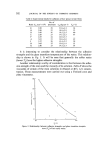
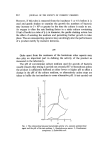
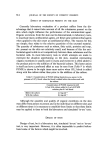
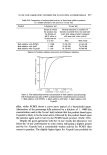
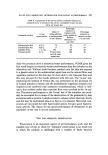
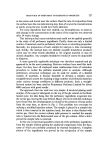
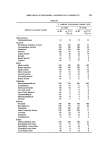
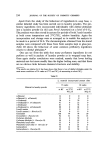
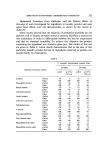
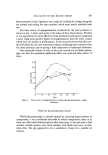
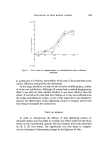
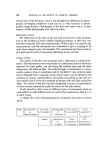
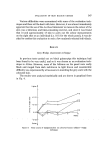
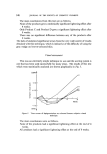
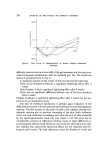
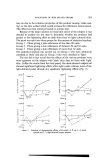
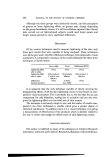
316 JOURNAL OF THE SOCIETY OF COSMETIC CHEMISTS Staphylococcus aureus in 10 min but not in 5 min was determined. The results from this test are compared with the percentage reduction obtained from an actual 'in-use' trial in which the number of bacteria recovered from adjacent switches of hair immediately prior to and immediately after shampooing were determined (Table VI). There is little correlation between the laboratory test and performance in practice. From the laboratory test it would be assumed that the base containing zinc omadine* would perform significantly better than the other products, but from the 'in-use' test this is not the case. The laboratory test is inadequate since it measures only the concentration of product giving approximately a 99.997•o or greater kill at a time between 5 and 10 min under idealized conditions. It gives no information as to the activity of the 'in-use' dilution which is the important concentration. MEASUREMENT OF THE ANTIMICROBIAL ACTIVITY OF BATH PRODUCTS BY LABORATORY METHODS AND IN-USE METHODS The importance of working with the use dilution may be seen when comparing the activities of several possible bath additive products con- taining different antimicrobial agents. By applying the simple laboratory method used above, to determine the extent to which the products can be diluted and yet kill Staphylococcus albus in 10 min but not in 5 min, it is assumed that the product based upon PCMX would perform better than either a product based upon cationic agents or upon Vespedol•' (Table IIIJ. The 'in-use' results, however, do not bear out these findings. As with the previous example, the use-dilution has not been studied and moreover only a percentage kill of the order of 99.997•o or greater has been measured. There is need to know the relation- ship between a variety of dilutions and percentage kill (Table VII,). When the percentage kill for each of the antimicrobial agents in the bath additive products is plotted as a function of the dilution a totally different picture emerges (Fig. 2,). Vespedol, whilst requiring a relatively high concentration to give a 99.997•o kill, reduces the number of bacteria to below 99•o at a very low concentration, 'the slope of the graph between 99 and 100•o being almost horizontal. The cationic substance shows a similar but less pronounced * Olin Corporation. •' Registered Trade Mark, Reckitt & Colman.
Purchased for the exclusive use of nofirst nolast (unknown)
From: SCC Media Library & Resource Center (library.scconline.org)