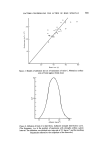
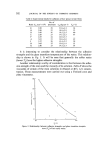
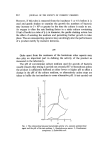
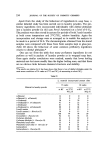
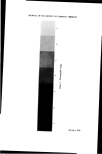
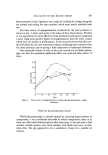
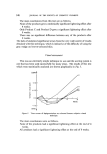
348 JOURNAL OF THE SOCIETY OF COSMETIC CHEMISTS The main conclusions from this test are as follows. None of the products gave a statistically significant lightening effect after 4 weeks. Only Product C and Product D gave a significant lightening effect after 8 weeks. There was no significant difference between any of the products after 8 weeks. The lack of statistical significance arises from the very wide scatter of results obtained with this technique, which is indicative of the difficulty of using the grey wedge on brown-coloured skin. Visual assessment This was an extremely simple technique to use and the scoring system is one that has been used successfully for many years. The results of this test which were statistically analysed are shown graphically in Fig. 5. The main conclusions were as follows. None of the products had a significant lightening ettbct at the end of 4 weeks. All products had a significant lightening effect at the end of 8 weeks.

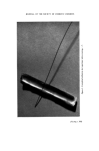
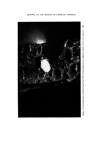
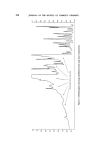
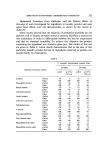
EVALUATION OF SKIN BLEACH CREAMS 349 Product C produced a significantly better lightening effect than the other three products, which were equivalent, after 8 weeks. The one interesting feature of Fig. 5 is that it shows that the effect of Pro- duct C on the skin was to produce an effect which was between 'slightly lighter' to 'noticeably lighter' than the control area after eight weeks. The other three products gave effects that were much less than 'slightly lighter'. Photographic assessment Forearms Visual examination of these photographs showed that there would be obvious difficulties in carrying out traces with the microdensitometer. This was due to the presence of very strong highlights on various parts of the arm arising from the use of a flash attachment and the different curvatures on control and test sites. After careful consideration it was decided not to carry out microdensitometer traces on forearms. Faces The same sort of difficulty due to highlights was also experienced on the photographs of subjects' faces before and after the test and therefore no microdensitometer traces were carried out on these photographs. It was disappointing that the photographic technique did not yield any useful information, but this was probably due to the fact that the lightening effects were much smaller than anticipated. Colour of skin (Lovibond) As mentioned previously this was a slow and laborious method for measuring the skin colour and only a few subjects were evaluated with this technique. An examination of the results of this assessment did not reveal any pattern of change of colour either with regard to the product used or the length of treatment. Reflectance of skin (EEL •7•ectrooehotometer) This direct measurement made on the forearms (and foreheads where applicable) was a very simple technique to carry out. The only experimental
Purchased for the exclusive use of nofirst nolast (unknown)
From: SCC Media Library & Resource Center (library.scconline.org)