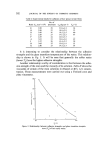
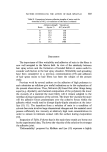
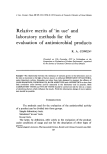
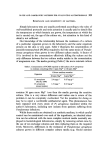
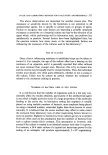
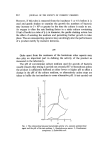
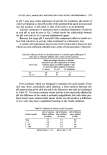
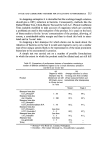
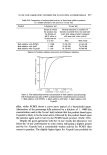
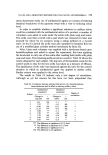
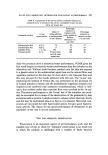
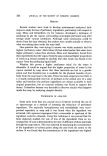
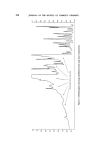
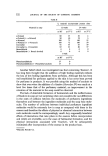
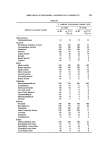
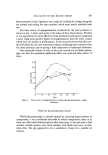
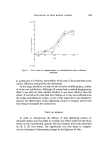
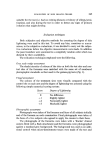
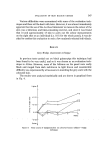
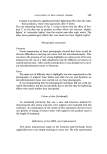
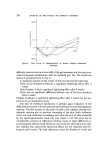
IN-USE AND LABORATORY METHODS FOR EVALUATING ANTIMIRCOBIALS 317 Table VII. Comparison of antimicrobial activity of three bath additive products in a simple laboratory test and in an 'in-use' test Product Laboratory test 'In-use' test Extent to which the product may be diluted yet kill S. albus in 10 min but not in 5 min Percent reduction in numbers of bacteria recovered from skin and bath water after using product compared with soap and water control Skin Bath water Bath additive with PCMX Bath additive with QAC Bath additive with Vespedol 1: 1500 53 (26-72) 63 (62-65) 1: 800 69 (51-89) 78 (55-90) 1: 140 81 (76-87) 95 (90-99) Figures in brackets represent maximum and minimum reduction. • 75 % 5o __ I o. 009 o. 025 o. 050 o- 075 o.I Concentrotion of beth edditive % w/v Figure 2. The relationship between concentration of bath additive and percentage kill of Staphylococcus albus at 40øC as determined by a simple laboratory procedure. 1, Bath additive with PCMX. 2, Bath additive with QAC. 3, Bath additive with Vespedol. effect, whilst PCMX shows a curve more typical of a bactericidal agent. Abstraction of the percentage kills achieved by a dilution of I: 4400 (the concentration used in the 'in-use' test) indicate that the product based upon Vespedol is likely to be the most active, followed by the product based upon the cationic agent and in turn by the PCMX based product (Table VIII). Despite the good agreement with the 'in-use' results the laboratory test belies the 'in-use' performance to some extent, indicating a slightly greater activity for Vespedol and a considerably weaker activity for PCMX than occurs in practice. The slightly higher figure for Vespedol can probably be

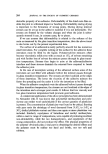
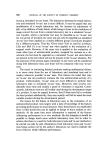
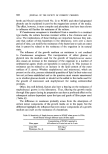
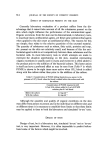
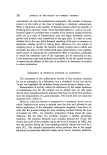
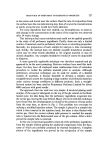
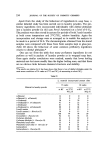
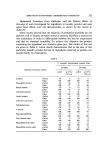
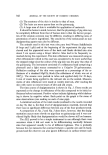
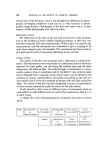
318 JOURNAL OF THE SOCIETY OF COSMETIC CHEMISTS Table VIII. Percentage kill given by bath additives at a dilution of 1: 4400 as abstracted from results obtained in a laboratory test designed to measure percentage kills at different dilutions Product Percentage kill of Staph. albus at 1:4400 Bath additive with PCMX 25 % Bath additive with cationic 80 % substance Bath additive with Vespedol 99.97 accounted for by the idealized situation exemplified by the laboratory test, but similar results would be expected for the other two products. This, however, is not the case and with PCMX it is difficult to account for the better performance in practice. Certainly, within the laboratory test, no account is taken of the effect of substances present on the skin, nor the accumulation, if any, of the antibacterial agent on the skin. Measurements indicate that this is very low and, moreover, such a situation would not account for the better performance exhibited by PCMX in the bath water as well as on the skin. It must be noted that the laboratory results are based upon a single strain of Staphylococcus albus, whereas the skin is host to a number of differing micrococcal species, as well as other bacterial species including diphtheroids. The majority of normal skin flora when grown in the laboratory differ little in resistance to any one antimicrobial agent, although resistance to different antimicrobial agents varies considerably. However, it is not known how resistance of the various organisms actually on the skin differ in respect to an individual agent or how this resistance matches the resistance of laboratory cultures. Neither is the effect known of the influence of mixed populations on the overall resistance of the bacterial species present on the skin. There is some indication from laboratory tests that mixed populations are less resistant than the individual bacterial species making up the mixed population, but the information to date is rather scant. Such differences may well account for the discrepancy between the two sets of results. AXILLAE ODOUR AND BACTERIAL NUMBERS Axillae odour is according to Shelley, Hurley and Nichols (4) and other workers, the result of bacterial action on apocrine sweat. Consequently,
Purchased for the exclusive use of nofirst nolast (unknown)
From: SCC Media Library & Resource Center (library.scconline.org)