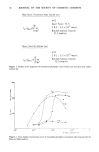
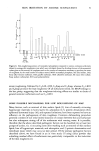
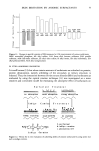
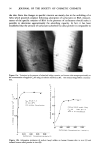
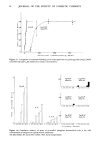
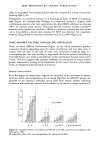
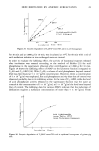
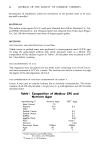
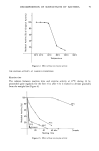
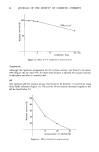
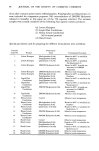
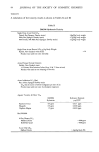
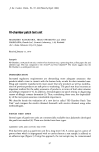
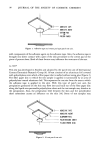
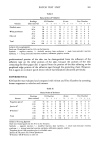
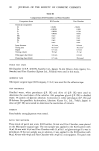
54 JOURNAL OF THE SOCIETY OF COSMETIC CHEMISTS the skin. Since the changes in specific rotation are mainly due to the unfolding of cr helix which proceeds stepwise following adsorption of surfactants on BSA, measure- ments of the specific rotation of BSA in the presence of surfactants should make it possible to determine approximately the adsorbing capacity. In fact, it has been established that the amount of surfactants adsorbed by callus powder is comparable to Figure 15a. Variation in the amount of adsorbed indigo carmine on forearm skin retroproportionally to the concentration of applied C•2AS using circulation method at 28C. 0.01 means 0.01g/10Oml concentra- tion. 1.0 0.5 C12 AS pH 7.0 10 rain 28Oc 150 ml/min Circulation •.5 1.o 0.5 mes30mpH C12 AS 10ml 7.0
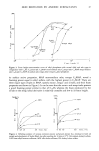
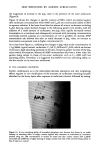
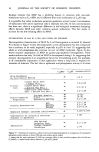
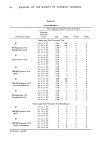
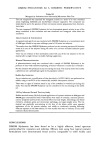
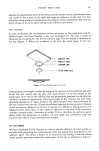
Callus 40Oc 6 hr incubation 0.61 0.62 0j)3 0.•)4 Surfactant COncentration ( mole/1 ) A 0.01 0.02 0.03 0.04 Surfactant Concentration (mole/1) Figure 15b. Adsorption isotherms of sodium lauryl sulfate on human forearm skin in vivo (A) and isolated human callus powder in vitro (B).

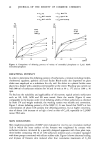
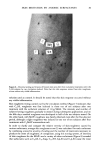
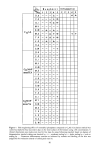
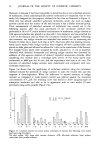
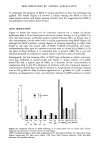
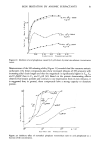
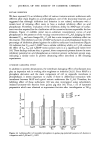
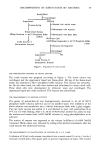
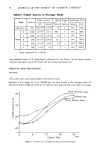
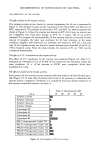
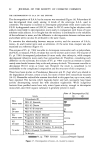
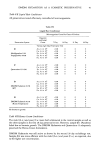
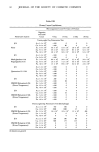
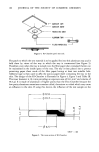
SKIN IRRITATION BY ANIONIC SURFACTANTS 55 the magnitude of increase in the [trip value in the presence of the same surfactants (Figure 9). Figure 10 shows the changes in specific rotation of BSA, which are plotted against their surfactant concentrations when MAP and C•0AS are continuously added to BSA in aqueous solution. It has been found that for almost all anionic surfactants including C•0AS, the [cr]D values showed changes in the following pattern (13) initially, with the addition of a small amount of surfactants, the [cr]• value rapidly decreased toward levorotation to a minimum and subsequently increased with increasing concentrations and finally reached a plateau at a concentration of 1.0-1.5 g/100ml. In contrast, MAP monosodium salt showed that after an initial decrease in [cr]• value, no increase in levorotation was present even at higher concentration (1). As is clear from Figure 11, exhibiting the changes in [cr]• value at the concentration of 1.5 g/100ml, typical anionic surfactants, C•2AS , C•2AOS and C•2SAS , which are known (7) to have a high adsorbing potential on the skin, showed a greater increase of the value toward levorotation, whereas all MAP monosodium salts have a lower value, the pattern being similar to those of non-ionic surfactants such as C•2-14EO with less adsorbing ability. Therefore, it is suggested that MAP's have less adsorbing ability on the skin similar to the non-ionic surfactants. IN VIVO ADSORBING PROPERTIES Further confirmation as to the relationship between adsorptive and skin roughening effects requires in vivo clarification of the amounts of surfactants remaining actually adsorbed on the horny layers after exposure to surfactant solution followed by rinsing. Figure 14. In vivo adsorbing ability of monoalkyl phosphate onto forearm skin shown by an visible intensity of adsorbing effect of indigo carmine applied after treatment of surfactants by circulation method using the 1.096 concentration. It should be noted that skin surface treated with C•2MAP monoTEA salt (AMP) has a higher staining of inidgo carmine than that of ES, the level being similar to that of water as a control.
Purchased for the exclusive use of nofirst nolast (unknown)
From: SCC Media Library & Resource Center (library.scconline.org)