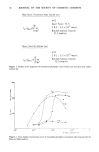
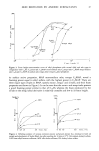
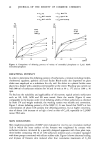
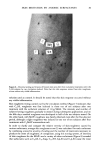
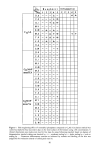
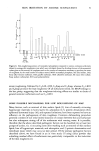
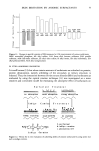
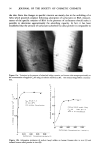
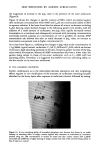
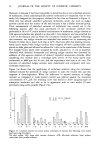
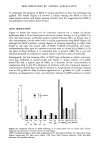
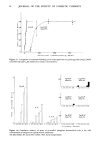
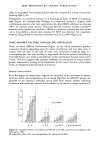
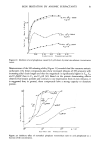
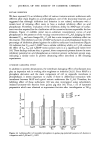
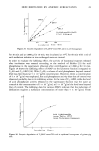
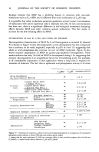
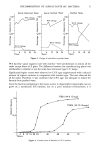
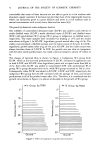
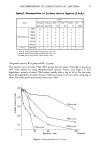
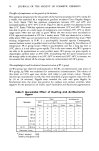
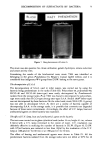
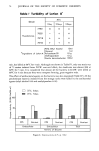
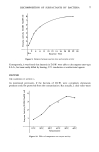
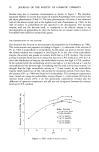
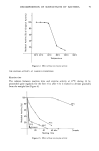
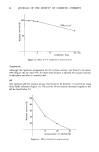
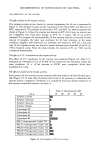
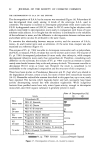
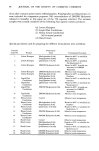
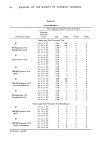
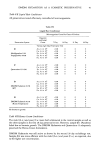
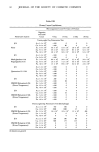
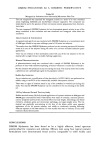
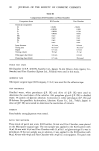
64 JOURNAL OF THE SOCIETY OF COSMETIC CHEMISTS findings indicate that MAP has a labilizing feature in common with non-ionic surfactants such as C12-14EO , and is different from ionic surfactants of C12AS type. It is possible that when surfactants penetrate epidermis, actual contact concentration of surfactants with native epidermal cells is relatively low (18). At low concentrations less than cmc, there is a significant difference in the biological membrane disrupting effects between MAP and other common anionic surfactants. This fact seems to account for the low irritating effect by MAP. DECOMPOSITION OF MAP BY L-CELL AND GUINEA PIG EPIDERMIS Decomposition characteristics of MAP by L-cell homogenate as revealed by released Pi is shown in Figure 25 (16). Decomposition curves demonstrate that this compound has a tendency to be easily degraded, especially at pH's 8.5 and 5.0, suggesting that alkali or acid phosphatase-like enzymes can act on MAP molecules. Figure 26 also shows enzymic degradation of MAP by guinea pig epidermis homogenates. These results indicate that only 2.8-8.6% of MAP is decomposed during I hr, suggesting that enzymic decomposition is an insignificant factor for the labilizing study, but probably is of considerable importance in skin application where a long time is required for initiation of irritation. The fact that in epidermis acid phosphatase activity is 10 times C12MAP C12AS Concentration Skin-Roughness by Circulation Method 1.0% Closed Patch Test ( Human Skin ) • 1.0-4.0% Irrita- Closed Patch Test • tion ( Guinea Pig Skin ) 0.5-30 % Cumulative Open Patch Test ( Guinea Pig Skin ) • 2.0-4.0% Surface Tension •- 10-3M e Pysico-chemical C M C •- 10-3M Properties Defatting Ability -v- 0.2-1.0% Protein Denaturation BSA Keratin •-- 0.5-1.5% • 0.5-1.5% Enzyme • 0.05-0.1% Membrane Damage( Lysosome Labilization ) *• 0.005-0.05% 5 mM Degradation by naturally occuring .• Enzymes in Epidermis BSA Optical Rotation Test • 0.5-1.5% Adsorption Indigo Carmine Technique • 1.0% Figure 27. Summary of cutaneous, surface active and biological properties in comparison of monolauryl phosphate mono sodium or mono TEA salt and sodium lauryl sulfate. means that the right surfactant (C•2AS) has a stronger effect in each studied property than the left one (C•2MAP). .- means similar effects between C•2AS and C•2MAP.

SKIN IRRITATION BY ANIONIC SURFACTANTS 65 higher than that of aryl sulfatase (16) suggests that even if MAP can penetrate horny layers, it may be decomposed more easily than alkyl sulfate, thus leading to relatively low irritation. COMMENT In summarizing cutaneous, surface active and biological effect especially between C•2MAP and C•2AS (Figure 27), it is clear that the potent irritancy of C•2AS is not due to surface active properties or the ability to denature proteins including enzymes since C•:MAP with less irritancy also exhibits the same level of surface and biological activity as C•2AS. It is suggested that the generally accepted notions regarding irritation mechanism by which surfactants act on skin, such as the fact that protein denaturation plays an important role (22), are not enough to explain such differential degrees of irritation between C•MAP and C12AS. As can be seen from Figure 27, comparable factors in causing cutaneous effects were membrane rupturing, adsorbing and degrading properties, although the last factor may be restricted to MAP's composed of phosphoric acid ester. In conclusion, our comparative studies using surfactants with extremely different irritancy reveal that irritation by surfactants is closely related to their action on the biomembrane system and that their adsorptive properties on the surface of the skin are of considerable importance as a primary factor in the initiation of skin roughness. ACKNOWLEDGMENTS Dr. Nagase, Director of Research Laboratories, encouraged this work and permitted publication of this paper. REFERENCES (1) G. Imokawa, H. Tsutsumi and Y. Kurosaki, Surface activity and cutaneous effects of monoalkyl phosphate surfactants,J. Amer. Oil Chem. Soc., 55,839-843, 1978. (2) G. Imokawa and T. Takeuchi, Surfactants and skin-roughenss, Cosmetics and Toiletties, 91, 32-46, 1976. (3) G. Imokawa, K. Sumura and M. Katsumi, Study on skin roughness caused by surfactants: 1 A new method in vivo for evaluation of skin roughness,J. Amer. Oil. Chem. Soc., 52,479-483, 1975. (4) G. Imokawa and Y. Mishima, The cumulative effect of surface active agents on human cutaneous horny layers,Jap. J. Dermatol., 473-481, 1976. (5) J. F. Kirk, Effect of hand washing on skin lipid removal, Acta. Derm- vener., 46, Sup. 57, 24-68, 1966. (6) G. Smeenk, The influence of detergents on the skin, Arch. Klin. Exp. Derm., 235, 180-191, 1966. (7) G. Imokawa, K. Sumura and M. Katsumi, A correlation between adsorption of surfactants onto callus and skin roughness caused by the surfactants,J. Jap. Oil Chem. Soc., 23, 17-23, 1974. (8) S. P. Harrold, Denaturation of epidermal keratin by surface active agents, J. Invest. Dermatol., 32, 581-588, 1959. (9) E.J. Van Scott and J. B. Lyon, A chemical measure of the effect of soap and detergents on the skin,J. Invest. Dermatol., 21,199-203, 1959. (10) G. Imokawa and Y. Mishima, The cumulative effect of surface active agents on cutaneous horny layers lysosome labilizing action, Contact Dermatitis, 5, 151-162, 1979. (11) H. Wilmsmann, Zur Reaction oberflachenaltiver Verbindungen mit Keratin and Enzymen, Fette Sei•n Anstrichm., 61,965-973, 1959.
Purchased for the exclusive use of nofirst nolast (unknown)
From: SCC Media Library & Resource Center (library.scconline.org)