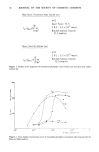
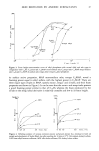
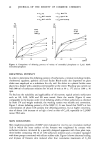
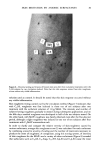
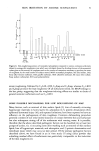
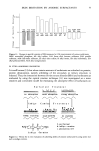
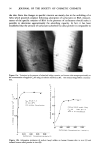
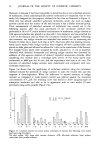
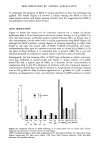
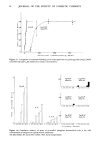
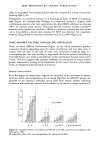
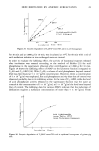
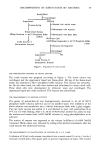
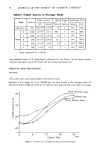
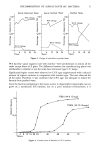
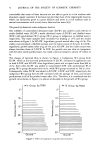
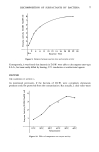
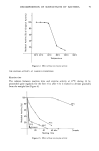
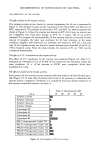
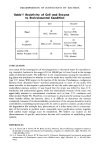
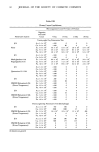
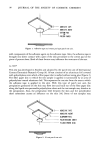
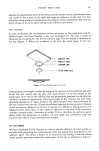
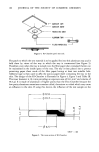
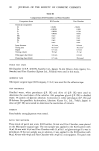
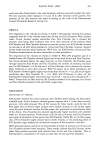
72 JOURNAL OF THE SOCIETY OF COSMETIC CHEMISTS conceivable that some of these bacteria are not able to grow in a rich medium with abundant organic nutrients. It has been reported that most of the oligotrophic bacteria which can exclusively grow in a poor medium and never in a rich medium exist in natural environments such as soil, rivers, lakes and sea water (8,9). The growth of aleionized water indigenous bacteria One milliliter of nonsterilized deionized water (D.I.W.) was added to each 100 ml of sterile distilled water (S.D.W.), sterile deionized water (S.D.I.W.) and distilled water (D.W.) with predominant W-13 group (W-13 group is indigenous to distilled water.), respectively. The water samples were incubated by shaking at 25øC and the results were shown in Figure 2. In S.D.I.W., logarithmic growth started after a lag of 4 hr. The viable counts attained a 200-fold increase over the initial counts 20 hr later. In S.D.W., logarithmic growth started after a lag of 4 hr as in S.D.I.W., but the viable counts were always less than those of S.D.I.W. In D.W. the growth rate was slow in comparison with the other sterile purified water, but viable counts increased to almost 106 within 24 hr. The change of bacterial flora is shown in Figure 3. Indigenous W-6 group from D.I.W., which at first survived predominantly in D.I.W., increased its appearance rate in both S.D.W. and S.D.I.W. from logarithmic phase and occupied more than 90% in 24 hr. Even when D.I.W. was added to nonsterilized D.W. with predominant W-13 group, W-13 group decreased after 10 hr, while W-6 group increased to 70% in 24 hr. Consequently, when D.I.W. was added to S.D.I.W., S.D.W. and D.W., respectively, the indigenous W-6 group from D.I.W. increased with the passage of time, and became predominant in all of the purified waters after 24 hr. Therefore, it is considered that the growth curve shown in Figure 2, is almost attributable to the growth of W-6 group. 10 ø- 15 ø- 20 ø 25 ø - 30 ø- W-6 Group Sp.77801 10 ø • 20 ø- 25 ø - ) 30 ø-- Growth Growth W-13 Group Sp.77604 Figure 5. Effect of temperature on growth rate of bacteria

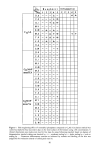
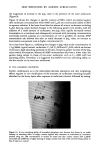
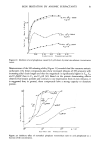
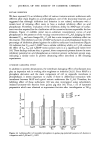
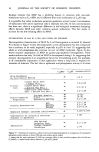
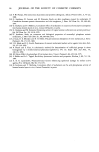
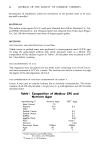
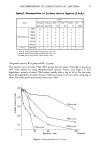
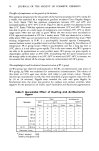
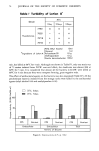
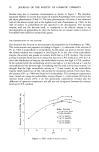
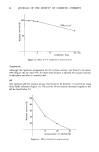
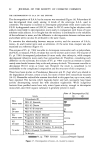
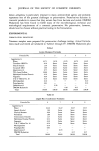
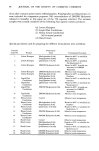
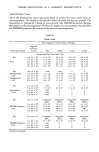
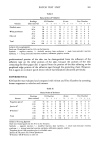
DECOMPOSITION OF SURFACTANTS BY BACTERIA 73 Tablelfi Decomposition of Surface Active Agents (S.A.A.) S.A.A. Strain Polysor- Polysor- HCO ,1 HCO ,2 Oleth- Se *3 bate-20 bate-80 40 60 15 2020 J 77801 .4-J-. + + + ñ -- 78231 + + + + ñ -- 78718 + + + + ñ -- Pseudomonas 78755 + + + + ñ -- 771105 + + + + ñ -- 781215 + -H- + + ñ -- W-13 781014 .... ñ -- ß 1 HC040 Polyoxyethylene(40) Hydrogenated Castor Oil ß 2 HCO 60 Polyoxyethylene(60) Hydrogenated Castor Oil ß 3 Se 2020 Polyoxyethylene(20) 2-Octyl dodecyl Ether The growth curve of IV-6 group and IV-13 group The growth curve of strain 77801 (W-6 group) and the strain 77604 (W-13 group) at 25øC were shown by using Biophotometer (Jouan, France, and Figure 4). The 1ogarithimc growth of strain 77801 started rapidly after a lag of 16 hr. On the other hand, the logarithmic growth of strain 77604 was found to be slow after a long lag of 40 hr. The strain grew more slowly than strain 77801. o u 10 4- X•••/cm2 600/zw/cm 2 lO 1700/z w/cm 2 30 6'0 Reaction time 1200/z w/cm • Minutes Figure 6. Germicidal effect of U.V. lamp
Purchased for the exclusive use of nofirst nolast (unknown)
From: SCC Media Library & Resource Center (library.scconline.org)