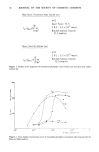
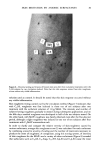
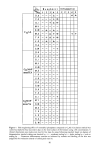
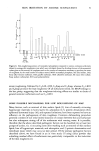
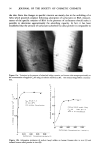
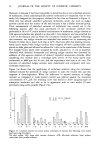
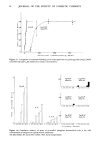
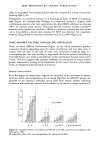
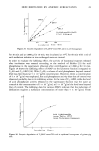
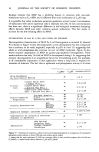
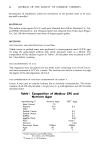
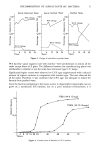
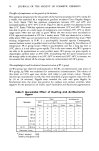
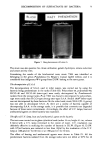
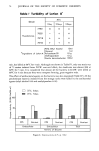
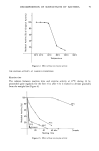
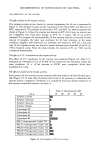
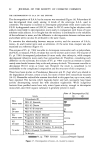
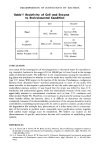
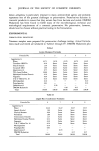
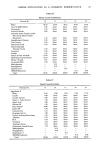
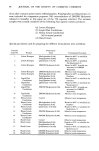
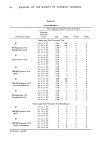
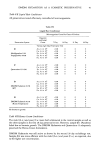
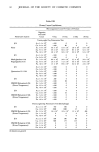
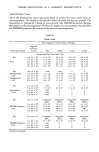
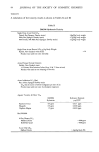
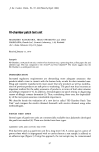
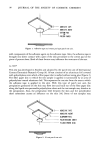
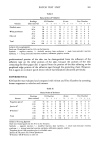
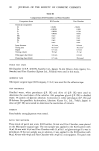
76 JOURNAL OF THE SOCIETY OF COSMETIC CHEMISTS TableV Turbidity of Lotion A* 50øC Strain 1 Day 2 Days 3 Days 77801 % -H- • 78231 -- + • Psuedomonas 78718 + • • 78755 + + • *Ingredients of Lotion A 95% Ethyl Alcohol 10ml Glycerol 1 ml Polysorbate-20 0.1 g Methylpa raben 0.1 g Sterile deionizedwater 100ml min, but killed at 60øC for 5 min. Although not shown in Table IV, only one strain out of 72 strains isolated from D.I.W. was not killed, the death-rate was almost 99% at 60øC for 5 min. It is considered that almost all the bacteria in D.I.W. were killed at 60øC for 5 min because they were nonspore forming, gram-negative rods. The effect of antibacterial agents on the bacteria was also examined (Table IV). All the predominant bacteria isolated from the storage tanks were killed by the antibacterial agents (ethyl alcohol 10% and methylparaben 0.1%). -r i----I 25øC, 3days O o • 25øC, 7days Z z 100- o o 50. CPS I Nutrient Endocellular CPS Nutrient Extracellular Activity of Enzyme CPS I Total Nutrient Figure 8. Enzyme activity of Ps. sp. 77801

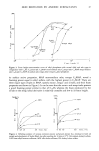
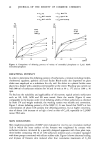
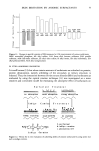
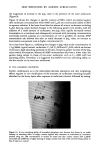
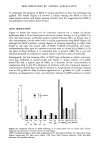
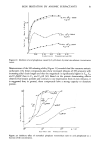
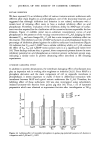
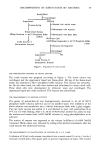
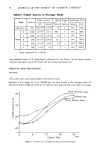
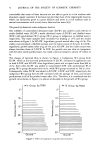
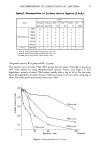
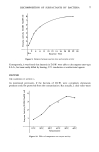
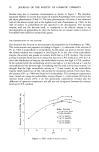
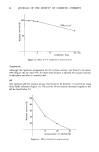
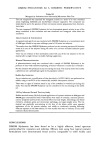
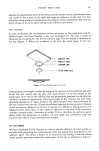
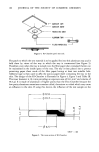
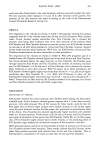
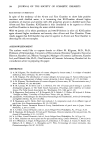
DECOMPOSITION OF SURFACTANTS BY BACTERIA 77 Hrs. Reaction Time 1'8 2'O 2'2 2'4 Figure 9. Relation between reaction time and enzyme activity Consequently, it was found that bacteria in D.I.W. were able to decompose ester-type S.A.A., but were easily killed by heating, U.V. irradiation or antibacterial agents. ENZYME THE HAZINESS OF LOTION A As mentioned previously, if the bacteria of D.I.W. were completely eliminated, products could be protected from the contamination. But actually, a clear toilet water Z i i i i 1C•øC 2C•øC 30øC 40øC 50øC 60øC Temperature Figure 10. Effect of temperature on enzyme activity
Purchased for the exclusive use of nofirst nolast (unknown)
From: SCC Media Library & Resource Center (library.scconline.org)