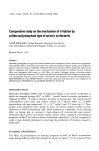
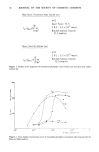
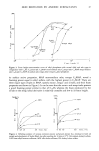
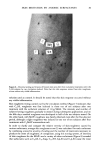
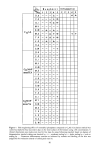
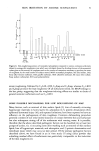
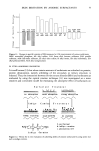
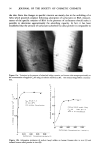
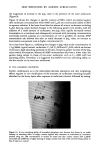
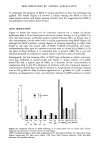
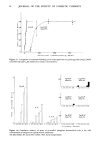
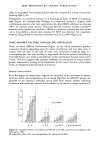
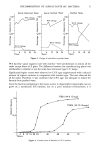
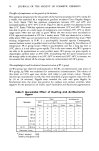
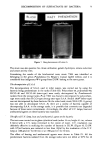
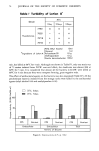
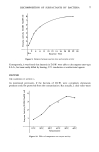
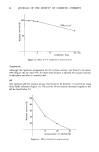
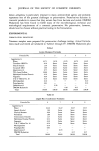
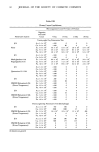
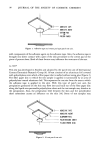
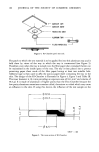
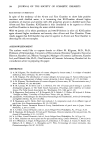
80 JOURNAL OF THE SOCIETY OF COSMETIC CHEMISTS 100- 1'2 2'4 Hrs. Irradiation Time Figure 14. Effect of U.V. irradiation on enzyme activity Temperature Although the optimum temperature for the enzyme activity was found to be about 50øC (Figure 10), we used 37øC for these tests because it allowed the enzyme reaction to take place and also is routinely used. pH The optimum pH for enzyme activity was found to be between 7.0 and 8.0 by using three buffer solutions (Figure 11). The activity of the enzyme decreased rapidly as the pH declined below 5.0. 00J 80- 60- 40- 20- lb 2'0 30 Concentration of Alcohol (%) Figure 15. Effect of alcohol on enzyme activity

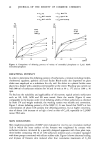
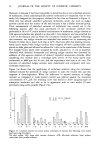
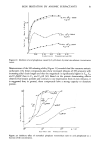
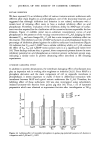
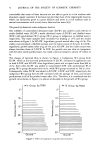
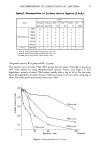
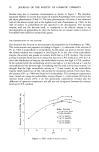
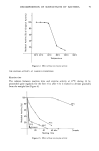
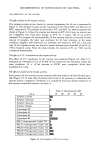
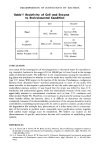
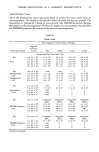
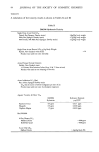
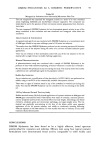
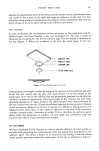
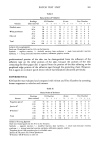
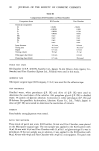
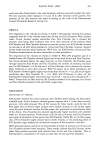
DECOMPOSITION OF SURFACTANTS BY BACTERIA 81 THE RESISTIVITY OF THE ENZYME The effect of heat on the enzyme activity The residual enzyme activity heated at various temperature for 10 rain is presented in Figure 12. The residual enzyme activity was found to be 97% at 60øC and 20% even at 80øC, respectively. The residual activities after 70øC and 80øC for arbitrary periods are shown in Figure 13. Unless the enzyme was heated at 80øC for 50 rain, its activity was not completely lost. Even after storage at 50øC for 3 weeks, 74% of its activity remained. To compare the thermostability of this enzyme with the commonly known enzyme of steapsin, the latter was examined for its heat tolerance at the same condition. Steapsin, with tributyrin as a substrate, was heated at 70øC for 5 min and only 4% of its lipase activity was found to remain whereas more than 80% of the Ps. sp. 77801 remained active. From the above results, the enzyme of Ps. sp. 77801 can be considered thermostable. The effect of U. V. irradiation on the enzyme activity The effect of U.V. irradiation on the enzyme was examined (Figure 14). After U.V. irradiation at 1700/aw/cm 2 for 24 hr 66% of the enzyme activity remained. Under the same condition, 2.0 x 10⁷/ml bacteria in D.I.W. were completely killed after irradiation for 2 min. The effect of alcohol on the enzyme activity Forty percent of the enzyme activity remained after the addition of ethyl alcohol up to 10% (Figure 15). At least 30% of alcohol was found to be necessary to deactivate the enzyme activity completely. Therefore, it is considered that such alcohol tolerance of this enzyme caused the haziness of Lotion A. S.A.A. Sorbitan Laurate Sorbitan Palmitate Sorbitan Stearate Sorbitan Oleate Polysorbate-20 Polysorbate-40 Polysorbate-60 Polysorbate-80 PEG-5 Hydrogenated Castor Oil PEG-10 Hydrogenated Castor Oil PEG-20 Hydrogenated Castor Oil PEG-40 Hydrogenated Castor Oil PEG-60 Hydrogenated Castor Oil Rate of Decomposition (%) 10 20 30 40 50 I i i i i v/////////////////////////A Figure 16. Decomposition of S.A.A. by enzyme
Purchased for the exclusive use of nofirst nolast (unknown)
From: SCC Media Library & Resource Center (library.scconline.org)