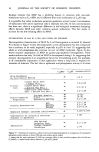
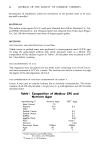
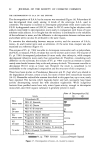
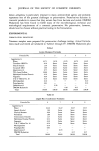
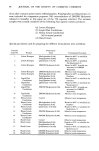
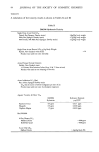
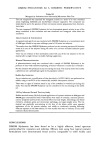
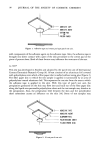
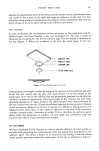
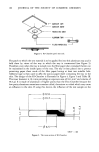
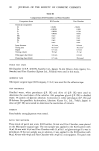
102 JOURNAL OF THE SOCIETY OF COSMETIC CHEMISTS Table III Comparison of KI-Chamber and Finn Chamber Comparison Items KI-Chamber Finn Chamber Chemical components A1 99.8% 99.6% Fe 0.003% 0.30% Si 0.002% 0.13% Cu 0.002% 0.01% Mn trace trace Mg trace trace gn trace trace Ti trace trace Inner diameter 10.3 mm 8.0 mm Tesing area 83.3 mm 2 50.2 mm 2 Depth 0.7 mm 0.5 mm Testing volume 58.3 3tl 25.1 Filter paper disc (thick) 0.6 mm 0.4 mm Protecting sheet (thick) 0.7 mm Not used PATCH TEST UNITS KI-Chamber (U.S.P. 4158359, Kanebo Ltd., Japan), Al-test (Imeco Astra Agency Co., Sweden) and Finn Chamber (Epitest Ltd., Finland) were used in this study. ADHESIVE TAPE Micropore surgical tape (3M Company, U.S.A.) was used for the adhesive tape. TEST MATERIALS Distilled water, white petrolatum (J.p. IX) and olive oil (J.p. IX) were used to determine the reactivities of the vehicles. 20% propylene glycol (J.P. IX) in distilled water, 5% jasmin oil (Jasmin absolute, Comoroes) in white petrolatum (J.P. IX) and IP-Solvent (Iso-paraffinic hydrocarbon, Idemitsu Kusan Co., Ltd., Tokyo, Japan) in olive oil (J.P. IX) were tested to determine the reactivities of irritants. SUBJECTS Sixty healthy young Japanese were tested. PATCH TEST METHODS Three kinds of patch test units, KI-Chamber, Al-test and Finn Chamber, were placed on the Micropore surgical tape. The test sample was applied to the KI-Chamber with 10 •tl, Al-test with 10 •tl and Finn Chamber with 25 •tl by 1 ml glass syringe if it was in petrolatum. If the test sample was in solution, it was applied to the KI-Chamber with 40 •tl, Al-test with 40 •tl and Finn Chamber with 20 •tl by a micropipette. The patch test

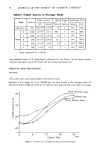
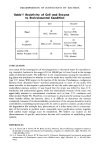
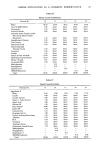
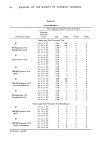
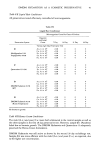
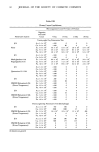
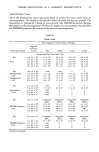
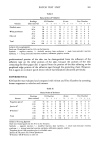
PATCH TEST UNIT 103 units were then firmly fixed to the volar forearms, and they were left in place for 24 hr. The test reactions were evaluated 1 hr and 24 hr after removal of the patches. The intensity of the skin reaction was rated according to the scale of the International Contact Dermatitis Research Group (13). RESULT The responses to the vehicles are shown in Table I. KI-Chamber showed less intense responses with all of the vehicles tested than Al-test and Finn Chamber. With distilled water, Al-test showed weaker reactivities than Finn Chamber but it showed the reaction, thus being faint erythema even 24 hr after removal of the patches while KI-Chamber and Finn Chamber showed no reaction at that time. KI-Chamber showed no reaction at all with white petrolatum. Al-test and Finn Chamber, however, showed similar weak reactions (faint erythema). With olive oil, KI-Chamber, Al-test and Finn Chamber showed almost the same reactivities as white petrolatum. The responses to the irritants are shown in Table II. With 20% propylene glycol in distilled water, KI-Chamber showed higher reactivities than Alotest and Finn Chamber, but Al-test showed almost the same reactivity as Finn Chamber. KI-Chamber gave stronger reactions than Al-test and Finn Chamber the number of erythema reactions was 9 in KI-Chamber, 5 in Al-test and 4 in Finn Chamber, and it showed the reaction (faint erythema) at 24 hr after removal. With 5% jasmin oil in white petrolatum, the KI-Chamber showed slightly higher reactivities than Al-test (P 0.1), and much higher reactivities than Finn Chamber (P 0.1). With 50% IP-Solvent in olive oil, the KI-Chamber showed higher reactivities than Al-test (P 0.01) and Finn Chamber (P 0.005). Twenty-four hr after removal, KI-Chamber showed 18.3% response, but Al-test and Finn Chamber showed 15.0% and 10.0%, respectively. DISCUSSION REACTIVITIES OF VEHICLES KI-Chamber showed the lowest response with distilled water among the three patch methods used. Al-test, however, showed greater response with it 1 hour after removal, and even 24 hr after removal. One of the reasons for these results could be that the filter paper disc of Al-test might contain water soluble irritants, or that Al-test might cause the press irritation because the filter paper disc protruded on polyethylene sheet of the Al-test. Finn Chamber also showed significantly higher reactivity with distilled water at 1 hr post exposure. These results could be due to the fact that Finn Chamber was made of aluminum of less purity than KI-Chamber (Table III), or the filter paper disc of Finn Chamber might contain water soluble irritants, or the protecting sheet of KI-Chamber might weaken the mechanical irritation of the chamber to the skin. With white petrolatum and olive oil, KI-Chamber showed no reaction, but Al-test and Finn Chamber showed weak reactions. These results indicate that KI-Chamber shows fewer false positive reactions with vehicles than Al-test and Finn Chamber. That is, KI-Chamber is considered to be more accurate than Al-test and Finn Chamber.
Purchased for the exclusive use of nofirst nolast (unknown)
From: SCC Media Library & Resource Center (library.scconline.org)