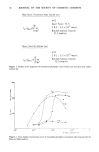
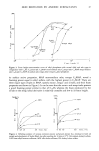
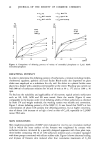
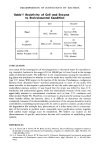
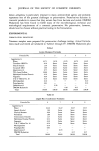
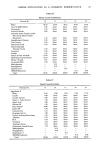
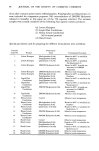
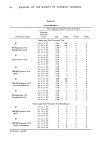
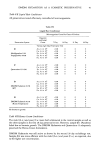
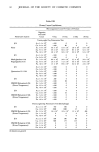
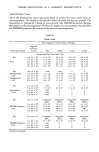
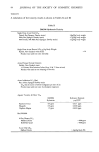
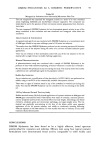
104 JOURNAL OF THE SOCIETY OF COSMETIC CHEMISTS REACTIVITIES OF IRRITANTS In spite of the tendency of the Al-test and Finn Chamber to show false positive reactions with distilled water, it is interesting that KI-Chamber showed higher incidences of reaction and severity with 20% propylene glycol in distilled water than Al-test and Finn Chamber. KI-Chamber is thus considered to be superior to Al-test and Finn Chamber in detecting the water soluble irritants. With 5% jasmin oil in white petrolatum and 50% IP-Solvent in olive oil, KI-Chamber again showed higher incidences and severity than Al-test and Finn Chamber. These results suggest that KI-Chamber may also be superior to Al-test and Finn Chamber in detecting the oily test samples. ACKNOWLEDGMENT The authors would like to express thanks to Albert M. Kligman, M.D., Ph.D., Professor of Dermatology, University of Pennsylvania Hirotake Futagoishi, Executive Director, Kanebo Ltd. Minoru Yamagishi, Manager of Cosmetic Laboratory, Kanebo Ltd. and Takashi Abe, Ph.D., Chief Scientist of Cosmetic Laboratory, Kanebo Ltd. for consultation advice in preparing this paper. REFERENCE (1) A.M. Kligman, The identification of contact allergens by human assay, I. A critique of standard methods,J. Invest. Dermatol., 47, 369-374 (1966). (2) A.M. Kligman, The identification of contact allergens by human assay, II. Factors influencing the induction and measurement of allergic contact dermatitis,J. Invest. Dermatol., 47, 375-392 (1966). (3) A.M. Kligman, The identification of contact allergens by human assay, III. The maximization test,J. Invest. Dermatol., 47, 393-409 (1966). (4) B. M. Lanman, W. B. Elvers and C. S. Howard, The role of human patch testing in a product development program, in The Toilet Goods Association, Proceedings, Joint Conference on Cosmetic Sciences, The Toilet Goods Association, Inc., Washington, D.C., 1968, pp 135-145. (5) B. Magnusson, Patch testing, in T. B. Fitzpatrick, M. A. Pathak, L. C. Harber, M. Seiji and A. Kukita, "Sunlight and Man," University of Tokyo Press: Tokyo, 1974, pp. 799-813. (6) J. Jadassohn, Verhandlungen der Deutschen Dermatologischen Gesellschaft, Archiv fur Dermatologie und Syphilis (Berlin), 34, 103-129 (1896). (7) B. Magnusson and K. Hersle, Patch test methods, I. A comparative study of six different types of patch tests, Acta Dermatovenereologica, 45,123-128 (1965). (8) Mid-Japan Contact Dermatitis Research Group, Standardization of patch tests in Japan, Contact Dermatitis, 2, 205-211 (1976). (9) A. A. Fisher, Contact Dermatitis, 2nd ed., Lea & Febiger Press: Philadelphia, Pa., 1973, pp. 26, 66. (10) R. Hayakawa, M. Kobayashi, H. Ueda and F. Morikawa, Clinical evaluation of Al-test patch test, The Journal of Dermatology, 2, 111-114 (1975). (11) A. A. Fisher, Contact Dermatitis, 2nd ed., Lea & Febiger Press, Philadelphia, Pa., 1973, pp. 123. (12) V. Pilira, Chamber test versus patch test for epicutaneous testing, Contact Dermatitis, 1, 48-52 (1975). (13) D. S. Wilkinson, S. Freget, B. Magnusson, H.J. Bandman, C. D. Cainan, E. Cronin, N. Hjorth, H.J. Maibach, K. E. Malten, C. L. Meneghini and V. Pilira, Terminology of contact dermatitis, Acta Dermatovenereologica, 50, 287-292 (1970).

Book Review HANDBOOK OF U.S. COLORANTS FOR FOODS, DRUGS AND COSMETICS, Daniel M. Marmion, John Wiley & Sons, Inc., New York, 1979, VII + 350 pages. Price: $21.5o. This book is a compilation of informa- tion on the color additives used in the United States for food, drugs, and cosmetics. The author has collated and summarized the various published docu- ments and records constituting the current state of the art for colors in order to prepare this comprehensive reference text on color additives. Functionally, this presentation has been divided into three major units a history of the regulations and use of colors, the chemical analysis of the colorants, and a review of the methodology for the analy- sis of colors in mixtures and products. In each of these sections, the relevant litera- ture has been compiled and referenced. Part A--History, Regulations, Descrip- tions, and Use--briefly describes the development and widespread use of colo- rants from early historical times to today's highly regulated period. This discussion includes a description and the specifica- tions for each of the colorants permitted for use in products regulated under the Color Additive Amendments to the Food and Drug Act. From the cosmetics' view- point, the descriptions of the colorants exempt from certification could have been more detailed with respect to back- ground and usage. Part B--Colorant Analysis--provides much detail on the methodology and techniques used for the analysis of the color additives subject to certification. This information includes analytical pro- cedures and criteria for the identification, strength, and purity of these certified colorants. Part C--Resolution of Mixtures and Analysis of Commercial Products-- briefly discusses techniques used to isolate and determine the levels of color- ants in combinations and in a variety of product categories. Since the number of chemical product types and systems are virtually endless, the major part of this section is devoted to an annotated biblio- graphy that will direct the readers to the literature pertinent to their needs. The author notes that this text reflects the regulatory situation as of January 1, 1979. As every cosmetic chemist with even a fleeting exposure to the color regulations quickly learns, the usage and restrictions on color additives are exceed- ingly complex and constantly changing. The reader will therefore need to update this information regularly to stay abreast of the current regulatory state. In spite of this limitation, which faces any attempt to codify color additive information, this handbook is a valuable reference for the cosmetic chemist.--JAMES M. AKERSON-- Clairol Incorporated. 105
Purchased for the exclusive use of nofirst nolast (unknown)
From: SCC Media Library & Resource Center (library.scconline.org)