j. Soc. Cosmet. Chem., 33, 115-129 (May/June 1982) The Hydrophile-Lipophile Balance of Mixed Nonionic Surfactants FUMINORI HARUSAWA, HIDEO NAKAJIMA, and MUNEO TANAKA, Shiseido Laboratories, 1050 Nippa- Cho, Kohoku- ku, Yokohama- shi, Japan 223 Received August 3, 1981. Synopsis The partition behavior of homogeneous and Poisson distribution nonionic surfactants in the oil-water system was studied in connection with the type of emulsion produced. The partition isotherms exhibited an abrupt change of slope at the critical micelle concentration. It was shown that the phase in which micelles are formed will be the continuous phase in the formation of emulsions. Moreover, the hydrophilic-lipophilic characteristics of homogeneous nonionic surfactants were found to be independent of surfactant concentration whereas those of inhomogeneous ones did change with concentration. For an inhomogeneous nonionic surfactant, which has a Poisson distribution of molecular weights, the proportions of each component extracted to each phase were determined by gas chromatography to elucidate the mechanism of emulsifier blending. The deviations of HLB numbers of emulsifier blends from weight average were attributed to the changes in composition of the mixed micelles formed in the oil-water system with total emulsifier concentration and/or with mixing ratios of the constituent emulsifiers. INTRODUCTION Griffin introduced the HLB (hydrophile-lipophile balance) method for selecting an appropriate emulsifier, or blend of emulsifiers, to prepare an emulsion (1, 2). However, it has become apparent for many years that although the HLB method is useful as a rough guide to emulsifier selection, it has serious limitations. In this method, an HLB number is assigned to each surfactant based on the analytical or composition data of the surfactant, and is related by a scale to the suitable application, e.g., o/w or w/o emulsifier, wetting agent, detergent, and solubilizing agent. Originally the most suitable emulsifier, or blend of emulsifiers, was determined by a tedious trial-and-error procedure. It should be appreciated that, in practice, HLB means the hydrophilic- lipophilic characteristics of emulsifiers at an oil-water interface. Accordingly, the HLB of an emulsifier is influenced by experimental conditions such as types of oils, additives to water or oil, emulsifier concentration, phase volume of the oil, and temperature (3), or even by the procedure for preparing an emulsion (4). Furthermore, the HLB method assumes that the HLB number of a blend of emulsifiers can be calculated on the basis of algebraic additivity. However, deviations of HLB numbers of emulsifier blends from weight average have been observed by several 115

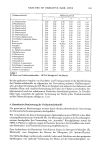
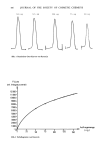
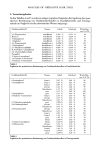
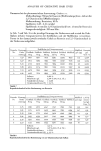
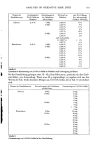
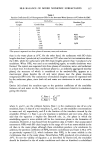
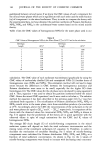
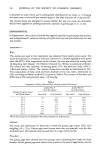
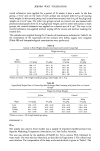
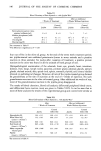
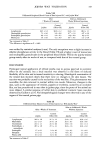
116 JOURNAL OF THE SOCIETY OF COSMETIC CHEMISTS investigators (5-9). On the other hand, there is little basic work to explain the mechanism of emulsifier blending. The purpose of this paper is to describe the partition behavior of mixed surfactants in two-phase (oil-water) systems in connection with the type of emulsion produced and to elucidate the mechanism of emulsifier blending on the basis of the mixed micelie theory reported previously (10). EXPERIMENTAL MATERIALS Homogeneous polyoxyethylenated nonylphenols (NPE6 and NPE,, subscripts denote the ethylene oxide chain lengths) were synthesized and purified as described by Katsura et al. (11). Commercial !•olyoxyethylenated nonylphenols (NPEg, NPE•, and NPEr6 subscripts denote the average ethylene oxide chain lengths) were obtained from Toho Chemical Industry CO., Ltd. Homogeneous polyoxyethylenated p,t-octylphenols (OPE4, OPEs, OPE6, and OPE,) were synthesized by the method similar to that used for homogeneous NPEs. Cyclohexane and isooctane were spectroscopic grade. Water was twice distilled by using an all quartz still. METHODS Partition measurements were carried out by placing 100 ml of oil containing the required amount of surfactant in a separatory funnel, adding 100 ml of water, and allowing equilibrium to occur by diffusion at 25øC as previously reported (12). The surfactant concentration in each phase was measured by UV spectrophotometry. In the case of the system containing commercial NPE•, each phase was concentrated by evaporation and the chromatograms for both phases were determined by gas-liquid chromatography (GLC). In order to confirm the micelie formation in the oil phase, the amount of solubilized water into the oil phase was measured by the Karl Fischer titration. Surface tensions of aqueous surfactant solutions were measured by a modified Wilhelmy type surface tensiometer (Shimadzu ST-1). The phase inversion temperatures were determined by electrical conductivity method. RESULTS AND DISCUSSION 1. Partition behavior of nonionic surfactants in the oil- water system and the type of emulsion produced The partition coefficients at 25øC for the system, isooctane-water, of a homogeneous series of OPEs at concentrations below the critical micelie concentration (CMC) as well as the partition data determined by Crook et al. (13), are listed in Table 1, together with the type of emulsion formed at 25øC. The partition coefficient (Ki) of surfactant i was calculated from the equation: I• i • Co/C w (1) Where Co and C,• are the molar concentrations of the surfactant in the oil and water phases, respectively. It is apparent from the partition data in Table 1 that the surfactants with ethylene oxide (EO) chain lengths in the range of ! to 8 are more soluble in the oil
Purchased for the exclusive use of nofirst nolast (unknown)
From: SCC Media Library & Resource Center (library.scconline.org)