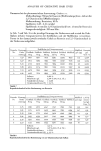
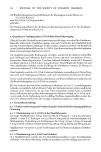
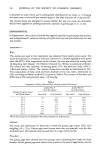
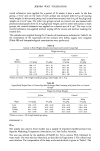
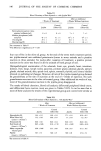
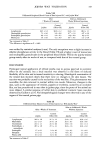
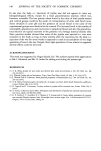
148 JOURNAL OF THE SOCIETY OF COSMETIC CHEMISTS In rats also, the daily s.c. injections of jojoba wax did not appear to cause any histopathological effects, except for a local granulomatous reaction, which was, however, reversible. The low protein values found in the urine of both jojoba-treated and control groups could be the result of contamination of urine with food traces. Some elevation in urine pH and the presence of occult blood in the urine of the experimental groups were identical to the control. The increase found in the number of neutrophilic granulocytes and monocytes in peripheral blood and also the granuloma- tous reaction are typical reactions to the presence of a foreign material (mainly oils). Since previous studies showed that most of the jojoba wax injected s.c. into mice remained in the body as long as three months after the injections (6), the daily s.c. injection of the wax for seven weeks is expected to result in accumulation of very large quantities of wax in the rats. Despite these high quantities of wax, almost no apparent adverse effects could be detected. ACKNOWLEDGEMENT This work was supported by Negev-Jojoba Ltd. The authors express their appreciation to Ms. I. Mureinik and Ms. D. Imber for editing and styling the manuscript. REFERENCES (1) T. K. Miwa, Jojoba oil wax esters and derived fatty acids and alcohols, J. Am. Oil ½hem. Soc., 48, 259-264 (1971). (2) J. Wisniak, Jojoba oil and derivatives, Prog. Chem. Fats Other Lipids, 15, Part 3, 167-218, (1977). (3) J. Wisniak and D. Liberman, Some physical properties of Simmondsia oil, J. Am. Oil ½hem. Soc., 52, 259-261 (1975). (4) T. K. Miwa, Chemical aspects of jojoba oil--A unique wax from desert shrub Simmondsia californica, Cosmet. Perfum., 88, 39-41 (1973). (5) N. Taguchi and T. Kunimoto, Toxicity studies on jojoba oil for cosmetic uses, Cosmet. Toilet., 92, 53 (1977). (6) A. Yaron, A. Benzioni and I. More, Absorption and distribution of jojoba wax injected subcutaneously into mice, Lipids, 15,889-894 (1980). (7) G. P. Guillot, J. Y. Giauffret, N. C. Martini, J. F. Gonnet and G. Soule, Safety evaluation of cosmetic raw materials: Results obtained with 160 samples from various origin, Proc. 1 lth International LF.S.C.C. Congress, Vol. I (Venice, Italy, 1980) p 43.

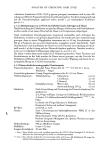
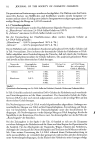
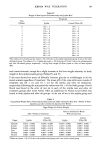
J. Soc. Cosmet. Chem., 33, 149-155 (May/June 1982) Effect of polyols on physical stability of suspensions containing nonionic surfactant JOEL L. ZATZ, RU-YUN LUE, Rutgers College of Pharmacy, P.O. Box 789, Piscataway, N.J. 08854 Received January 22, 1982. Presented at the Annual SCC Meeting, New York City, December 10-11, 1981. Synopsis The effect of three polyols on flocculation and redispersibility of suspensions of hydrophobic solids wetted by a nonionic surfactant (polysorbate 80) was investigated. The suspensions were defloculated in the absence of polyol, and all exhibited caking. Addition of a polyol beyond a critical concentration caused the suspensions to become flocculated and redispersible except for butamben. The concentration at which this change in properties took place depended on the polyol as well as the suspended solid. While sorbitol had negligible effect on solubility of sulfamerazine and salicylamide, the addition of polyethylene glycol 400 and propylene glycol resulted in enhanced solubility of the solids, accounting for peaks in the plots of sedimentation volume as a function of polyol concentration. INTRODUCTION Cosmetic and pharmaceutical suspensions are usually coarse dispersions in which sedimentation takes place over a period of time. Such products have acceptable physical stability provided that the sedimented suspensions can be redispersed by mild agitation (hand shaking) to yield uniform dispersions of reasonably small particle size. Many studies have demonstrated a relationship between redispersibility and the flocculation state of the dispersed particles (1). Deflocculated systems (those contain- ing individual particles that remain separated because of repulsive forces) tend to pack tightly in the sediment and are consequently difficult to redisperse. These are referred to as "caked" suspensions. Flocculated systems (in which the suspended particles join to form loosely bonded, anisotropic agglomerates) yield a bulky sediment that is usually easily redispersible. Because of the relationship between flocculation and redispersibility, factors affecting the degree of flocculation have been investigated. Low concentrations of inorganic salts promote flocculation in systems containing charged particles (1). Long chain polymers flocculate particles of opposite charge by simulta- neous absorption to several particles, thereby "bridging" them together (2-4). Uncharged particles are unaffected by low salt concentrations. Local anesthetics stabilized by nonionic surfactants experienced increased degree of flocculation in the presence of relatively high concentrations of lyotropic salts (5). The effect was ascribed
Purchased for the exclusive use of nofirst nolast (unknown)
From: SCC Media Library & Resource Center (library.scconline.org)