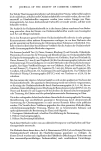
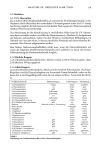
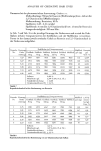
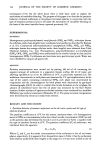
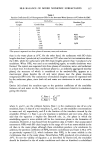
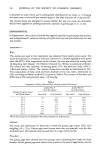
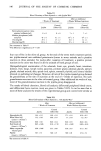
142 JOURNAL OF THE SOCIETY OF COSMETIC CHEMISTS is absorbed to some extent and is subsequently distributed in the body, i.e. 5-30/ag/g wet tissue were recovered from internal organs I day after injection of 23 mg wax (6). The present study was designed to assess whether the wax can cause any detectable effects when applied for prolonged periods, topically in guinea pigs or s.c. in rats. EXPERIMENTAL In Experiment I, the toxicity of jojoba wax applied topically to guinea pigs was studied, and in Experiment II, subacute toxicity of jojoba wax injected subcutaneously into rats was studied. EXPERIMENT I WaX The jojoba wax used in this experiment was obtained from locally grown seeds. The seeds were ground in a hammer mill and extracted in a Soxhlet apparatus with petrol ether (40-60øC). After evaporation of the solvent, the wax was refined by mixing with 2% bleaching earth (Impact 150, Morton Chemical Co., Weeks, Louisiana) and filtered. The refined wax was colorless, its melting point 13øC, the refractive index (20øC) -- 1.4652, and density--0.8631. The content of wax esters was 98%, as determined by TLC. The composition of fatty acids and fatty alcohols of the wax esters, determined by GLC according to Miwa's method (1), is given in Table I. The content of free fatty acid (FFA) was 0.15%, and peroxide value--5.0 meq/kg. Table I Composition of Fatty Acids and Fatty Alcohols inJojoba Wax Esters Jojoba Wax I a Jojoba Wax IP (% in Wax Esters) (% in Wax Esters) Number of Carbon Atoms and Double Bonds Fatty Acids Fatty Alcohols Fatty Acids Fatty Alcohols 16: 0 0.6 0.1 0.6 trace 18: 0 -- trace -- trace 18: 1 5.3 0.5 5.7 0.5 20: 0 -- 0.1 -- 0.2 20: 1 36.9 23.4 36.5 24.4 22: 0 0.4 0.4 0.6 trace 22: 1 6.7 22.2 6.6 22.5 24: 1 trace 3.3 trace 2.4 aWax I was extracted in our laboratory Wax II was imported (see Experimental). Animah The study was performed on thirty-two 5-week-old guinea pigs (strain DH), each weighing 320 ___ 25 g. Guinea pigs were chosen since they are generally used for skin sensitivity tests. The animals were housed four in a cage and fed ad lib. Procedure The guinea pigs were divided into four groups, each containing four males and four females. All the guinea pigs were shaved once a week in the area of application, and the

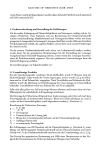
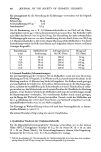
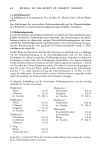
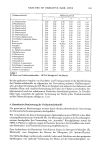
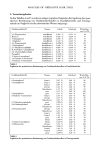
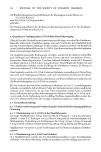
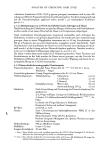
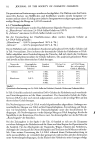
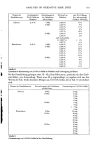
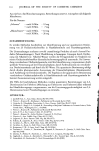
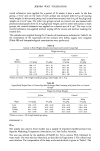
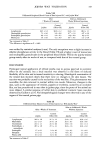
JOJOBA WAX TOLERATION 143 tested substances were applied for a period of 20 weeks, 6 days a week. In the first group, a 4-cm 2 area on the back of each animal was smeared with 0.25 g of wax/kg body weight. In the second group, each animal was smeared with 0.5 g of wax/kg body weight on a 8-cm 2 area. The other two groups served as control: one was treated with pharmaceutical-grade olive oil, 0.5 g/kg body weight, and the other with saline in both groups, the control substance was applied on a shaved area of 8 cm 2. The wax or the control substance was applied without wiping off the excess and without washing the treated skin. The animals were weighed during the 20 weeks of treatment as indicated in Table II. At the termination of the experiment all the animals were killed, organs were weighed (Table III) and histopathological examinations were performed. Table II Increase in Body Weight of Jojoba-wax-treated and Control Guinea Pigs a Weight Increase (g) Jojoba Control Time Olive Oil Saline (Weeks) 0.25 g/kg 0.5 g/kg 0.5 g/kg 0.5 g/kg 3 200ñ 15 205 ñ 30 210 ñ 40 200ñ 45 7 36O ñ 15 325 ñ40 33O ñ60 33O ñ 45 11 520 ñ 10 575 ñ 50 530 ñ 80 530 ñ 60 14 580 ñ 25 575 ñ 50 600ñ90 650 ñ 70 20 620 ñ 150 625 ñ 30 620 ñ 100 670 ñ 120 aValues are means ñ SE of eight animals per group, initial weight 320 _+ 25 g. Table III Organ/Body Weight Ratio of Guinea Pigs after Prolonged Daily Smearing withJojoba Wax vs. Control Groups a Weight (% of Body Weight) Jojoba Control Olive Oil Saline Organ 0.25 g/kg 0.5 g/kg 0.5 g/kg 0.5 g/kg Liver 5.40 ñ 0.51 4.80 _ 0.20 4.20 ñ 0.61 5.10 ñ 0.32 Heart 0.33 ñ 0.03 0.29 ñ 0.02 0.28 _+ 0.01 0.40 ñ 0.03 Kidney 0.43 ñ 0.18 0.34 ñ 0.01 0.32 ñ 0.04 0.42 _+ 0.06 Testis 0.35 ñ 0.05 0.31 _+ 0.04 0.35 ñ 0.03 0.35 ñ 0.16 •Values are means ñ SE of eight animals per group EXPERIMENT II The jojoba wax used in these studies was a sample of imported expeller-pressed wax (Apache Marketing Cooperative Association, Inc. San Carlos, Arizona). The wax was refined by the addition of NaOH (0.1 N) to remove FFA, followed by water wash. The wax was then bleached, as described in Experiment I. The refined wax was colorless. The composition of the fatty acids and alcohols is given in Table I. The
Purchased for the exclusive use of nofirst nolast (unknown)
From: SCC Media Library & Resource Center (library.scconline.org)