HLB BALANCE OF MIXED NONIONIC SURFACTANTS 129 (2) W. C. Griffin, Calculation of HLB values of nonionic surfactants, J. Soc. Cosmet. Chem., 5, 249-56 (1954). (3) K. Shinoda, The comparison between the PIT system and the HLB-value system to emulsifier selection, Proc. 5th Intern. Congr. on Surface Active Substances, Barcelona, 1968, 2,275-83. (4) T.J. Lin andJ. C. Lambrechts, Effect of initial surfactant location on emulsion phase inversion,J. Soc. Cosmet. Chem., 20, 185-98 (1969). (5) N. Ohba, Hydrophile-lipophile balance values of nonionic surfactants determined by emulsification, Bull. Chem. Soc. Jpn., 35, 1016-20 (1962). (6) P. Becher and R. L. Birkmeier, The determination of hydrophile-lipophile balance by gas-liquid chromatography, J. Amer. Oil Chem. Soc., 41,169-72 (1964). (7) H. Arai and K. Shinoda, The effect of mixing of oils and nonionic surfactants on the phase inversion temperatures of emulsions,J. Colloid Interface Sci., 25,396-400 (1967). (8) T. Mitsui, Y. Machida, and F. Harusawa, Factors affecting the phase-inversion temperature, Bull. Chem. Soc. Jpn., 43, 3044-48 (1970). (9) K. Shinoda, T. Yoneyama and H. Tsutsumi, Evaluation of emulsifier blending, J. Dispersion Sci. Technol., 1, 1-12 (1980). (10) F. Harusawa and M. Tanaka, Mixed micelle formation in two-phase systems, J. Phys. Chem., 85, 882-85 (1981). (11) H. Katsura, T. Sait3, and K. Uehara, Synthesis of homogeneous polyoxyethylene nonylphenyl ethers, Yukagaku, 2 5,476-79 (1976). (12) F. Harusawa, T. Sait$, H. Nakajima, and S. Fukushima, Partition isotherms of nonionic surfactants in the water-cyclohexane system and the type of emulsion produced,J. Colloid Interface. Sci., 74, 435-40 (1980). (13) E. H. Crook, D. B. Fordyce, and G. F. Trebbi, Partition coefficients of normal distribution and homogeneous p,t-octylphenoxyethoxyethanols,J. Colloid Sci., 20, 191-204 (1965). (14) K. Shinoda and H. Saito, The effect of temperature on the phase equilibria and the types of dispersions of the ternary system composed of water, cyclohexane, and nonionic surfactant,J. Colloid Interface Sci., 26, 70-74 (1968). (15) H. Saito and K. Shinoda, The stability of w/o type emulsions as a function of temperature and of the hydrophilic chain length of the emulsifier,J. Colloid Interface. Sci., 32,647-51 (1970). (16) J. T. Davies, A quantitative kinetic theory of emulsion type. I. Physical chemistry of the emulsifying agent, Proc. 2nd Intern. Congr. Surface Activity, London, 1957, 1,426-38. (17) P. Sherman, "Emulsion Science," Academic Press, New York, 1968, p 151. (18) H. L. Greenwald, E. B. Kice, M. Kenly, andJ. Kelly, Anal. Chem., 33,465-68 (1961). (19) J. s. Marland and B. A. Mulley, Effect of micelle formation and the nature of the oil-phase on the distribution of a non-ionic surfactant in three and four-component emulsions, J. Pharm. Pharmac., 24, 729-34 (1972). (20) M.J. Schick, S. M. Atlas, and F. R. Eirich, Micellar structure of non-ionic detergents,J. Phys. Chem., 66, 1326-33 (1962). (21) P. Becher, "Nonionic Surfactants," M.J. Schick, Eds., (Marcel Dekker, New York, 1967), Chapter 15. (22) E. H. Crook, D. B. Fordyce, and G. F. Trebbi, Surface and interfacial tension of normal distribution and homogeneous p,t-octylphenoxyethoxyethanols,J. Phys. Chem., 67, 1987-94 (1963).

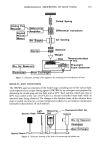
j. Soc. Cosmet. Chem., 33, 131-140 (May/June) Influence of bubble size on rheological properties of soap foam H. YAMADA, H. KOMATSU AND M. TANAKA, Shiseido Laboratories, 1050 Nippa-cho, Kohoku-ku Yokohama, Japan 223 Received September 21, 1981. Presented at 28th Meeting, Society of Rheology October I980, Sendai, Miyagi, Japan. Synopsis The viscoelasticity of soap foam and the bubble size were measured. They were influenced by the dissolved state of the soap and/or the viscosity of the solution. The elasticity of the foam and the reciprocal of the bubble size decreased with increasing viscosity of the solution. The correlation between the elasticity of the foam and the reciprocal of the bubble size was a linear relation having a minus coefficient. INTRODUCTION Foam characteristics is one of the dominant factors that determine the commercial value of such cosmetic products as soap, shampoo, shaving foam, cleansing foam, tooth paste, etc. Among the various properties of foam such as foaminess, foaming capacity, stability and mechanical property, the mechanical property has been rarely studied (t•5) by the lack of appropriate measuring instruments. The review in this area is given by Bikerman (6). An apparatus was devised to measure the mechanical property of foam, details of which were described previously (7). The principle of the measurement is based on the analysis of the oscillation of a coil spring dampened by foam. The effect of adding super-fatting agents to a soap on the physicochemical properties of the soap has been recently studied. The results of the study were presented elsewhere (8). This paper reports the relationship between the mechanical property of foam and bubble size. MATERIALS AND METHODS MATERIALS All compounds except water-soluble thickening agents were reagent-grade and were used without further purification. The water used was distilled after deionization. 131
Purchased for the exclusive use of nofirst nolast (unknown)
From: SCC Media Library & Resource Center (library.scconline.org)