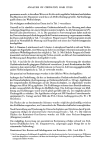
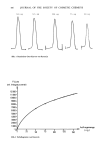
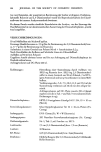
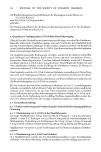
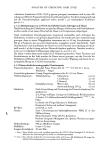
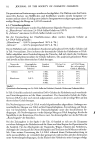
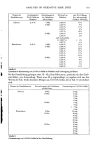
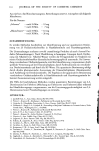
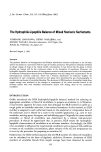
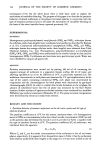
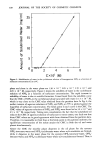
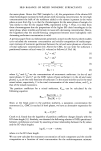
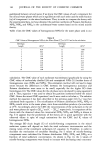
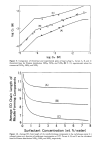
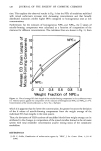
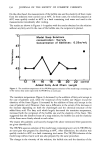
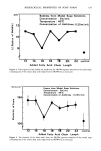
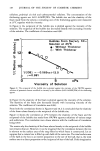
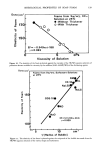
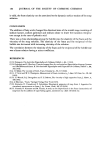
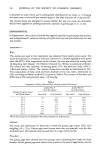
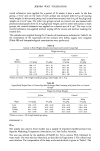
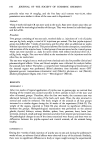
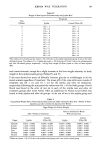
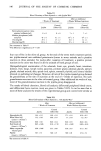
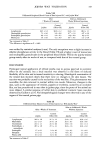
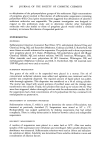
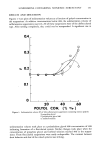
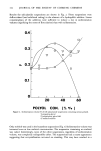
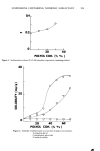
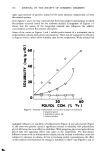
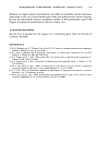
138 JOURNAL OF THE SOCIETY OF COSMETIC CHEMISTS cellulose, polyvinyl alc•)hol and carboxymethyl cellulose. The concentration of the thickening agents was O.025-O.050W/W%. The bubble size and the elasticity of the foam made from the solution containing one of the thickening agents were measured at 25øC together with the viscosity. In Figure 9, the reciprocal of the bubble size is plotted against the viscosity of the solution. The reciprocal of the bubble size decreased linearly with increasing viscosity of the solution. The coefficient of correlation was 0.981. cm -1 o Bubbles From 5w/w% KC12 Solution at 25ø( - O: Without Thickener O: With Thickener •-• 1/[DB•] = --0.565vs-1-13.0 V=0.981 5 cPs Viscosity of Solution Figure 9. The reciprocal of the bubble size is plotted against the viscosity of the 5W/W% aqueous solution of potassium laurate modified in viscosity by the addition (O.025-O.050W/W%) of the thickening agents. In Figure 10, the elasticity of the foam is plotted against the viscosity of the solution. The elasticity of the foam also decreased linearly with increasing viscosity of the solution. The coefficient of correlation was 0.983. From both the correlations shown in Figures 9 and 10, it is concluded that the elasticity of the foam relates linearly to the reciprocal of the bubble size. Figure 11 shows the correlation at 25øC between the elasticity of the foam and the reciprocal of the bubble size made from 5W/W% aqueous solutions of various soaps and surfactants. The correlation was a linear relation with the coefficient of correlation being 0.929. The reason why the elasticity of the foam relates linearly to the reciprocal of the bubble size remains obscure. However, it can be imagined that the correlation between the two is relevant to the surface area of the soap films by which foam is constructed. Let us suppose that a certain box is filled up with balls of the same size. The total surface area of the balls in the box is an inverse proportion to the size of the ball, that is, the total surface area is a direct proportion to the reciprocal of size of the ball. If this imagination

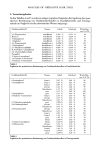
RHEOLOGICAL PROPERTIES OF SOAP FOAM 139 Dyne/cm 2 Foams from 5w/w% KC•2 Solution at 25øC I= ß 'Without Thickener o 170 - _ 0 :With Thickener o _ ._• 150- ß . m 0 EF= -- 0.549vs-1-188 • 7=0'983 0 5 cPs Viscosity of Solution Figure lO. The elasticity of the foam is plotted against the viscosity of the 5W/W% aqueous solution of potassium laurate modified in viscosity by the addition (O.025-O.050W/W%) of the thickening agents. Dyne/cm 2 150 IO0 Foams from 5w/w% Surfactant Solutions at 25øC Ni KMO CE _ø NaLS ODE-IO• aO EF=12.1/DB+30.6 ¾=0.929 •- I I , . I I I I 5 10 cm 4 1/(Radius of Bubble) Figure 11. The elasticity of the foam is plotted against the reciprocal of the bubble size made from the 5W/W% aqueous solution of the various soaps and surfactants.
Purchased for the exclusive use of nofirst nolast (unknown)
From: SCC Media Library & Resource Center (library.scconline.org)