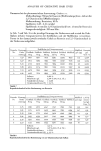
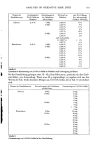
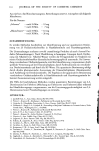
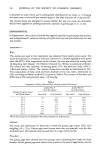
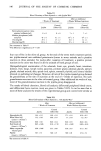
144 JOURNAL OF THE SOCIETY OF COSMETIC CHEMISTS peroxide value was 34 meq/kg, and the free fatty acid content was 0.12%, other parameters were similar to those of the wax used in Experiment I. Animals Thirty 6-week-old male CR rats were used in the study. Rats were chosen since they are usually used for toxicological studies of this type. They were housed in individual cages and fed ad lib. Procedure Two groups consisting of ten rats each, received daily s.c. injections of 1 ml of jojoba wax per kg body weight, a total of 42 injections per animal. The first jojoba-injected group was killed after 7 weeks of injections, and the other after an additional six weeks without injections (rest period). This period allowed for further absorption, metabolism and secretion of the injected wax. A third grouP'of ten rats served as the control group. These rats were injected s.c. daily for seven weeks with refined medicinal olive oil, 1 ml/kg body weight. Five rats were killed at the termination of the injections and the other five, six weeks later. The rats were weighed once a week and were checke...d each day for possible clinical and pharmacological effects. Urine and blood samples were collected for analysis before the animals were killed. Thereafter, a comprehensive histopathological examination of the internal organs was performed. Blood chemistry tests included: serum GPT (glutamic-pyruvic transaminase-colorimetric test) (Merck) glucose-u.v. test (Merck) alkaline phosphatase (Sigma test) Urea--"Merckognost" (Merck). RESULTS EXPERIMENT I After two weeks of topical application of joj0ba wax to guinea pigs, we noticed that shaving of the treated area caused scratches in three animals in each of the wax- and olive oil-treated groups. Therefore, after the first two weeks, the treatment area was alternated between the two sides of the back each week. Thus, the skin returned to normal and could be reshayed. The body weight of the animals in all four groups increased to a similar degree during the 20 weeks of the experiment (Table II). The weight of the organs, reported in Table III, also showed no significant differences between the groups. Histopathological examination was performed on the adrenal glands, thyroid, kidneys, urinary bladder, spleen, liver, pancreas, heart, brain (two sections), stomach, small and large intestines and skin from treated and untreated areas. No pathological changes in any of the tissues examined were found, and there were no differences between the jojoba-exposed and control animals, all the animals being healthy. EXPERIMENT II During the 7 weeks of daily injection of jojoba wax to rats and during the additional 6 weeks of rest, no adverse clinical effects were observed in any of the animals. Similarly, there were no significant differences in body or organ weight among the experimental

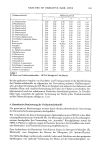
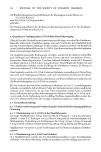
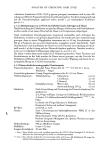
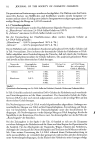
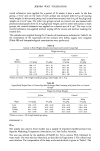
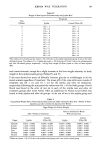
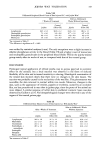
JOJOBA WAX TOLERATION 145 Table IV Weight of Rats Injected Subcutaneously withJojoba Wax a Weight (g) Time (Weeks) Jojoba Control (Olive Oil) 0 182 _+ 6 195 -+ 2 1 238_+ 10 276_+ 9 2 274_+ 9 303_+ 10 3 294_+ 10 322-+ 9 4 317 _+ 9 334 -+ 9 5 319-+ 9 353-+ 10 6 347 -+ 10 361 -+ 10 7 363 -+ 10 372 -+ 12 8 367 -+ 12 381 -+ 11 9 385 _+ 11 390 -+ 12 10 397 -+ 11 397 -+ 12 11 382 _+ 10 387 -+ 10 12 403 + 10 405 _+ 13 13 407 _+ 10 404 _+ 20 aThe values at 0 to 8 weeks are the means _+ SE of 20 rats in the jojoba-treated group and 10 rats in the olive oil-treated group. The values at 9 to 13 weeks are means _+ SE of groups of 10 and 5 rats in the jojoba-treated and olive oil-treated groups, respectively. 1 ml/kg body weight of either jojoba or olive oil were injected daily. and control animals, except for a slight increase in the liver weight relatively to body weight in the jojoba-treated group (Tables IV and V). Urine tests showed no traces of billrubin, ketones, glucose or urobilinogen in all the tested animals regardless of treatment. The mean pH of the urine after seven weeks of treatment was 8.0 _+ 0.3 and 7.0 _+ 0.2 for the jojoba and olive oil treatments, respectively following the rest period the values were 9.0 + 0.0 for both groups. Occult blood was found in the urine of one rat in each of the jojoba wax and olive oil treatment groups after seven weeks. After an additional six weeks occult blood was found in both jojoba and olive oil groups--in six out of ten in the jojoba group and Table V Organ/Body Weight Ratio of Rats Injected Subcutaneously Daily withJojoba Wax after 7 Weeks of Daily Injections and after a Further Six Injection-free Weeks a Organ Weight (% of Body Weight) After 7 Weeks of Treatment After an Additional 6 Weeks Without Injections Control Control Organ Jojoba (Olive Oil) Jojoba (Olive Oil) Adrenals 0.0118 _+ 0.0002 0.0109 _+ 0.0005 0.0104 _ 0.0002 0.0099 _ 0.0005 Gonads 1.4100 _+ 0.0350 1.3640 _+ 0.0750 1.2070 _+ 0.0280 1.2090 +_ 0.0460 Kidneys 0.7910 _+ 0.0100 0.8091 _+ 0.0210 0.7040 _+ 0.0140 0.7090 _+ 0.0290 Liver 3.6030 -+ 0.0600 3.6087 _+ 0.2128 3.2330 _+ 0.1010 2.9080 _ 0.0890 Pituitary 0.0034 _+ 0.0007 0.0034 _+ 0.0002 0.0036 _+ 0.0004 0.0031 + 0.000! Thyroid 0.0063 _+ 0.0003 0.0060 _+ 0.0004 0.0048 _+ 0.0004 0.0057 _+ 0.0006 •Values are means _+ SE of 10 rats in the jojoba-treated group and 5 rats in the control group
Purchased for the exclusive use of nofirst nolast (unknown)
From: SCC Media Library & Resource Center (library.scconline.org)