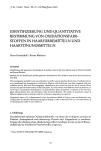
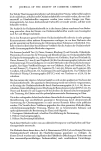
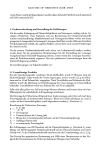
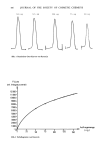
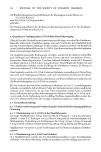
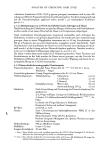
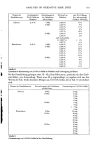
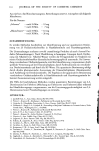
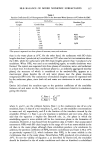
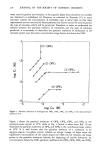
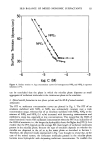
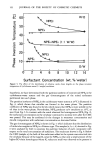
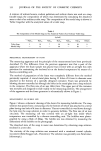
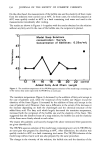
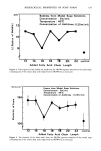
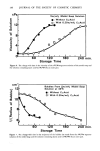
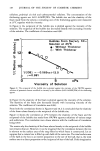
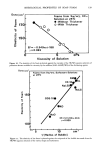
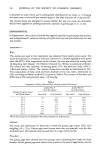
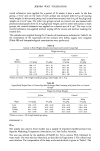
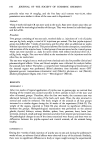
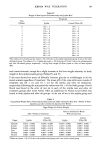
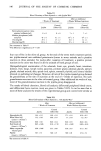
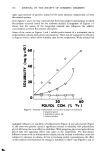
136 JOURNAL OF THE SOCIETY OF COSMETIC CHEMISTS cPs 0 i 5w/w% Model Soap Solution O: Without C12Acid O: With 0.25w/w% C•2Acid e,,,,,,, s'"'s / i ß , I , , I , • I , , I 60 120 180 240 min. Storage Ti me Figure 6. The change with time in the viscosity of the 5W/W% aqueous solution of the model soap and the solution containing lauric acid 0.25W/W% by an outer part. cm -1 • 12 m 10 Bubbles From 5w/w% Model Soap Solution at 40øC 0' Without C•2Acid O: With 0.25w/w% C12Acid ø• o 60 120 180 240 min. Storage Time Figure 7. The change with time in the reciprocal of the bubble size made from the 5W/W% aqueous solution of the model soap and the solution containing lauric acid 0.25W/W% by an outer part.

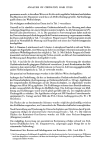
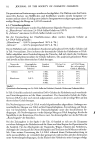
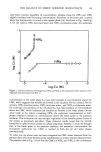
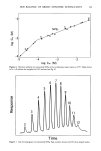
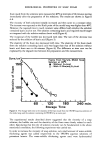
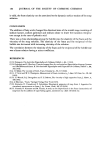
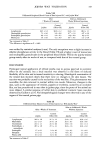
RHEOLOGICAL PROPERTIES OF SOAP FOAM 137 foam made from the solutions were measured at 40øC at intervals of 20 minutes starting immediately after the preparation of the solutions. The results are shown in Figures 6-8. The viscosity of both solutions initially increased and then came to a constant value. The increase was expected as the Kraft point of the model soap was higher than 40øC. However, the required time to reach constant value differed with whether the solution contained lauric acid or not. The solution containing lauric acid required much longer as compared with the solution without lauric acid (Figure 6). The reciprocal of the bubble size decreased with time. The rate of the decrease was reduced by the addition of lauric acid (Figure 7). The elasticity of the foam also decreased with time. The elasticity of the foam made from the solution containing lauric acid was larger than that of the solution without lauric acid from zero to 60 minutes (Figure 8). The difference at time zero can be explained by the elapsed time between the preparation and the measurement. Dyne/cm•l • i ,-a o ß %, %-0 ! I Foams From 5w/w% Model Soap' Solution at 40øC O: Without C12Acid O: With 0.25w/w%C12Acid •1 I ] I I I I I I I 60 120 180 240 min. Storage Time Figure 8. The change with time in the elasticity of the foam made from the 5W/W% aqueous solution of the model soap and the solution containing 0.25W/W% by an outer part. The experimental results described above suggested that the viscosity of a soap solution, the bubble size and the elasticity of the foam were closely related to each other. Speculating that the role of solution viscosity can be fundamental in the above mentioned correlation, the following experiment was carried out. In order to increase the viscosity of soap solution, very small amount of water-soluble thickening agents was added respectively to the 5W/W% aqueous solutions of potassium laurate. The water-soluble thickening agents used were hydroxyethyl
Purchased for the exclusive use of nofirst nolast (unknown)
From: SCC Media Library & Resource Center (library.scconline.org)