j. Soc. Cosmet. Chem., 34, 255-262 (August 1983) Simplified procedure for evaluating antiperspirants: A method for rapid screening with subsequent assessment of axillary antiperspirant activity E. H(3LZLE, Department of Dermatology, University of Dusseldorf, Moorenstrasse 5, D-4000 Dusseldorf l, [Vest Germany, and A.M. KLIGMAN, Department of Dermatology, University of Pennsylvania, Duhring Laboratories, Medical Education Building, Room 244, 36th & Hamilton [Valk, Philadelphia, P/I 19104. Received January 17, 1982. Synopsis A two-stage simplified procedure for evaluating antiperspirants has been designed. For screening, the test agents were applied to the forearms for 3 hours via Duhring Chambers. The next day, after a heat stimulus, sweat suppression was estimated by the silicone imprint technique. For final testing, a simplified gravimetric method was utilized for estimating sweat secretion in the axilla. Female subjects were preselected on the basis of their susceptibility to sweat suppression by 20% aqueous aluminum chloride. The axillae were treated twice daily for 3 days with measurements on the 4th. The subjects entered a hot box at 55øC and 35% R.H. When forearm sweating was noted, axillary sweat was collected in special pads for a 10 minute period and weighed. The rank order of antiperspirant efficacy in forearm and axilla tests were the same. Reproducibility was good. The efficacy of aluminum salts was dose dependent. INTRODUCTION The development of proprietary antiperspirants is a costly, time-consuming enterprise. Animal models are generally not relevant, since only man is endowed with a fully developed eccrine apparatus. Results obtained on the paws of rats or mice (1,2) are of doubtful applicability. Currently, it is thought that meaningful results require assess- ment of sweat suppression in the axilla. This rule was established because many materials which readily suppress sweating when applied occlusively to the forearm are far less effective in the axilla. Axillary testing has many handicaps. Only one agent can be evaluated at a time. Sweat output is exceedingly liable and subject to perturbations by a multitude of factors which are not easily controlled. Emotions can trigger sudden outpourings in certain persons even under seemingly nonstressful situations. Postural changes such as 255

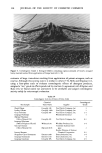
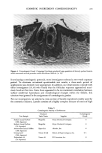
256 .JOURNAL OF THE SOCIETY OF COSMETIC CHEMISTS crossing the legs alter sweating to a surprising degree (3). Many think that the right and left sides constantly produce different amounts of sweat (4,5). Published gravimetric data demonstrate that measurements made under supposedly identical conditions may differ by as much as 100%! Lack of reproducibility is a burden carried by all who labor in this unstable region. Another variable is great individual differences in susceptibility to the suppressive effect of antiperspirants (6,7). For example, we found that with 20% aluminum chlorohydrate, an effective antiperspirant, one-third to one-half of the panelists showed little or no reduction in sweating. These difficulties have prompted various attempts to develop more reliable testing procedures. The recommendations are often elaborate, as exemplified by the protocols of Wooding and Finkelstein (8) and the shortened version by Cullem (9). Thirty-six subjects are needed for each test, who must possess spartan habits of endurance. First, there is a warm-up period of 40 minutes at 105øF. Then sweat is collected for 20 minutes. A new pad is inserted, and sweat collected for another 20 minutes. This totals 80 minutes of heat stress. Baseline values of sweating must also be secured. Time and money are apparently of small interest in these elaborate exercises. The web of variables has provoked statisticians into olympic competition of computa- tions. Our goal was to develop a sensible, rapid program for screening antiperspirants and measuring their effectiveness. We propose a two-stage program in which formulations are first tested on the forearm and finally assessed in the axilla. FOREARM SCREENING The subjects were paid, male and female white college students. Informed consent was obtained. The forearm was chosen over the back because the skin is less mobile and patches can be securely fastened by wrap-around taping. Moreover, the density of sweat glands is much higher, 150/cm • compared to 90/cm •, allowing more reliable estimation of sweat inhibition. METHOD The test materials comprised 16 metallic salts, 10 salts of aluminum, and 6 commercial formulations. Each preparation was evaluated in six subjects. The materials were applied via 15 mm Duhring Chambers allowing occlusive, rigorously controlled exposures (10). The mid-volar forearm can accommodate 8 chambers at one time. For testing liquids two layers of non-woven cotton cloth (Webril ©, Kendall Co., Boston, Mass.) were snugly fitted into the chamber and loaded with 200/xl via a micropipette. The chambers were fastened to the skin for 3 hours. We chose this time because it allowed adequate differentiation among antiperspirants of widely differing effective- ness. The chambers were glued to the skin with Durotak © 30-1289 (National Starch and Chemical Corp., Bridgewater, NJ.), and further fixed by encircling the limb with non-occlusive tape (Dermicel ©, J & j, New Brunswick, NJ.). The volunteer was then placed in an environmental chamber at 55øC and 30% R.H., until general sweating began. Then, the subject left the chamber and sat quietly in an air conditioned room to complete the 3 hour exposure. This pre-heating maneuver fills the eccrine sweat ducts,
Purchased for the exclusive use of nofirst nolast (unknown)
From: SCC Media Library & Resource Center (library.scconline.org)