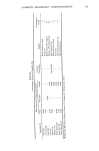
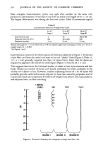
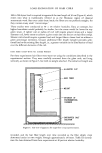
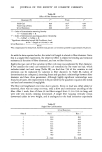
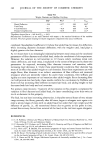
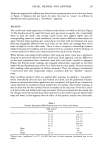
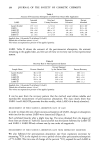
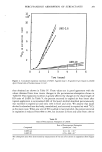
ANTIPERSPIRANT EVALUATION 257 promoting inward diffusion of metallic salts. Efficacy is enhanced, and of even greater importance, variability is greatly decreased (11,12). It should be noted that 55øC is very hot indeed, higher than generally used. The advantages are that sweating starts earlier, and the output is less variable under such a strong thermal stress. Sweat suppression was estimated by the silicone imprint technique 24 hours after removing the chambers. We showed previously that anhidrosis reached a maximum when thermal stimulation was delayed for a day (13). To perform the test, the subjects were brought to profuse sweating in the hot box as above, after which each test site was blotted dry. Immediately, a 40:1 mixture of silicone monomer and catalyst was evenly spread over the surface with a tongue blade. Polymerization occurs in four to five minutes. During this time, bubbles of sweat are trapped in the hydrophobic film. The sheet was then pulled from the skin. When viewed under transmitted light, the bubbles form a discrete pattern which can be contrasted to the surrounding untreated skin. Sweat suppression was estimated to the nearest 25% in relation to the density of bubbles in a nearby untreated control site. A comparison of this global method of estimation with counts of sweat droplets per sq. cm. revealed an error of less than 10%. Assessing the density of sweat droplets gains validity when it is recalled that metallic antiperspirants do not cause partial obstruction. The duct is either patent or blocked. The size of the droplet is irrelevant. If higher precision is wanted, the droplets can swiftly be counted in the image analyzer (if this costly instrumentation is available). RESULTS IN FOREARM Sweat suppression ranged from 0 to 97.5% (Table I). Among the various metallic salts LaCI 3 suppressed the least (30%), while 5, including AICI 3, gave an inhibition of more than 85%. Table I Antiperspirant Efficacies by Forearm Testing (% reduction) Various Metallic Salts a Aluminum Compounds b Proprietary Products c VOC13 97.5 AI2(OH)sC1 60.0 Al-nitrate 90.0 VCI• 95.0 SnC12 50.0 Al-chloride 87.5 VOC12 92.5 ErC13 40.0 Al-bromide 80.0 AIC13 87.5 GdC13 40.0 Al-perchlorate 75.0 InC13 87.5 ZnCl2 35.0 Al-chlorohydrate 67.5 HfOCl 3 83.3 LaC13 30.0 Al-phenolsulfonate 57.4 GaC13 77.0 Al-sulfate 45.0 SnCl 4 67.5 Al-lactate 30.0 ZrOC12 65.0 Al-oxalate 15.0 NdCl 3 62.5 Al-acetate 0.0 Pump spray (A) 75.0 Roll-on (B) 72.5 Roll-on (C) 65.0 Pump spray (D) 65.0 Pump spray (E) 62.5 Roll-on (F) 57.5 a20% aqueous solutions bAqueous solutions, 0.87M in respect to aluminum tActlye ingredients: A = Aluminum sesquichlorohydrate B = Zirconium-Aluminum-Glycine-hydroxy- chloride complex C = Zirconium-Aluminum-Glycine-hydroxy-chloride complex D = Aluminum Chlorohy- drex Aluminum Chloride E = Aluminum Chlorohydrex Aluminum Chloride F = Aluminum Chlorohydrate. Sweat inhibition of various metallic salts, different aluminum compounds, and proprietary antiperspirants as evaluated by the forearm screening test. Materials were applied for 3 hours under occlusion readings were done 24 hours later.

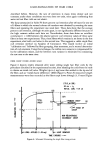
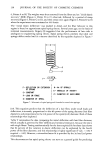
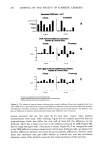
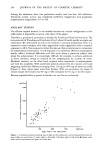
258 JOURNAL OF THE SOCIETY OF COSMETIC CHEMISTS Among the aluminum salts, four performed weakly with less than 50% inhibition. Aluminum acetate, in fact, was completely ineffective. Suppression with proprietary antiperspirants ranged from 57.5 to 75%. AXILLARY TESTING The silicone imprint method is not suitable because the vaulted configuration of the axilla makes it impossible to secure a flat sheet of the plastic. Therefore, a gravimetric procedure as detailed by Fredell and Read (14) was used. The test protocols of Wooding and Finkelstein (8) or Cullem (9) hardly qualify as simple and convenient. We determined to reduce the method to practical proportions. First, it is essential to select subjects who show appreciable sweat suppression after a standard exposure to A1C13. Non-responders dilute the data and force statisticians to compensate by mathematical contrivances. A null response to an otherwise effective antiperspirant mainly reflects technical difficulties and tells more about a particular subject than about the antiperspirant. It is exceedingly difficult, for example, to achieve anhidrosis in heavy sweaters, owing to removal of the antiperspirant by currents of sweat. Moderate sweaters, on the other hand, respond more consistently to antiperspirants and with less variability. With unselected subjects sweated for ten minutes, we found staggering individual differences ranging from 110 mg to 1870 mg of sweat per axilla (Figure 1). Also, males sweat more than females. With our procedure, the mean 10 minute output for females was 497 mg (_+ 300) compared to 911 mg (+422) for males. Because reproducibility is greater in females, we use this sex exclusively. mg/10min 1500 8 lOOO, 8 -- 500- ß ß %0 ß 0 ß ß o • o • • ß •, oO'8 c, ß 0•0 ß 0 0 0 ß oo o ø ß o ß 500 1000 1500 I mg/10 min Right Axilla or FJ'rst Measurement Figure 1. Correlation between sweating rates of right and left axillae and a second measurement from the same axillae two weeks later. [] males, right vs. left axilla. O females, right vs. left axilla. ß females, same axilla, initial measurement and again two weeks later.
Purchased for the exclusive use of nofirst nolast (unknown)
From: SCC Media Library & Resource Center (library.scconline.org)