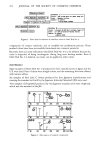
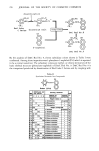
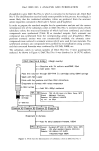
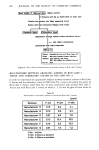
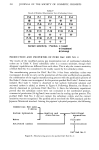
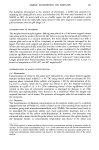
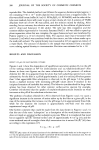
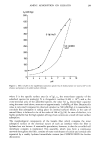
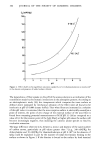
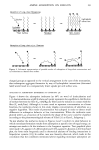
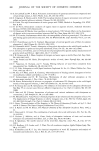
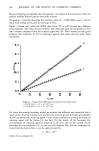
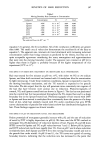
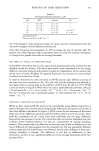
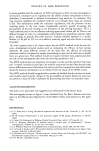
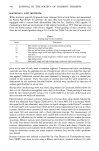
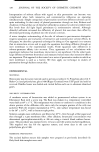
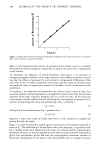
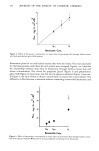
282 JOURNAL OF THE SOCIETY OF COSMETIC CHEMISTS Table V Result of Modified Maximization Test of Subsidiary Colors P-O P-1 P-2 P-3 P-4 P-5 P-6 P-7 P-8 P-9 P-10 P-11 P-12 P-13 P-14 P-15 P-16 P-17 P-18 Contact sensitivity ß Positive, -I- (weak) • (moderate) • (strong) PRODUCTION AND PROPERTIES OF PURE D&C RED NO. 9 The results of the modified guinea pig maximization test of synthesized subsidiary colors are in Table V. Every subsidiary color is a contact sensitizer, though their allergenic capabilities are different from each other. This is why the contact sensitivity of D&C Red No. 9 is considered to be mainly caused by the subsidiary colors. The manufacturing process for D&C Red No. 9 free from subsidiary colors was investigated. In order to carry out the production of this color as effectively as possible, the combination of the regular manufacturing process with the purification process of Red Lake C Amine was investigated. In this process purified Red Lake C Amine is not isolated. Red Lake C Amine is dissolved in hot sodium hydroxide solution and activated carbon is added, as shown in Figure 8. Following filtration, the tiltrate is directly diazotized to synthesize D&C Red No. 9. Since the laboratory experiment proved that the subsidiary colors were not contained in the synthesized product, commercial production (50 kg/batch) was carried out by scaling up that process. The purified D&C Red No. 9 did not contain the subsidiary colors, and the contact sensitivity was not recognized. The purified article met both the FDA standard and the Japanese Ministerial standard. Among the pigment's physical properties, the following Commercial Red Lake C Amine Sodium hydroxide Water Activated carbon Heating and dissolution Centrifugal separation Filtrate Diazotization D&C Red No.9 Figure 8. Manufacturing process for purified D&C Red No. 9.

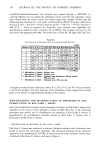
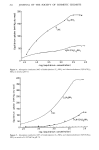
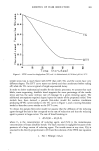
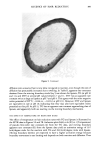
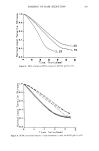
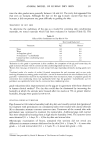
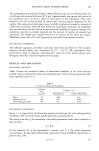
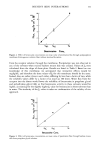
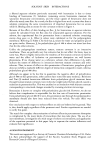
D&C RED NO. 9 ANALYSIS AND PURIFICATION 283 b 20 - 10- oo • Straight color Extended toner • Oo ß o a' 6b 7'0 a c L -50 -40 Figure 9. Result of colorimetric measurements plotted using Hunter Lab co-ordinates. O: Purified article e: Commercial article Pigment 15 parts, Titanium 42 parts, Oil 43 parts I dioxide I Mix I Sample for colorimetric measurement were investigated: 1) color tone 2) specific surface area and oil absorption and 3) electron microscopic appearance. For the purified article, the straight color and the one diluted with barium sulfate (35% pure dye) were comparable with the corresponding commercial articles. 1. Color tone: The color tones were measured by an Hitachi Spectrophotometer 607. Results are shown in Figure 9. Both the straight color and the extended toner have the same color tones as the commercial articles. 2. Specific surface area and oil absorption: The specific surface areas measured by nitrogen absorption using a Shimadzu Table VI Specific Surface Area and Oil Absorption i Oil absorption (ml/g x100) Specific sur- Samples face area(m•/g) Oil A Oil B Straight Commercial 56.10 105 100 color Purified 52.54 115 110 Commercial 19.85 55 50 Extended toner Purified 22.46 55 50
Purchased for the exclusive use of nofirst nolast (unknown)
From: SCC Media Library & Resource Center (library.scconline.org)