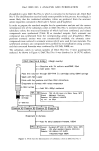
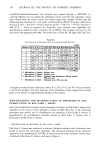
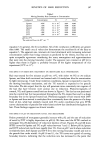
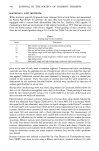
318 JOURNAL OF THE SOCIETY OF COSMETIC CHEMISTS MATERIALS AND METHODS White domestic pigs (40-50 pounds) were obtained from a local farmer and maintained on Purina Pig Chow © . To generate dry skin, they were housed in an insulated room equipped with a custom-built dehumidifier (Bry-Air Inc., Sunbury, OH) capable of maintaining a fresh-air environment of 10% relative humidity at 70øF. Hair was removed from the dorsal surface with electric clippers. Visual grading of skin condition was done by two trained graders using a 0 to 5 scale (see Table I) at the start of a study and Table I Grading Scale for Skin Condition Grade Description 0 1.0 2.0 3.0 4.0 5.0 Skin smooth and lustrous, no detectable dryness or ashing Skin lustrous, slight ashing visible Skin dry, without luster moderate ashing covering general surface area Skin slightly rough overall with slight scaling high amount of ashing covering total area Skin has moderate to high roughness moderate scales with some small cracks high ashing overall Skin highly rough with high scaling, large cracks and high overall ashing prior to the start of each week's treatment regimen. Treatment with skin conditioning materials was done by applying one ml of material per 150 cm 2 once daily (five days per week for four weeks). For generation of visually normal skin from dry skin, petrolatum was applied. Additional normal skin was obtained by housing a pig in a shaded pen outside in the summer. These two types of normal skin had the same properties, as determined by the methods described below. Animals were sacrificed by injection of sodium pentobarbital in an ear vein. Human skin conditioning work was done using winter (in Cincinnati, Ohio) elbow dry skin. 0.3 ml of product was applied twice daily to the elbow. Visual grading of skin was done by two trained graders using a 0 to 5 scale (Table I) at the start of the study and after one and two weeks of treatment. Determination of stratum corneum turnover in vivo was done using dansyl chloride (8), which was obtained from Sigma Chemical Co., St. Louis, MO. For microscopy, whole skin punches (8 mm diameter) were frozen in liquid nitrogen-cooled Freon ©, mounted in Freeze-ease ©, and cryosectioned (from dermis toward epidermis) at 8 •tm on an Ames cryostat. Sections were unstained or were stained with Sudan black (9) or hematoxylin and eosin (10) and examined with a Zeiss photomicroscope. For measurement of stratum corneum thickness, tissues were coated with collodion prior to sectioning the presence of collodion on the surface of unstained sections served as a marker for tissue intactness. Mitotic indexes were determined as described by McOsker and Beck (11). To verify that dansyl chloride had penetrated into the entire stratum corneum in the turnover determination, tissue treated in vivo for 24 hours with dansyl chloride was sectioned as above and examined with a Zeiss photomicroscope with fluorescent optics using an ultraviolet exciter the entire stratum corneum but not the viable epidermis was stained. Stratum corneum was isolated as described by Van Duzee (12). Transepidermal water loss (TEWL) was done in vitro using a Meeco electrolytic moisture analyzer (13) with

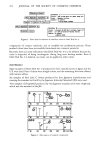
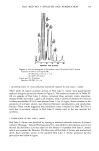
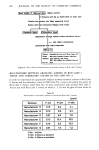
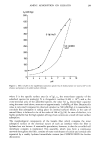
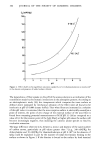
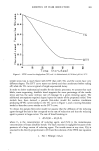
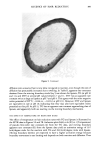
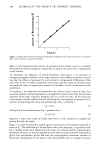
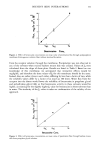
ANIMAL MODEL OF HUMAN DRY SKIN 319 tissue mounted in a ground-glass diffusion cell (14). Water-soluble materials were extracted from stratum comeurn as described by Blank (15). Amino acids (16-17) and lactate (18) were analyzed as described in the references cited. Pyrrolidone carboxylate was determined as glutamate (19) following heating at 100øC for 30 minutes in 3 N HCI and neutralization with NaOH (20). Stratum corneum hydration was done at room temperature over saturated solutions of salts at the indicated relative humidity (RH) values: CaCI 2 (30% RH), NaHSO4 (50% RH), NaCIO 3 (75% RH), KCI (85% RH), and K2SO4 (95% RH). For estimation of stratum comeurn lipid content, the stratum comeurn surface of whole skin was swabbed briefly with a hexane-saturated cotton-tipped applicator to remove surface lipid. The stratum comeurn was then isolated (12), dried, weighed, extracted with hexane for 24 hours with mild agitation, recovered by filtration (Whatman No. 1 filter paper), and reweighed. The tissue was then extracted with ether for 24 hours with mild agitation, filtered, and reweighed. The weight loss after hexane extraction and after ether extraction yielded the nonpolar and polar lipid contents, respectively. Thorough hexane extraction of the stratum corneum side of whole skin was done by clamping the tissue in a ground-glass diffusion cell with hexane in contact with the stratum comeurn for five minutes. In experiments involving sebum application to tissue, one mg of sebum per cm 2 was spread on the stratum comeurn. Sebum was obtained by swabbing the surface of pig or human skin with hexane, which was then filtered the hexane-soluble material (sebum) was recovered by removal of the solvent with a stream of dry nitrogen. Thin-layer chromatography of lipids was done by spotting a toluene solution of the lipids on 8-inch x 8-inch glass plates coated with silica gel G (Supelco Inc., Bellefonte, PA). The plates were developed with three consecutive solvent systems as follows: 1) chloroform:methanol:water at 90:10:1 (v:v:v) to half way up the plate, air dry 2) hexane:diethyl ether:acetic acid at 30:70:1 (v:v:v) to three-quarters way up the plate, air dry and 3) hexane:benzene at 3:2 (v:v) tO top of plate, air dry. The lipids were made visible by spraying the plate with 0.25% H2SO 4 and charting at 600øF for ten minutes. For experiments involving the generation of dry skin in vitro, whole normal skin was clamped in a ground-glass diffusion cell. The dermis side of the tissue was kept in contact with 0.9% NaCI, while dry nitrogen was blown across the stratum corneum surface. At timed intervals, tissue was removed and treated with sebum as described above. Whole human abdominal skin was obtained at autopsy. RESULTS AND CONCLUSIONS DEVELOPMENT OF DRY SKIN Housing of pigs in a low-relative-humidity (10%) environment resulted in development of dry skin (Figure 1), which was visually graded as indicated in Table I. Dry skin first appeared along the spinal area. The appearance of this dry skin was rapid, being noticeable to a significant degree in less than a day (Figure 2). The dry skin became generally distributed over the back within one to two weeks. The skin grade was nearly constant from shoulder to hip after housing the pigs for about one month, at which
Purchased for the exclusive use of nofirst nolast (unknown)
From: SCC Media Library & Resource Center (library.scconline.org)