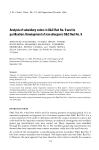
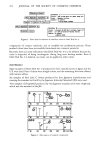
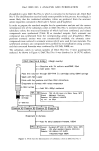
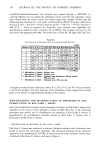
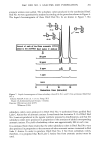
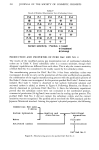
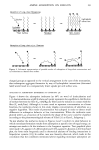
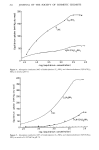
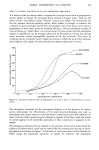
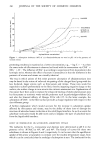
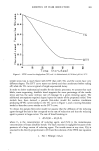
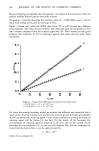
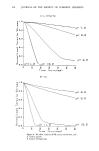
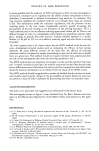
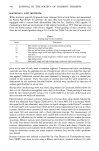
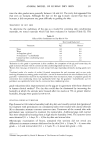
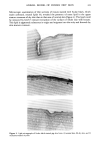
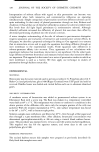
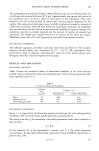
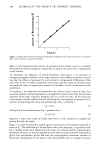
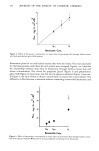
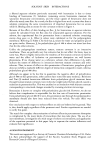
330 JOURNAL OF THE SOCIETY OF COSMETIC CHEMISTS I0- 6 - 4 - 2 / I I i 3 5 Time,hr Figure 1. Benzocaine penetration through polypropylene membrane from aqueous solution, 1.26 mg/ml. Each curve represents a separate membrane. Here, a is the thermodynamic activity of permeant in the vehicle, and L is a constant. Provided that solvent-membrane interactions are absent, the value of L is independent of the solvent. To determine the influence of vehicle-membrane interactions, it is necessary to compare penetration behavior of the same substance from different solvents in such a way that the afiSnity of permeant for each solvent is compensated. Differences in flux must then be due to vehicle-membrane interactions, and the extent of deviation from the predicted value is a quantitative measure of the effect of such interactions on skin penetration. To evaluate a, we adopt the convention that the activity of pure solute is unity. In a saturated solution, dissolved permeant is in equilibrium with excess solid. All saturated solutions of the same substance therefore have an activity of unity. At the saturation concentration, the flux will be maximal. Denoting the concentration at saturation by Cs and the corresponding flux byJs and substituting in Eq. 1 yields Eq. 3. Js = K Cs (•) Solving for K and substituting in Eq. 1 produces Eq. 4. J = Js C/Cs (4) Equation 4 states that a plot of steady state flux vs. C/Cs should be a straight line passing through the origin. Figure 2 is a plot of mean flux against aqueous benzocaine concentration expressed in terms of Cs. The relationship is indeed linear with a zero intercept, in agreement with Eq. 4. Similar results were obtained for the other two solvents and the polypropylene membrane. However, it was not possible to work with saturated solutions in propylene glycol and polyethylene glycol 400 with the polypropylene membrane because of benzocaine precipitation in the donor. This was probably due to transport of water

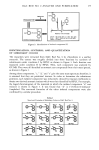
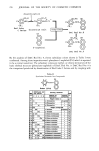
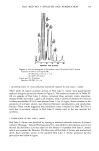
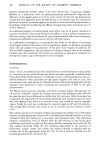
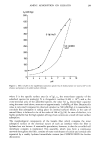
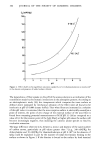
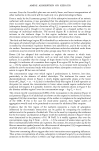
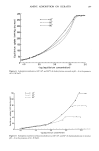
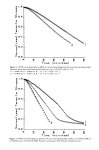
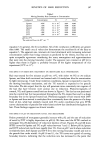
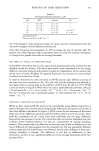
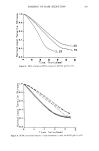
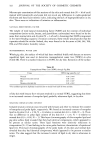
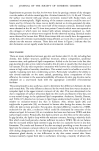
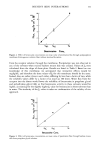
SOLVENT SKIN INTERACTIONS 331 io I I I Cs/, Cs/ Cs Benzocaine Conc. Figure 2. Effect of benzocaine concentration on mean value of penetration flux through polypropylene membrane from aqueous solution. Bars indicate standard deviation. from the receptor solution through the membrane. Precipitation was not observed in any of the solvents when excised hairless mouse skin was utilized. Values of Js were calculated from the slope of these plots. Results are listed in Table I. Based on our knowledge of this membrane, we anticipated that interactive effects would be negligible, and therefore the three values of Js for this membrane should be the same. Indeed, they are rather close to each other, differing by less than a factor of two, while the solubility values differ by a factor of as much as 300 times. Water flux from the receptor into the donor would lower the solubility of benzocaine in propylene glycol and polyethylene glycol 400, so that benzocaine activity in these solvents would be higher, accounting for the slightly higherJs value for benzocaine in these solvents than in water. The similarity of the Js values is taken as confirmation of the validity of our approach. x 90 u LL. 30 Benzocaine Conc. Cs Figure 3. Effect of benzocaine concentration on mean value of penetration flux through hairless mouse skin from propylene glycol solution.
Purchased for the exclusive use of nofirst nolast (unknown)
From: SCC Media Library & Resource Center (library.scconline.org)