j. Soc. Cosmet. Chem., 35, 73-93 (March/April 1984) Organic synthesis, antibacterial evaluation, and quantitative structure-activity relationships (QSAR) of cosmetic preservatives related to 5-bromo-5-nitro-l,3- dioxane. I. Aliphatic analogs STANLEY R. MILSTEIN and DONALD S. ORTH, The Andrew Jergens Company, 2535 Spring Grove Avenue, Cincinnati, OH 45214 J. LEON LICHTIN, University of Cincinnati College of Pharmacy, Cincinnati, OH 45267. Received November I O, 1982. Presented at the Annual Scientific Meeting of the Society of Cosmetic Chemists, New York, December 1980. Synopsis An aliphatic series of 2-substituted 5-bromo-5-nitro-1,3-dioxane analogs has been designed systematically to explore electronic, lipophilic and steric requirements for optimal antibacterial activity. The compounds were prepared via the acid-catalyzed condensation of 2-bromo-2-nitropropan-1,3-diol with the appropriate aldehyde or ketone. Although most compounds exhibited rather poor antibacterial activity against Staph- ylococcus aureus, a number of the derivatives exhibited faster rates of inactivation of Pseudomonas aeruginosa than either the 5-bromo-5-nitro-1,3-dioxane (Bronidox ©) or 2-bromo-2-nitropropan-1,3-diol (Bronopol ©) controls. The 2-n-propyl and 2,2-diethyl analogs were the most active aliphatic derivatives tested in vitro. The joint application of quantitative antibacterial activity data (i.e., D-values) and computer-assisted multiparameter regression analysis (i.e., Hansch QSAR) demonstrated the importance of steric and/or lipophilic influences in determining antibacterial efficacy of the aliphatic analogs vs. P. aeruginosa. The aliphatic congener predicted by QSAR to possess optimal anti-Pseudomonas activity (i.e., the 2,2-dimethyl analog) was tested in a proprietary white lotion formula and found to possess a high order of preservative efficacy. This work demonstrates the value of using QSAR to evaluate antibacterial activity data and to predict the member of a congeneric series possessing optimal levels of activity. INTRODUCTION Cosmetic manufacturers are required to demonstrate the safety and efficacy of their products. Preservative efficacy testing is performed to determine the type and concen- tration of preservative best suited to insure that a given product will not support microbial growth and become a health hazard (1,2). The variables that must be considered in preservative efficacy testing were reviewed in a recent article (3). Although each occurence of contamination of a finished product must be considered to determine the source of the problem, it is believed that most product contamination occurs when manufacturers fail to produce their products in accordance with good manufacturing practices or when the preservative system is inadequate. 73

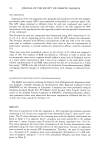
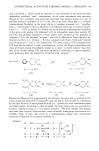
74 JOURNAL OF THE SOCIETY OF COSMETIC CHEMISTS The occurence of microorganisms in finished cosmetic products, either due to contam- ination during manufacture, adaptation of organisms to the preservative system, use of an inadequate preservative system, or contamination of a finished product by the con- sumer, has provided the impetus for chemists to continue their search for new, more effective preservatives. In the past few years, nitro- and halonitro-alcohols and their derivatives such as 2-bromo-2-nitro-l,3-propanediol (I) and 5-bromo-5-nitro-l,3- dioxane (II), have been investigated and, in some cases, used as cosmetic preservatives. Both I and II are reported to be quite effective against gram-negative bacteria, whereas only II exerts appreciable inhibitory activity against yeasts and molds (4,5). The solubility and partitioning properties of I and II are, in general, complementary to one another such that I is predominantly hydrophilic while II is predominantly hydro- phobic. B[•O• O• OH OH i II Fortunately for the commercial utility of I and II, their respective antimicrobial activ- ities are fully manifest in most cosmetic preparations at concentrations of 0.1%-0.2%. One characteristic that limits the usefulness of I is that the observed antimicrobial activity decreases as the pH is increased from 6-8 (4). The antimicrobial activity of II is relatively constant over the pH range of 5-9 (5). Lappas, Hirsch, and Winely (6) synthesized a number of structural analogs of II and evaluated their antimicrobial activity. Virtually all of the analogs possessing significant antimicrobial activity exhibited the gem-bromonitro moiety at position 5 (i.e., -R1 = Br, III). They also found that monosubstituted aliphatic side-chain derivatives at po- sition 2 (i.e., R 2 = CnH2n+l and R 3 = H) were more active than analogous disubsti- tuted aliphatic derivatives. Although there seemed to be some indication that antibac- terial activity falls off between the methyl (i.e., Ri= Br, R 2 = CH 3 and R 3-- H) and the n-decyl (i.e., R1 = Br, R• = r/-C10H21 and R 3 = H) analogs, there was no indication as to what the most active analog in the series was, or whether the observed changes in biological activity were related to lipophilic or steric effects. The monosubstituted aromatic side-chain derivatives examined (i.e., R 2 = Ar, R 3 = H) exhibited antimi- crobial activities which approached or surpassed the I controls. They also concluded that no relationship existed between observed levels of antimicrobial activity and percent water solubility. Unfortunately, too few derivatives were synthesized and evaluated to enable quantitative structure-activity correlations to be determined. 02 R• / • R• III
Purchased for the exclusive use of nofirst nolast (unknown)
From: SCC Media Library & Resource Center (library.scconline.org)