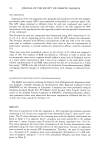
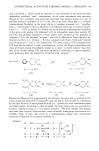
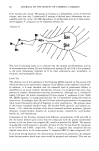
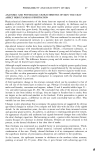
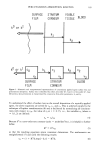
104 JOURNAL OF THE SOCIETY OF COSMETIC CHEMISTS cally abrasive attack, for example by rubbing against clothing and by washing. Fur- thermore, certain agents, which are applied for beneficial effect, are volatile and may be lost from the surface by simple evaporation (3,4) many insect-repellants are rep- resented in this category. Another, final, example of a class of materials for which surface loss has important (and damaging) ramifications are sunscreens. These are in- variably employed in situations where the user may perspire at an elevated level or might bathe shortly after application both eventualities may clearly result in significant loss of the applied agent (5,6). The ability to predict quantitatively, therefore, the consequences of surface loss on applied agent percutaneous absorption and retention is important in a number of areas. In this paper, this question is addressed by analyzing simple kinetic representations of the loss and penetration processes. Absorption from the applied surface film into the skin and body are described by consecutive first-order processes. Surface removal is considered in two ways: (1) as a zero-order (i.e., concentration-independent)process and (2) as a first-order event. Equations are derived which permit the concentration of applied agent to be calculated in the surface film and in the stratum corneum as a function of time. Representative rate constant values are then selected and employed to generate concentration-time profiles spanning a range of possible actual-use situa- tions. THE MODELS Two simulations of concomitant skin surface loss and percutaneous absorption are considered. Schematic and compartmental representations of the two cases are shown in Figure 1. The approach adopted is related to that described recently by Guy and Hadgraft (7) for interpreting the pharmacokinetics of percutaneous absorption. Two modifications are introduced here, however: (a) The percutaneous absorption kinetics are simplified to two first-order rate constants k 1 and k 2. The former describes movement of topically applied agent from the surface across the stratum corneum. The second parameter relates to the rate of passage of penetrant from the stratum corneum to the blood. (b) Surface loss of topically applied agent is included. Case I models this process as a zero-order event (rate constant kø) Case II represents surface loss with first-order kinetics, k •. CASE I: ZERO-ORDER SURFACE LOSS The three linear differential equations (equations 1-3) describe this situation: dc 0 - k ø - k•c0 (1) dt where v0, v•, and v2 are the Figure 1. dc• _ v 0 k•c0 - k2Cl (2) dt v• dc2 v1 -- k2Cl (3) dt v2 respective volumes of the compartments indicated in

PERCUTANEOUS ABSORPTION KINETICS 105 SURFACE STRATUM VIABLE FILM CORNEUM TISSUE BLOOD k o OF k I k 1 z k2 k 0 or k I SURFACE STRATUM FILM CORNEUM k2 •1 C2 v2 BLOOD Figure 1. Schematic and compartmental representations of concomitant applied agent surface loss and percutaneous absorption. Surface loss is described by either zero-order (k ø, Case I) or first-order (k s, Case II) kinetics skin penetration is characterized by consecutive first-order parameters, k• and k 2. To understand the effect of surface loss on the overall disposition of a topically applied agent, the above equations are solved for Co, Cl, and c2. This is achieved simply by the technique of Laplace transformation (8) and is facilitated by normalizing all concentra- tions with respect to Coo, the value of c o at t = 0 (7), i.e., the variables Un (where n = 0, 1,2) are defined' u. = c./coo (4) Because k ø is a zero-order rate constant (units = moles/dm3/sec), it is helpful to further define K ø = kø/coo (5) so that the resulting equations retain consistent dimensions. The mathematics are straightforward (7) and yield the following results: u 0 = (1 + Kø/k•)exp[-k•t] - Kø/k• (6)
Purchased for the exclusive use of nofirst nolast (unknown)
From: SCC Media Library & Resource Center (library.scconline.org)