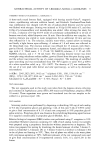
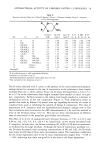
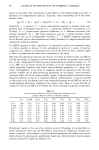
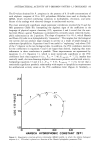
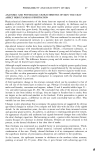
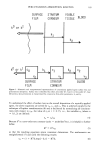
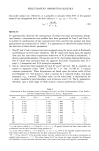
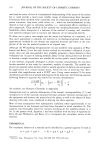
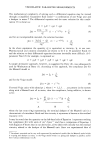
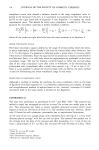
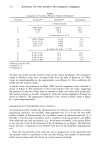
ANTIBACTERIAL ACTIVITY OF 5-BROMO-5-NITRO-1,3-DIOXANES 81 o 0 2' z o o o 5 lO 15 20 25 HOURS Figure 2. Effect of 5-bromo-5-nitro-2,2-diethyl-1,3-dioxane [ 10] concentration on the rate of inactivation of P. aer•ginosa in lotion. Symbols: lotion containing 0% (control), O--O lotion containing 0.01%, I--I lotion containing 0.10%, •,--' and lotion containing 0.2%, '--0. lecular length, minimum width, and maximum width (L•, B•, and B4) , respectively, were derived. A "forward step-wise" development of the QSAR for the aliphatic series of 2-substituted-II analogs is presented in Table III. In these equations, n is the number of data points upon which the regression equation is based, r is the multiple correlation coefficient for the regression, s is the standard deviation, and the numbers in parentheses are the 95% confidence intervals for the coefficients. In guarding against chance or fortuitous correlations, "outlier" data points (15) were not excluded from the data set if they were endpoints, and at least five data points were required per independent variable used in the final regression equations. The statistical significance of each successive regression "step" relative to the foregoing "step" was assessed by means of the F-statistic (16). Parameter values used in the derivation of the final set of regression equations (i.e., 11-14) are given in Table II, along with the observed vs predicted antibacterial activities on the basis of regression equation 12.

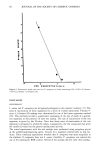
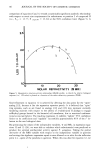
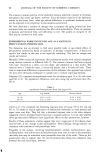
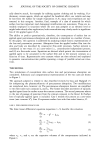
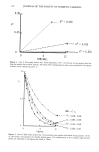
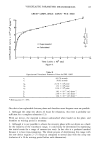
82 JOURNAL OF THE SOCIETY OF COSMETIC CHEMISTS 6 S' 4' 2 l' -3 -2 -1 o LOG CONCENTRATION (%) Figure 3. Preservative death time curve for P. aeruginosa in lotion containing 0.01-0.20% of 5-bromo- 5-nitro-2,2-diethyl- 1,3-dioxane [ 10]. DISCUSSION MICROBIOLOGY S. aureus and P. aeruginosa are recognized pathogens in the cosmetic industry (17). The rates of inactivation of these organisms by a series of 2-alkyl substituted 5-bromo-5- nitro-1,3-dioxane (II) analogs were determined by use of the linear regression method (10). This method provides a quantitative expression of the rate of death of a specific test organism in the presence of each test analog. The rate of inactivation of the test organism is given by the D-value. Note that faster rates of inactivation of the test organisms correspond to smaller D-values consequently, the test compound that gives the smaller D-value has the greater antibacterial activity. The initial experiments with the test analogs were performed using propylene glycol as the solubilizing/dispersing agent, because II is supplied commercially in this me- dium. These screening experiments revealed that P. aeruginosa was more suceptible to the aliphatic II congeners than was S. aureus therefore, P. aeruginosa was selected for use in the subsequent RBR studies. Several of the analogs did not exert their antibac-
Purchased for the exclusive use of nofirst nolast (unknown)
From: SCC Media Library & Resource Center (library.scconline.org)