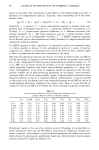
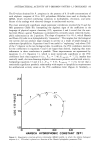
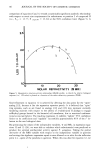
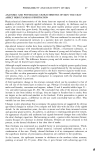
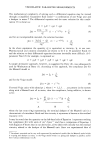
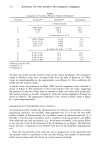
ANTIBACTERIAL ACTIVITY OF 5-BROMO-5-NITRO-1,3-DIOXANES 87 found the optimum sum of the MR (i.e., • MR 0) was 12.28. This corresponds to a set of substituents of steric bulk intermediate between the 2,2-dimethyl- (or 2-ethyl-) and 2-methyl-2-ethyl- (or 2-n-propyl-) substituent pairs. Operating analogously with respect to equation 13, the lipophilicity optimum (i.e., ]•w0) of the 2-substituents is found to be 1.03. This corresponds to the 2,2-dimethyl- (or 2-ethyl-) analogs. Lappas et al. (6) concluded that the 2,2-dimethyl- analog was the most active disubstituted congener of II. They also reported that the 2-methyl- analog [2] was the most active monosubstituted aliphatic congener this was not corroborated by our experimental data or by QSAR, both of which point towards a C2-C 3 analog as the most active mono- substituted a[iphatic analog in the series (c.f., Figures 4-5). Hansch and Leo (12) noted that log P (or •r) and MR often turn out to be so highly collinear that either parameter will give about the same quality correlation. In the present study, a clear statistical preference for equation 12 over 13 cannot be made. Although the 95% confidence limits are "tighter" and the multiple correlation coef- ficient for equation 12 is superficially superior to that for equation 13, the apparent improvement is significantly influenced by the high cross-correlation between the pa- rameters q'r and MR (i.e., t• d.f. = 1.348 t• d.f.•0.05 = 1.796) (25). In vector terms, the angle between the q'r and MR unit vectors is given by arccos (0.94) -- 19 ø, so that there is a large vector component of q'r built into MR. This, of course, renders difficult an unequivocal interpretation of any QSAR involving either parameter unless addi- tional, more esoteric analogs of II are used in order to remove the collinearity between w and MR. Nevertheless, circumstantial evidence leads us to favor a steric interpretation (i.e., eq 12) for the data described here. This is explained in the following paragraphs. The MR parameter is usually defined in terms of the Lorentz-Lorenz equation (eq 16): n 2- 1 MW MR - n• + I d - 4/3wNo• (16) where n = the index of refraction, d = the density, MW = the molecular weight of a compound (usually taken as a liquid), N = Avogadro's Number, q'r = 3. 14159, and o• = the substituent polarizability. Dietrich et al. (26) described MR as an "ambivalent" parameter in that it is both a measure of substituent volume and polarizability. Thus, it is a "corrected molar volume", which relates to how loosely the electrons in an atomic or functional group electron cloud are held as measured by n (27). The work of Moriguchi, Kanaba, and Komatsu (28) showed that other measures of substituent bulk, such as the Van der Waals volume (Vw), are also often highly collinear with substituent lipophilicity, as modeled by log P (eq 17). Kier (29) demonstrated that the reason may be that measures of steric bulk and lipophilicity are both linearly correlated to a yet more fundamental topological index, the "molecular connectivity" (X), which can roughly be defined as a calculated measure of the way in which con- stituent atoms of a molecule are bonded to one another (eqs 18-21). log P = 2.51 (+0.13) Vw + 0.23 (+0.15). n = 60, r = 0.980, s = 0.23. (17) o• (Polarizability) = 9.26 X + 1.60 (no limits given). n = 36, r = 0.99, s = 3.60. (18)

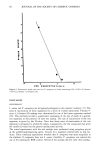
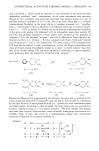
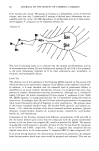
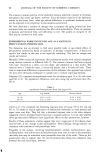
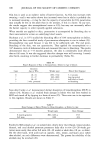
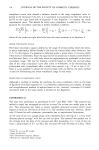
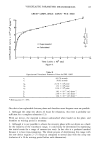
88 JOURNAL OF THE SOCIETY OF COSMETIC CHEMISTS log P = 0.95 (_+0.01) X - 1.48 (+0.04). n = 138, r = 0.99, s = 0.15. (19) CSA (Hydrocarbon cavity surface area) = 133.4 + 58.24 X. n = 69, r = 0.98, s = 11.2. (20) MR(Alkanes) = 1.37 + 10.44 X. n = 46, r = 0.95, s = 1.81. (21) Thus, the ambiguity between the operation of lipophilic and steric effects in antibac- terial testing is not unique to this study. Hansch and coworkers (30) demonstrated the importance of lipophilic effects in the antibacterial activity of the parabens and other antibacterials for both gram-positive and gram-negative organisms. Kabara (31) sug- gested the importance of steric factors in the antimicrobial activity of butylated hy- droxytoluene analogs against Streptococcus routans. Paris et al. (32) recently found that Van der Waals radii, another measure of steric bulk, afforded the best QSAR, ac- counting for the rates of oxidation of phenols to the corresponding catechols by P. putida U. We believe that steric factors play the primary role in determining the antibacterial activity (i.e., Table II) in the aliphatic series of II congeners explored in the present study (i.e., compounds 1-13). The reasons for this are: first, if steric bulk at the 2- position is detrimental to antimicrobial activity, we can rationalize the greater activity of analog [ 14] against P. aeruginosa (vide infra) in 10% polysorbate 80/saline, for which a D-value of 5.9 hr was observed, as compared with the activity of analog [7], for which a D-value of 14.6 hr was obtained. The former analog possesses a planar phenyl ring at position 2, which probably offers minimum steric interaction in the approach of [14] to the "receptor" at which the antibacterial mechanism is triggered. Compound [7], on the other hand, is a totally saturated analog of [14], possessing a cyclohexyl Figure 6. 60 MHz •H-nmr spectrum of 2-cyclohexyl-5-bromo-5-nitro-l,3-Dioxane [7] in C6D 6 (TMS Internal Standard).
Purchased for the exclusive use of nofirst nolast (unknown)
From: SCC Media Library & Resource Center (library.scconline.org)