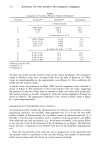
98 JOURNAL OF THE SOCIETY OF COSMETIC CHEMISTS The stratum corneum portion of the epidermis remains relatively constant in thickness throughout this entire age frame, however. Since the barrier capacity of the epidermis resides in the horny layer, other age-related differences in epidermal thickness would not be expected to be important in percutaneous penetration. We have described a number of changes that accompany the aging process but have uncovered only two extreme conditions that affect skin permeability. These are psoriasis in humans and essential fatty acid deficiency in rats. The quality or integrity of the skin may be involved in both cases. EXPERIMENTAL WORK INVOLVING AGE AS A FACTOR IN PERCUTANEOUS PENETRATION The foregoing was an attempt to find some possible leads to age-related effects of percutaneous penetration based on anatomic or biologic considerations. A search for specific test results in this area is not especially rewarding. The data are meager and results are limited. Marzulli (1960) conducted exploratory skin penetration studies with tributyl phosphate using stratum corneum in diffusion cells (2). The stratum corneum had been stripped with tape, removed as a sheet, cut into disks, and employed as a skin model. The subjects were a 5~year-old male, a 9-year-old female, and a 43~year-old male. There were no important differences in penetration of this substance that appeared age-related the data were obviously inadequate in sample size to warrant reporting formally. Kligman (15) compared transepidermal water loss of subjects aged 19 to 26 with those aged 66 to 81. No significant differences were seen using leg and forearm skin (Ta- ble I). Table I Age-Related Transepidermal Water Loss (mg/cm2/hr) Age Leg (lateral) Forearm (dorsal) 19-26 0.05 -+ 0.03 0.16 + 0.06 66-81 0.12 -+ 0.06 0.10 + 0.03 Grove eta/. (16) compared the blistering response time of young (18 to 25) and old (65 to 75) adults to topical application of ammonium hydroxide on volar forearm and upper inner arm skin. They felt that a decreased response time in the older subjects suggested a better developed barrier function in younger subjects. It is not clear whether these age-associated differences have significant effects on skin penetration, however. Results of these exploratory studies suggest that over a large part of the lifespan there may be little, if any, change in skin permeability. These findings, though limited, are consistent with anatomical and physiologic facts. Tragedies in the nursery, involving hexachlorophene, alcohol, hydrocortisone, pen- tachlorophenol, and aniline have alerted physicians from time to time to the possibility that baby skin may be somewhat more permeable than that of the adult. There are few quantitative data to support this the case for prenatal skin being less competent than postnatal skin has some basis, however.

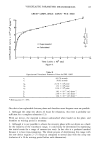
PERMEABILITY AND REACTIVITY OF SKIN 99 Animal experiments have shown that critical changes in the thickness of the stratum corneum occur prenatally but not after birth. Singer (17) reported that the stratum corneum of rats and guinea pigs reaches full thickness shortly before birth. The critical time for completion of the stratum corneum in humans is thought to be around 8 months. Hashimoto et al. (18) studied the formation of embryonic epidermis and its tranfor- marion into normal keratinizing epidermis. They report no keratinization at 12 weeks, some keratinization by 14-16 weeks, and all layers of epidermis essentially as in adult skin by 17-22 weeks. This is not to say that physiologic function is the same as the adult. Wildnauer et al. (19) show this is not so with regard to transepidermal water loss (TWL). In human term newborns, TWL was significantly lower than in adults, using resistance hygrometry (Table II). The effect, however, may be due to reduced eccrine activity in the newborn rather than to a more efficient barrier capacity for water transfer in the adult. Table II Transepidermal Water Loss (TWL) in Newborns and Adults Age Site n mg/cm2/hr Newborn Upper back 39 0.18 + 0.06 Newborn Rump 13 0.17 --- 0.04 Adult Upper back 42 0.27 --- 0.04 In 1949 Kagan and coworkers at Michael Reese Hospital suggested that immature infants might have unusually permeable skin (20). This was based on the fact that neonares of low birthweight had an excessive number of methemoglobinemia cases from aniline dye that had been used in stamping diapers. The diapers were applied to the babies' buttocks without prior boiling. The mean weight of affected babies was 1272 gm. The data were not clear cut because the inhalation route may have been involved as well as the percutaneous route due to volatilization of aniline in close quarters. Feinblatt eta/., in a study of ten mongoloid boys aged 4 to 22 months, found absorption of 1% hydrocortisone cream (t4C) ranging from 9.4 to 44.2% after application to covered intact skin (21). This compared with 1-2% absorption in two adults (41- and 58-year-old females) reported by Malkinson when 2.5% hydrocortisone in petrolatum was applied to covered intact skin. The techniques, though not strictly comparable, suggest possibly greater absorption of this substance when applied to infants. On the other hand, no difference in emission of CO2 from the upper back and forearm skin was seen when neonates and adults were compared (Table III) by Wilson and Maibach (22). Table III Emission of CO2 from Back and Forearm Skin n nl/cm2/min Neonares 21 21.8 + 5.4(S.D.) Adults 30 23.1 + 6.8 (S.D.)
Purchased for the exclusive use of nofirst nolast (unknown)
From: SCC Media Library & Resource Center (library.scconline.org)