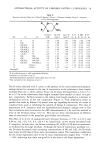
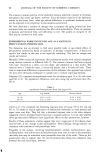
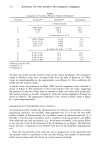
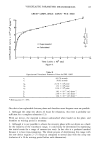
100 JOURNAL OF THE SOCIETY OF COSMETIC CHEMISTS CO2 loss is used as an indirect index of barrier function. As CO2 loss increases with sweating--and it was earlier shown that increased water loss in adults is probably due to increased sweating--it may be that the capacity of excised skin for CO2 penetration may actually be less in the adult than in the neonate, if this is a factor. At any rate, the results suggest that transepidermal water or CO2 loss may not necessarily reflect the barrier capacity to other topically applied substances. When steroids are applied to skin, penetration is accompanied by blanching due to their vasoconstrictor action on underlying blood vessels. Nachman et al. in 1971 studied the blanching effect of 10% neosynephrine on babies, providing the first controlled study of percutaneous absorption in vivo in infants (23). Neosynephrine was used because it was felt to be sufficiently safe. The end point, blanching of the skin, was not quantitative. They applied the neosynephrine to a 3/4"-diameter circle of abdominal skin and measured the time to blanching. The results demonstrated that at 7-8 months gestation, the skin is considerably more affected than at full term. It was also suggested that skin changes were still occurring 1 month after birth, resulting in further decreases in permeability (Table IV). Table IV Blanch Response of Skin to Neosynephrine, Related to Age of Infants Gestation Cases Age in Wks. Weight (gm) Blanch Skin Response 28-34 1090-1560 5-6 seconds 35-37 960-2890 long lag period 38-42 3215-4110 half failed to blanch wks. postnatal -- no blanching Soon after Curley et al. demonstrated dermal absorption of hexachlorophene (HCP) in infants (24), Shuman et al. studied brain damage in babies who had been washed in HCP and rinsed off by dipping in a basin of water (25). There were one to six exposures to this regimen. Results are shown in Table V. Table V Brain Damage in Babies Washed in Hexachlorophene, as Related to Age Age Weight (gm) Brain Damage 8 months gestation 800-1400 g 17/25 Full term 1400 4/24 Studies by McCormack et al. on isolated skin clearly show that ethanol, benzyl alcohol, decanol, and cetyl alcohol penetrate premature baby skin in vitro (26-28 weeks ges- tation) more easily than either full term (38-40 weeks) or adult skin (18 yrs. or older). On the other hand, with acids such as caprylic, oleic, stearic, and lauric acid, rather than alcohol, no such differences were demonstrated. The greater fat solubility of the alcohols may be involved (26).

PERMEABILITY AND REACTIVITY OF SKIN 101 A recent report of dermal absorption of methylated spirits applied to the skin of a preterm 27-week-gestation infant was thought due to the susceptibility of skin of this age (27). The results are not quantitative and serve simply as a warning of the delicate nature of preterm skin. These findings support the thesis that the skin of the preterm baby is more permeable than that of the neonate in some cases. CONCLUSIONS Aging is generally associated with geriatric illness and a decreased capacity for physi- ologic functions accompanied by a reduced ability to adjust to life's stresses. There are a number of pharmacokinetic changes that accompany the aging process. We are somehow aware that the elderly, those over 65 years of age, have an increase in body fat. This is accompanied by a decrease in lean body mass and total body water. As a consequence, at any given dose of a water-soluble drug, the serum concentration is more elevated, whereas the serum concentration of a fat-soluble drug is lower. Furthermore, serum albumin is diminished as an effect of aging, making for a higher percentage of unbound, pharmacologically active drug in the total circulation. There is also a decrease in drug metabolism and renal excretion (28). All these changes suggest that old people are strikingly different from their younger counterparts in the handling of a topically applied substance once it enters the circu- lation. The barrier capacity of skin shows no such age-related decrease. In fact, it maintains itself throughout life with undiminished capacity once infancy is past. The preterm infant is especially vulnerable to percutaneous penetration, the neonate somewhat less so. Thereafter, the skin replaces its outer horny layers in a continuous process that results in a barrier that is relatively constant throughout the rest of life. It appears then, from the limited information obtained so far, that skin permeability is relatively constant throughout life after birth. The main change, an increase in barrier capacity immediately prior to birth, appears to be related to the completion of horny layer development at that time. These conclusions are presented in general terms, having limited basis in experimental work. There is much more to be learned from more detailed and more comprehensive studies. REFERENCES (1) F. N. Marzulli and R. T. Tregear, Identification of a barrier layer in the skin, J. Physiol., 157, 52- 53 (1961). (2) F. N. Marzulli, Barriers to skin penetration,.]. Invest. Dermatol., 39, 387-393 (1962). (3) P.M. Elias, B. E. Brown, P. Fritsch, J. Goerke, G. M. Gray, and R. J. White, Localization and composition of lipids in neonatal mouse stratum granulosum and stratum corneum, .]. Invest. Der- matol., 73, 339-348 (1979). (4) W. R. Koehler, J. L. Solan, B. H. Arthur, and M. D. Lehman, "Further Studies on the Effects of Solvents on Skin Permeability," in: Basic Studies in Percutaneous Absorption, Report No. 7, pp 85- 115, 1964, L.J. Vinson, W. R. Koehler, M.D. Lehman, P. Masurat, and E. J. Singer, Eds. Defense Doc. No. AD606878. From Clearinghouse for Scientific and Technical Information, De- partment of Commerce, Washington, D.C.
Purchased for the exclusive use of nofirst nolast (unknown)
From: SCC Media Library & Resource Center (library.scconline.org)