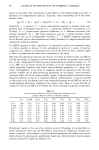
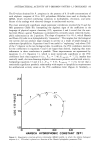
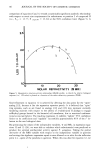
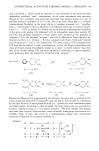
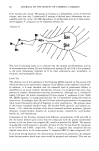
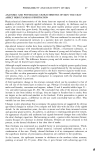
ANTIBACTERIAL ACTIVITY OF 5-BROMO-5-NITRO- 1,3-DIOXANES 75 The purposes of the work reported here were twofold. Our primary goals were to synthesize a larger set of analogs of II, encompassing a wider range of hydrophobic, steric, and electronic properties than those previously prepared by Lappas et al. (6), to assess the quantitative rates of inactivation of selected test microorganisms, and to determine such structure-activity relationships (SAR) as might manifest themselves. A secondary goal was to ascertain whether the analog of II, predicted by SAR studies and found to be the most active compound in the congeneric series, would exhibit this enhanced level of antimicrobial activity in an actual cosmetic formulation (i.e., a lo- tion), relative to II itself. The present paper describes our results with a series of aliphatic II analogs a future manuscript will discuss the structure-activity relationships in the corresponding aromatic series of II analogs. MATERIALS AND METHODS SERIES DESIGN A series of II analogs, substituted in the 2-position by various aliphatic substituents were used. These analogs are listed below. R 2 (R1,R2) = (H,H), (Me,H), (Et,H), (n-Pr), (n-Bu,H), (n-Am,H), (c-C6H11,H), (Me,Me), (Me,Et) (Et,Et), (n-Pr,Et), (-[CH214-), (-[CH215-) ORGANIC SYNTHESIS All starting materials and solvents were reagent grade and were obtained from Ald- rich Chemical Co. or Eastman Kodak Co. Paraformaldehyde was purchased from Matheson, Coleman & Bell Manufacturing Chemists. Melting points were determined on a Mel-Temp © apparatus (Laboratory Devices, Inc.) and are uncorrected. The infrared (Jr) spectra were determined as neat oils or as Nujol mulls using a Perkin-Elmer Model 700 spectrophotometer. The 60 MHz proton magnetic resonance (nmr) spectra were recorded on a Varian T-60 nuclear magnetic resonance spectrophotometer in benzene- d6 or acetone-d6, with Me4Si as an internal standard. The 70 eV mass spectra were determined on an RMU-7 mass spectrophotometer. Microanalyses were performed by Midwest Microlab, Ltd. (Indianapolis) for all new compounds and were within -+- 0.4% of theoretical values, unless otherwise indicated. Compound II was prepared via the polyphosphoric acid (PPA)-catalyzed condensation of I and paraformaldehyde (6), while 5-bromo-5-nitro-2,2-dimethyl-l,3-dioxane was obtained by the boron trifluoride etherate-catalyzed condensation of I and acetone (6). All other analogs of II were prepared via the p-toluenesulfonic acid-catalyzed conden-

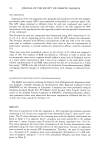
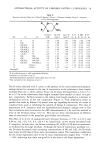
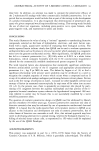
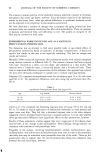
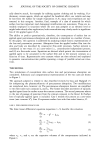
76 JOURNAL OF THE SOCIETY OF COSMETIC CHEMISTS sation between I and the appropriate aliphatic aldehyde or ketone, allowing for azeo- tropic distillation and collection of evolved water by use of a Dean-Stark trap (9, 10). These reactions are shown below: II] B•N02 HO OH F= -Et20 Br•MN02 e { CH20 )x PPA 100 ø 3hrs. (1-3) Physical properties and yields of the 2-substituted analogs of II are presented in Table I. A representative example of a synthetic procedure is given in the following: Table I 2-Alkyl-5-Bromo-5-Nitro-l,3-Dioxanes: Physical Properties & Antibacterial Activity R•• Br Rz NOz D-Values (hr)* No. • R• R 2 % Yield mp øC or bp øC (torr) S. aureus P. aeruginosa 1 H H 55 2 CH 3 H 81 3 CH3CH2 H 48 4 CH3(CH2) 2 H 63 5 CH3(CH2) 3 H 56 6 CH3(CH2) 4 H 100 7 c-C6H• H 68 8 CH 3 CH 3 71 9 CH 3 CH3CH2 89 10 CH3CH 2 CH3CH 2 66 11 CH3CH 2 CH3(CH2) 2 84 12 - (CH2)4 - 72 13 - (CH2) 5 - 71 Bronopol © Propylene Glycol Saline 57-60 a'b 53.5-55 (0.030) a 56-59 • 44-47 77-78 (0.04) • 81-84 (0.04) 91-93 (0.035 103-106 80-83 a 70-72 (0.035 42 -45 81-83 (0.035 76-79 88-91 a 2.2 0.6 4.3 0.6 3.2 0.8 2.2 0.6 3.3 0.6 6.0 3.5 5.8 3.5 3.5 0.6 5.2 0.6 4.0 0.6 2.2 2.2 5.5 0.6 4.7 22.2 3.5 1.2 9.2 34.9 21.2 45.6 # All compounds had ir and nmr spectra consistent with assigned structures. * 0.10% solutions in 10% propylene glycol/saline. • mp 49-50øC, 58-59øC, 79-81øC, 86-89øC, and bp 73-75øC (0.005 torr), 72øC (0.005 torr)reported (66) for compounds 1, 3, 8, 13, 4, and 2, respectively b mp 58-60øC reported (5) for compound 1.
Purchased for the exclusive use of nofirst nolast (unknown)
From: SCC Media Library & Resource Center (library.scconline.org)