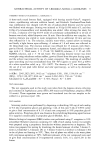
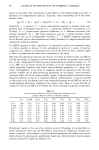
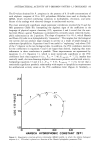
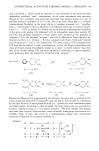
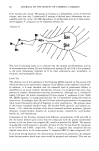
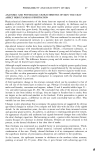
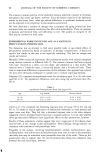
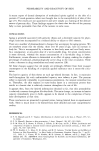
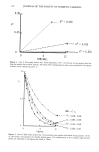
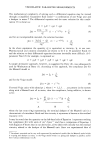
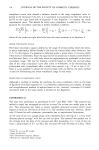
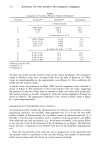
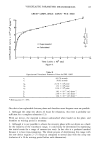
ANTIBACTERIAL ACTIVITY OF 5-BROMO-5-NITRO-1,3-DIOXANES 89 ring at position 2, which would be expected to exist primarily in the more sterically demanding, puckered "chair" conformation. In the room temperature nmr spectrum (Figure 6), the cyclohexyl ring axial and equatorial ring protons appear as a pair of partially resolved muhiplets at 0.75-2.08, which are most likely due to a reduced conformational flexibility in the ring's ability to undergo inversion (i.e., "ring-flip- ping"), a phenomenon which is observed in cyclohexane itself only at reduced temper- ature (i.e., -65øC or below) (9). Second, the much reduced conformational flexibility of the spiro-cyclic analog [12] compared with its isolipophilic open-chain isomers [5] and [10] also probably represents a much greater steric demand on the approach of congener [12] to the bacterial "receptor", and this is reflected in lower observed an- tibacterial activity (i.e., D-value = 8.2 hr), compared with those of [10] and [5] which have D-values of 3.7 and 5.2 hr, respectively. The lower activity of [5] compared with [10] may also be related to steric considerations, in that the longer hydrocarbon side chain of n-butyl-analog [5] probably sweeps out a larger "excluded volume" than does that of the diethyl analog [10] and thus represents a substituent of greater apparent steric hindrance from the perspective of the bacterial "receptor". \o • '•o• (D = 5.9 HR) (D 14.6 HR) [14] [7] Activity: CH3CH2 • Br ß Br CH3CH/O-•-/ NO 2 CH3(CH2) 3(•NO2 (D = 3.7 HR) (D 5.2 HR) (D 8.2 HR) [lO] [5] [12] Stretton and Manson (33) suggested that the bacterial "receptor that is involved in the action of geminal bromonitro compounds, such as I and II, may actually be constituted by the thiol moieties of mercaptoamino acids (i.e., cysteine) in some membrane-bound microbial protein. According to their proposal, the nitro moiety acts as a one-electron acceptor, thereby serving as a "free radical initiator". The thiol radicals thus formed may enter into a typical chain reaction, some ultimately undergoing dimerization to a disulfide. This, in turn, may result in a conformational change with concomitant alteration of function of the protein (Scheme I). Scheme I R - SH )R - S- + H + Br /Br R - S- + R2C•---•R - S' + R2C NO2 %NO2 R - S' + HS - R ••-R - S - S - R + H' R - S' + R- S' )R- S - S- R

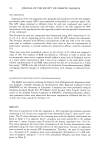
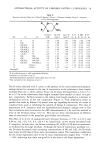
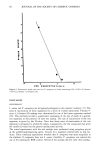
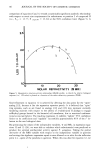
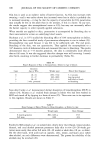
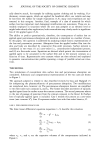
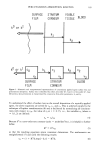
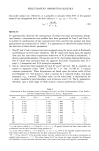
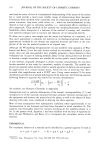
90 JOURNAL OF THE SOCIETY OF COSMETIC CHEMISTS If we envision the crucial -SH groups as existing in a hydrophobic cavity of restricted volume, such that only 2-substituted II analogs of defined steric dimensions can suc- cessfully enter the cavity, the MR dependence of antibacterial activity of these preser- vatives against P. aeruginosa can be explained (Scheme II). Scheme II This line of reasoning leads us to conclude that the optimal anti-Pseudomonas activity of monosubstituted analog [4] and disubstituted analogs [8] and [10] is due primarily to the steric dimensions conferred on II by these substituents and, secondarily, to electronic and hydrophobic factors. Lotion Test The ultimate test of the usefulness of the foregoing QSAR depends on the success with which the most active preservative-congener in the aliphatic series explored is predicted. In addition, it is most desirable that the enhanced level of preservative efficacy is manifested in an actual cosmetic formulation, because it is recognized that some com- ponents of cosmetic formulations inactivate preservatives. Although the 2,2-diethyl-II analog [10] gave the lowest experimental D-value against P. aeruginosa in vitro (Table III), QSAR equation 12 clearly predicted that the 2,2-dimethyl-II analog [8] would be more active. Accordingly, both [8] and [ 10] were tested as preservatives in a proprietary white lotion formulation devoid of fragrance or other preservatives. The aqueous phase of this lotion contained distilled water, SD Alcohol 40-B, glycerin, and sodium car- bomer -941, while the oil phase of the lotion contained synthetic spermacet, glyceryl dilaurate, cetearyl alcohol, mineral oil, myristyl alcohol, ceteareth-20, cetyl alcohol, lanolin oil, and dimethicone. Comparison of the D-values obtained with different concentrations of [8] and [10] in the test lotion showed quite nicely that the compound with the greater antibacterial activity in the test lotion was congener [8], exactly as predicted by QSAR. The amount of analog [8] or [ 10] required to provide a D-value of 4 hr (10) was found by calculation to be 0.04% and 0.06%, respectively. Thus, it is apparent that compound [8] was slightly more active in the lotion against P. aeruginosa PRD 10 than compound [10]. In an actual testing situation, the concentration of preservative predicted to be adequate from the preservative death time curve would be prepared and evaluated. This was not
Purchased for the exclusive use of nofirst nolast (unknown)
From: SCC Media Library & Resource Center (library.scconline.org)