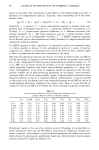
ANTIBACTERIAL ACTIVITY OF 5-BROMO-5-NITRO-1,3-DIOXANES 77 5-BROMO-5-NITRO-2-CYCLOHEXYL- 1,3-DIOXANE [7] A three-neck round bottom flask, equipped with heating mantle-Variac ©, magnetic stirrer, equilibrating side-arm addition funnel, and Friedrich Condenser/Dean-Stark trap combination was charged with 80 mL of sodium-dried benzene and the system was flushed with nitrogen. Stirring was initiated as 10.0g (0.050 mole) of I, and then 0.20g of p-toluenesulfonic acid monohydrate was added. After stirring this slurry for 15 min, a solution of 8.41g (0.075 mole) of cyclohexane carboxaldehyde in 20 mL of benzene was slowly added dropwise over 30 min. Once the addition was complete, the reaction mixture was stirred at room temperature for an additional 30 min and was then refluxed for 3 hr. The solution, initially water-white, turned yellow on heating and finally a light brown upon refluxing. A volume of 1.0 mL water was collected in the Dean-Stark trap. The reaction mixture was refluxed for 15 minutes with Norit, gravity filtered, decanted into a separatory funnel, and subjected sequentially to wash- ings with 2 x 50mLwater, 2 x 25 mL 5% NaHCO 3 solution, 2 x 25 mL 10% NaHSO 3 solution, and 2 x 50 mL water. The resulting benzene extract was dried overnight using anhydrous sodium sulfate, gravity filtered from the spent drying agent, and the solvent was removed by use of a rotary evaporator. The resulting oil solidified upon scratching and was recrystallized from (60-90 ø) Ligroin to yield 10.0 g (68%) of a white crystalline solid, m.p. 103-106øC. The identity of [7] was confirmed by the use of ir (see peak table below) and nmr spectroscopy, as well as by elemental microanalysis. ir (KBr): 2945,2925,2851,1442 cm- • (aliphatic C-H), 1561,1334,914 cm- • (NO2) , 1178,1138, 1077,1036 cm- • (acetal C-O-C-O-C), 550 cm- • (C-Br) Calculated for C•0H•604NBr: N- 4.76% Found: N- 4.60% TEST ORGANISMS The test organisms used in this study were taken from the Jergens culture collection and consisted of Staphylococcus aureus (FDA 209 strain) and Pseudomonas aeruginosa (PRD 10 strain). These organisms were grown and inoculated into the test samples as de- scribed in a previous report (10). TEST SAMPLES Screening studies were performed by dispersing or dissolving 100 mg of each analog in 9.0 mL of propylene glycol and piperring 1 mL of this into 9 mL of 0.85% saline to give a final concentration of 0.1% of each test compound in 10% propylene glycol/ saline solution. Propylene glycol was chosen as the solubilizing/dispersing agent because II is supplied commercially in propylene glycol (Henkel, Inc.). Relative biological responses (RBR) studies were performed using P. aeruginosa in 10% polysorbate 80/saline solutions containing 0.1 mM of each analog. Lotion test samples were prepared using a proprietary formulation without preservatives or fragrance. The lotion was prepared for testing by dissolving the desired amount of either 5-bromo-5- nitro-2,2-dimethyl- 1,3-dioxane [8] or 5-bromo-5-nitro-2,2-diethyl- 1,3-dioxane [ 10] in the oil phase and heating to 70øC. Then, this oil phase was added to the water phase with continuous agitation at 70øC. Sufficient amounts of the test compound were used to give final concentrations of 0 (unpreserved control), 0.01, 0.1, and 0.2% in the lotion.

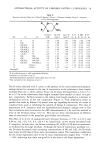
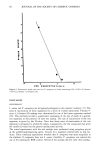
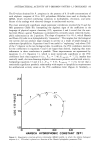
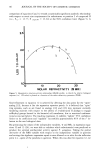
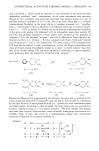
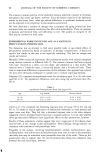
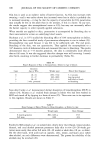
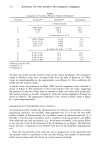
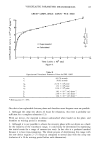
78 JOURNAL OF THE SOCIETY OF COSMETIC CHEMISTS TEST PROCEDURE Suspensions of the test organisms were prepared and introduced into the test samples, and aerobic plate counts (APC) were performed as described in a previous report (10). The APC values obtained at different times for each test compound were used to calculate the decimal reduction time (D-value), which is the time required for 90% inactivation of the population for each organism treated with the specified concentration of test compound. The D-values for each test compound were determined using APC values from 0-24, 2-24, or 4-24 hr, depending on the time at which the APC values were maximum. The D-values obtained with different concentrations of [8] and [10] in the test lotion were used to construct a preservative death time curve so that the concentration of preservative necessary to provide satisfactory preservative efficacy could be calculated (11). These data were then normalized relative to the activity of II, which was assigned a value of 100. The measure of RBR was defined as I/D-value in order to denote that an intrinsically more active congener should exhibit a given level of biological activity at a lower molar concentration than a less active congener in the same series. Loga- rithmic transformation of the RBR values allowed the data set to be placed on a "linear free energy" (LFER) scale and utilized in the derivation of extrathermodynamic QSAR, correlating observed changes in antibacterial activity with changes in molecular struc- ture. QUANTITATIVE STRUCTURE-ACTIVITY RELATIONSHIPS (QSAR) The QSAR were derived utilizing the Hansch 3AA Multiparameter Regression Anal- ysis program, available through the Southwestern Ohio Regional Computer Center (SWORCC) at the University of Cincinnati. Computer runs were performed using an Anderson-Jacobson Model 832 TTY/Model A242 Acoustic Data Coupler remote ter- minal on the Amdahl Systems Computer at SWORCC. Extrathermodynamic substit- uent parameter values were taken from the recent compilation of Hansch and Leo (12) or from the review article by Verloop (13). RESULTS The rates of inactivation of the test organisms in 10% propylene glycol/saline solutions containing 0.1% of each test compound were determined using S. aureus and P. aeru- ginosa. The D-values obtained in the screening tests with the aliphatic substituents are listed in Table I. It is apparent that P. aer•ginosa was more susceptible to the analogs than was S. a•re•s, because many D-values for the former organisms were 0.6 hr. This value represents the lower limit of sensitivity of the D-value determination when performed using the time intervals selected in this experiment, because no organisms were recovered at the second APC determination. Therefore, the rates of inactivation (i. e., D-values) of P. aer•ginosa alone were subsequently determined in 0.1 mM solu- tions of aliphatic analogs [1-13] in 10% polysorbate 80/saline and these values are given in Table II.
Purchased for the exclusive use of nofirst nolast (unknown)
From: SCC Media Library & Resource Center (library.scconline.org)