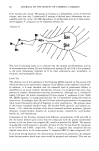
ANTIBACTERIAL ACTIVITY OF 5-BROMO-5-NITRO-1,3-DIOXANES 91 done here. In addition, no attempt was made to compare the preservative efficacy of the 2-substituted-II analogs with other commercially available preservatives. It is ex- pected that an investigator would include this as part of the testing in the development of a product formulation. It is also recognized that determination of preservative ade- quacy of a given compound would require additional testing. This testing would include the use of other test organisms, including gram-positive cocci, spore formers, other gram-negative rods, and representative yeasts and molds. CONCLUSIONS This study illustrates the value of using a "rational" approach to synthesizing bioactive compounds, selected on the basis of hydrophobic, electronic, and steric factors com- bined with a rapid, quantitative method of evaluating their biological activity. The results reported herein indicate clearly that QSAR can be used to evaluate quantitative antibacterial data such as D-values in vitro and to predict which analog(s) in a congeneric series have the greatest antibacterial activity. Most significantly, the QSAR prediction has led to a cosmetic preservative (i.e., [8]) fully active at 0.04% in a white lotion formulation, which compares favorably with the 0.1% concentration requirement claimed for the commercially available unsubstituted parent congener II itself. The work reported herein also demonstrates that statistically significant correlations between antimicrobial activity of the II congeners and appropriate physicochemical parameters (i.e., log P pr MR) do exist. The failure by Lappas et al. (6) to find a significant relationship with percent water solubility may be attributed to a need to recognize the complex sequence of events which occurs when a compound such as II or any of its substituted analogs undergoes partitioning between solvent phases. Factors such as the free energy of solvation in water, 1-octanol (or other lipophilic solvent) and entropy of fusion (as measured macroscopically by mp) must all be taken into account (34 c,d). In the present case, there is apparently an important role played by parti- tioning of II congeners between the aqueous exobiophase and that portion of the li- poprotein bacterial membrane system wherein the hypothesized invaginated -SH mol- eties referred to earlier may be found this is not successfully modelled by a water solubility parameter alone. The question of cosmetic preservative design via QSAR was first addressed by Hansch and his coworkers (35) twelve years ago. Cosmetic preservatives constitute one class of bioactive materials that may be evaluated by use of quantitative antibacterial data and QSAR. It is hoped that the work reported here will stimulate interest in QSAR as an adjunct to the evaluation and development not only of cosmetic preservatives, but of other classes of bioactive raw materials as well. Also, this rational approach may have merit in developing alternatives to animal testing, wherein the biological response (i. e., killing of selected tissue culture cells, as represented by 1/D-value) could be explained by the use of the QSAR Paradigm. ACKNOWLEDGEMENTS This project was supported in part by a (1978-1979) Grant from the Society of Cosmetic Chemists to S. R. Milsrein, which is gratefully acknowledged. The skillful

92 JOURNAL OF THE SOCIETY OF COSMETIC CHEMISTS technical assistance of Mr. S.J. Schmolka (University of Cincinnati Department of Chemistry), Mr. S. W. Collier (The Andrew Jergens Co.), and invaluable discussions with Dr. E. A. Coats (University of Cincinnati College of Pharmacy) concerning QSAR and the operation of the remote computer terminal are sincerely appreciated. The assistance of Ms. Hermenia Canty (The Andrew Jergens Co.) in the preparation of the manuscript is also acknowledged. One of us (S. R. Milstein) wishes to express his sincere appreciation to the University of Cincinnati, Department of Chemistry, as well as to Drs. Milton Orchin and R. Marshall Wilson for the hospitality enjoyed during a 1978-1979 sabbatical-year faculty appointment. The willingness of the University of Cincinnati College of Pharmacy to administer the SCC Grant is also gratefully acknowledged. REFERENCES (1) T. J. McCarthy, Microbiological control of cosmetic products, Cosmetics and Toi/etries, 95, 23 (1980). (2) P. A. Berke and W. E. Rosen, Are cosmetic emulsions adequately preserved against Pseudomanas?, J. Soc. Cosmet. Chem., 31, 37 (1980). (3) D. S. Orth, Principles of preservative efficacy testing, Cosmetics and Toiletties, 96, 43 (1981). (4) (a) B. Croshaw, M. Groves, and B. Lessel, Some properties of Bronopol ©, a new antimicrobial agent active against Pseudomonas aeruginosa, J. Pharm. Pharmacol. 16 (Suppl.), 1271 (1964) (b) N. G. Clark, B. Croshaw, B. E. Leggetter, and D. F. Spooner, Synthesis and antimicrobial activity of aliphatic nitro compounds,J. &led. Chem., 17, 972 (1974) (c) B. Croshaw, Preservatives for cosmetics and toiletries, J. Sac. Cosmet. Chem., 28, 3 (1977) (d) D. M. Bryce, B. Croshaw, J. E. Hall, V. R. Holland, and B. Lessel, The activity and safety of the antimicrobial agent Bronopol © (2-bromo-2- nitropropan-l,3-diol),J. Soc. Cosmet. Chem., 29, 3 (1978). (5) P. Lorenz, 5-bromo-5-nitro- 1,3-dioxane: A preservative for cosmetics, Cosmetics and Toiletties, 92, 89 (1977). (6) L. C. Lappas, C. A. Hirsch, and C. L. Winely, Substituted 5-Nitro-l,3-Dioxanes: Correlation of chemical structure and antimicrobial activity, J. Pharm. Sci., 65, 1301 (1976). (7) Z. Eckstein, Reactions of nitroparaffins. VIII. Reactions of 2-bromo-2-nitropropane-l,3-diol with aldehydes, Rockzniki. Chem., 27, 246 (1953). (8) J. R. Dimmock and L. M. Smith, Synthesis and evaluation of ketals, hemithioketals and dithioketals of conjugated styryl ketones principally for antineoplastic activity, J. Pharm. Sci., 69, 575 (1980). (9) W. W. Paudler, "Ring Inversion Studies," in Nuclear &lagnetic Resonance, (Allyn and Bacon, Inc., Boston), p 173. (10) D. S. Orth, Linear regression method for rapid determination of cosmetic preservative efficacy, J. Sac. Cosmet. Chem., 30, 321 (1979). (11) D. S. Orth, Establishing cosmetic preservative efficacy by use of D-values, J. Soc. Cosmet. Chem., 31, 165 (1980). (12) C. Hansch and A. Leo, Substituent Constants for Correlation Analysis in Chemistry and Biology, (Wiley- Interscience Publishers, New York, 1979). (13) A. Verloop, W. Hoogenstraaten, and J. Tipker, "Development and Application of New Steric Substituent Parameters in Drug Design," in Drug Design, E. J. Ariens, Ed. (Academic Press, New York, 1976)Vol. 3, pp 180-185. (14) J. J. Kabara, Structure-function relationships of surfactants as antimicrobial agents, J. Sac. Cosmet. Chem., 29, 733 (1978). (15) J. G. Topliss and R. J. Costello, Chance correlations in structure-activity studies using multiple regression analysis, J. Med. Chem., 15, 1066 (1972). SS 2 - SS•/K2 - K• (16) a) FK•_K• = where K• = no. of independent SS2/n- K2 variables in the regression in question, K• = no. of independent variables in reference regression (or mean), n = no. of data points, SS2 = sum of squares about regression in question, and SS• = sum of squares about reference.
Purchased for the exclusive use of nofirst nolast (unknown)
From: SCC Media Library & Resource Center (library.scconline.org)